Digital Public Infrastructure Map
Governments across the globe are on their way to building national-scale digital infrastructure. A comprehensive view of the state of DPI, however, is missing. The DPI Map addresses this.
GovStack offers governments with open-source tools for digital services, including building block specifications, a sandbox for testing (upcoming), and communities of practices, and more.
Our focus is to enable countries to kickstart their digital transformation journey by adopting, deploying, and scaling digital government services. Through the digital building blocks approach, governments can easily create or modify their digital platforms, services, and applications by also simplifying cost, time, and resource requirements. Our approach starts with research and development to inform design specifications based on best practices of generic reusable digital components, or building blocks. Next, the collaboration will move towards creating a model digital government services platform, which will demonstrate elements of reuse across services and sectors (i.e., use cases). The design specifications and the resulting government platform model will be available as “digital public goods” for use by the global community, with a focus on procurement and implementation in a low-resource context.
12 Building Block Specifications Published. 14 Reference Use Cases Published. 261 Individual Contributors. 17 Products on GovExchange. 5 Communities of Practice. (Source) — 2024-03

Governments across the globe are on their way to building national-scale digital infrastructure. A comprehensive view of the state of DPI, however, is missing. The DPI Map addresses this.

POPVOX Foundation works to inform and empower people and make government work better for everyone.
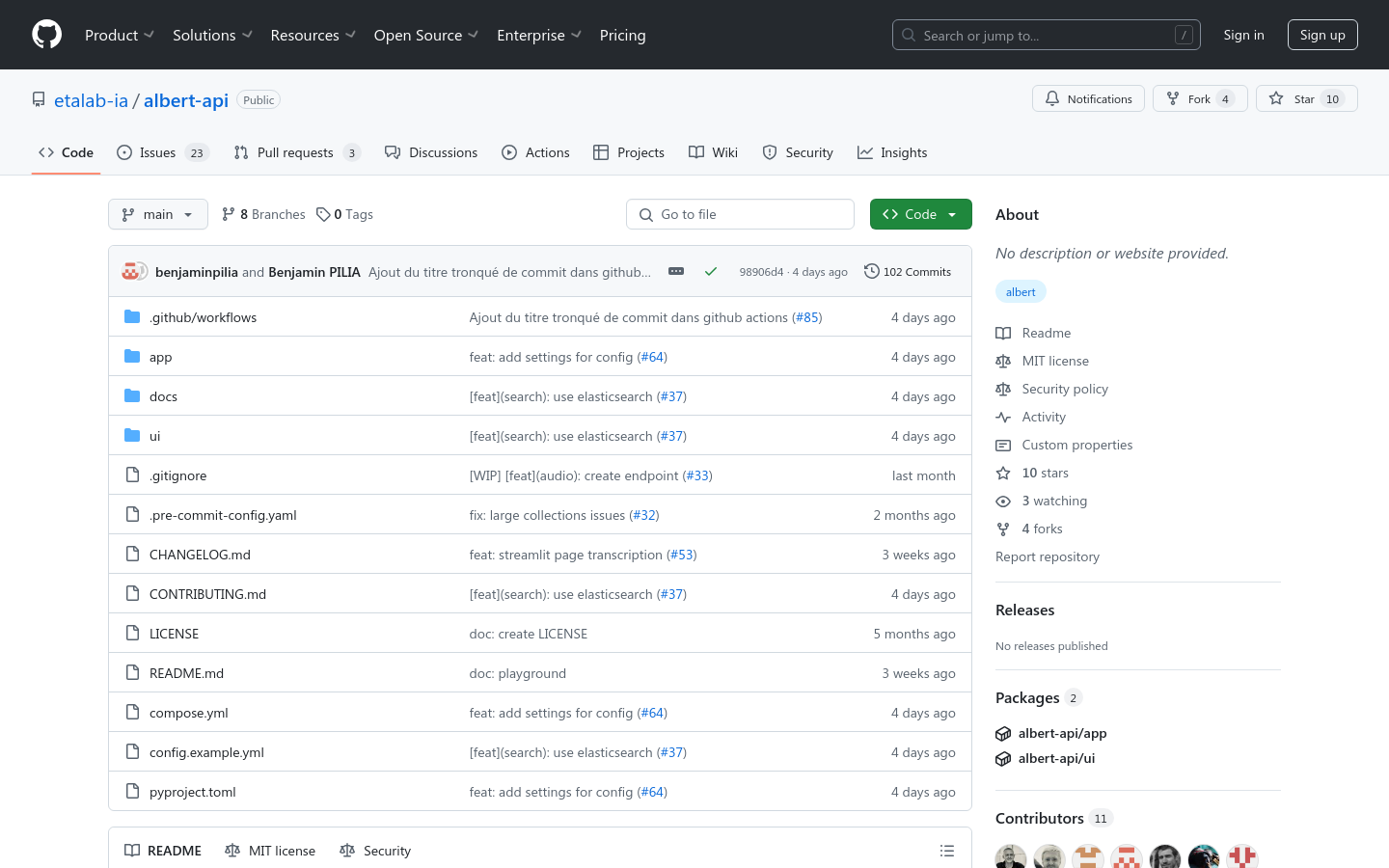
Starting in 2024, Albert will be tested at local public service counters — Maisons France services — to help users with their paperwork.