Civic Tech Field Guide
Donate

5 projects

Digital Public Goods Standard

The Digital Public Goods Standard is a set of specifications and guidelines designed to maximise consensus about whether a digital solution conforms to the definition of a digital public good: open-source software, open data, open AI models, open standards, and open content that adhere to privacy and other applicable best practices, do no harm by design and are of high relevance for attainment of the United Nations 2030 Sustainable Development Goals (SDGs).

Partnerships for the Goals
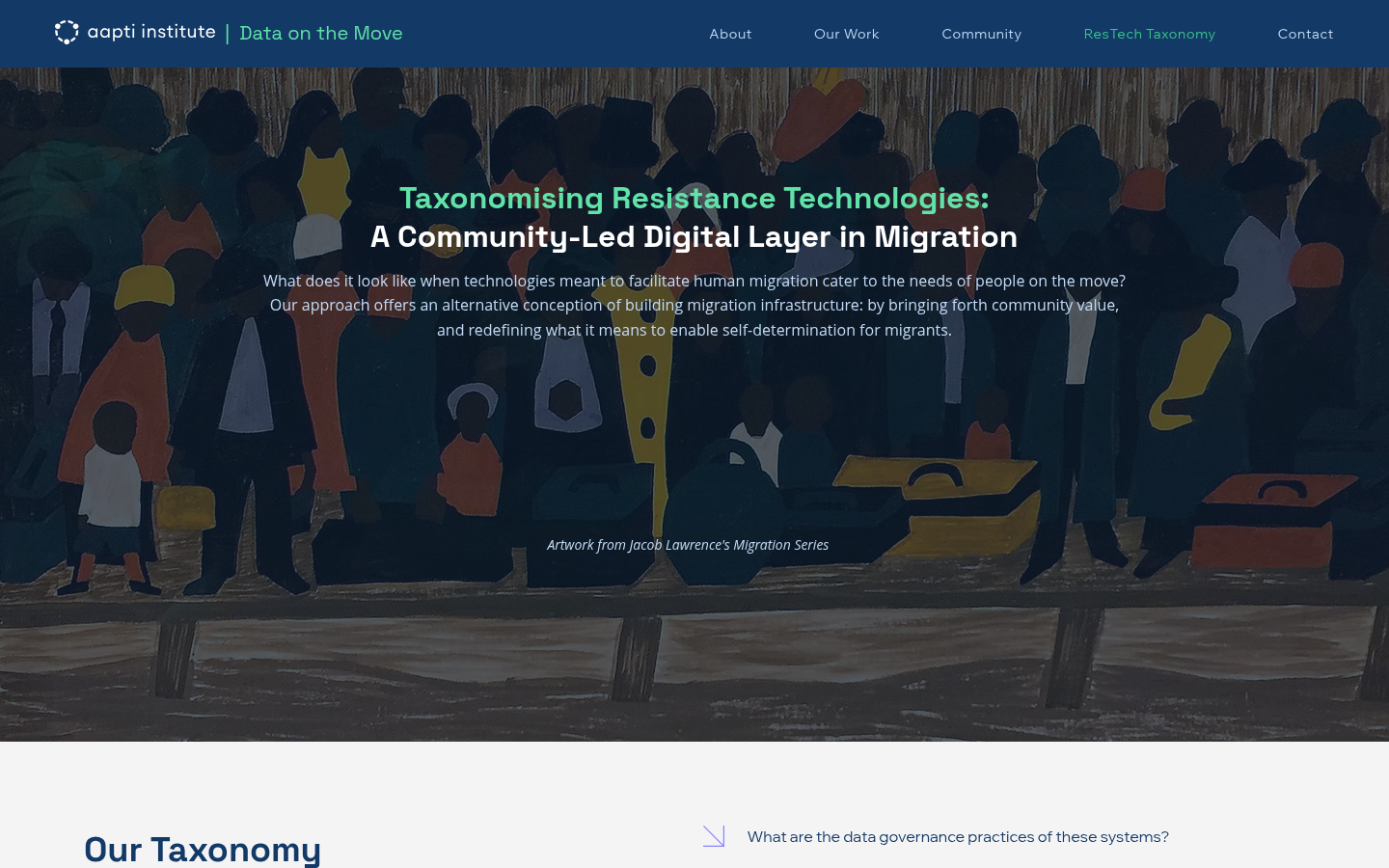
Taxonomising Resistance Technologies

This taxonomy is a living repository of digital systems that fall under the definition of what we call ‘Resistance Technology’ or ‘ResTech’, a digital layer in the migration sphere that is community-led, and built to fill gaps in information, welfare, and development through bottom-up means, thereby rebalancing existing power structures and enabling negotiation for people on the move.

Bangalore
immigration

Civic Information Index

The Civic Information Index uses data to map drivers of engaged, informed, equitable, and healthy communities nationwide.

Internews Network, 15th Street Northwest, Washington, DC, USA
2025
local, census, reports

JusticeBench

Discover AI projects across the access to justice landscape, understand where they fit in the justice journey, and find data and evaluation tools to know if they work.

Stanford, CA, USA

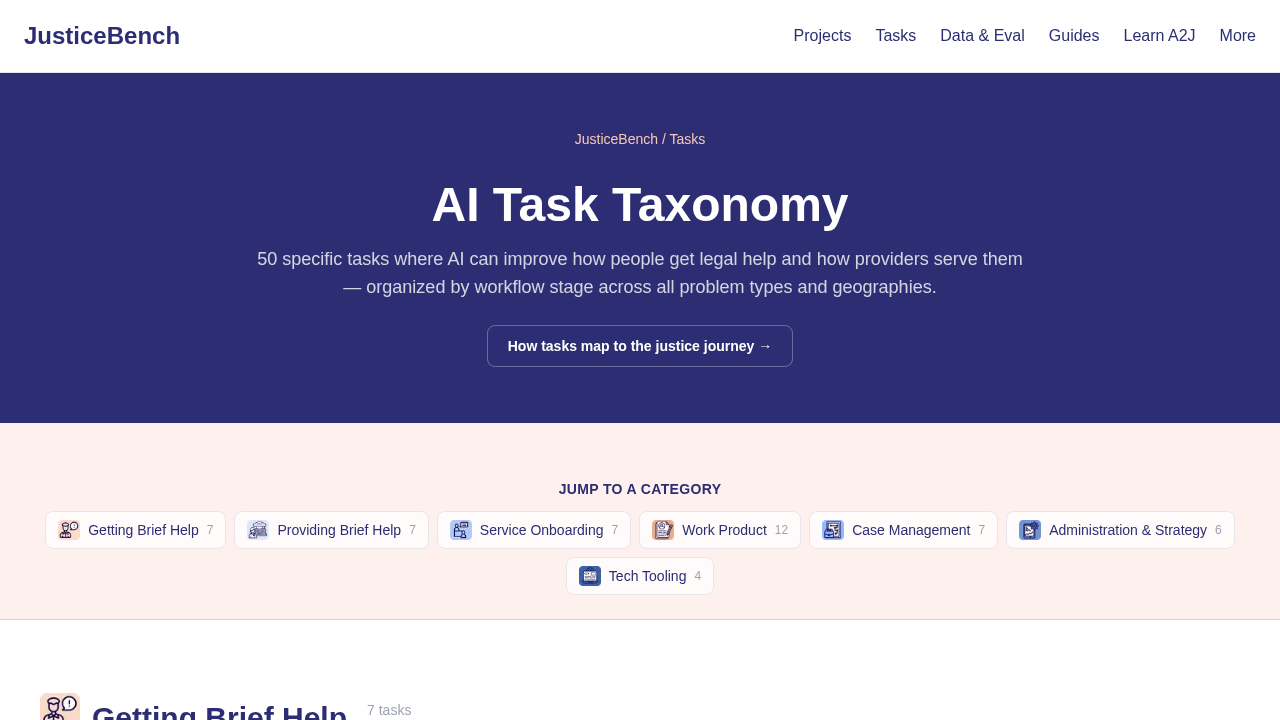
JusticeBench Task Taxonomy

50 specific tasks where AI can improve how people get legal help and how providers serve them — organized by workflow stage across all problem types and geographies.

Stanford, CA, USA