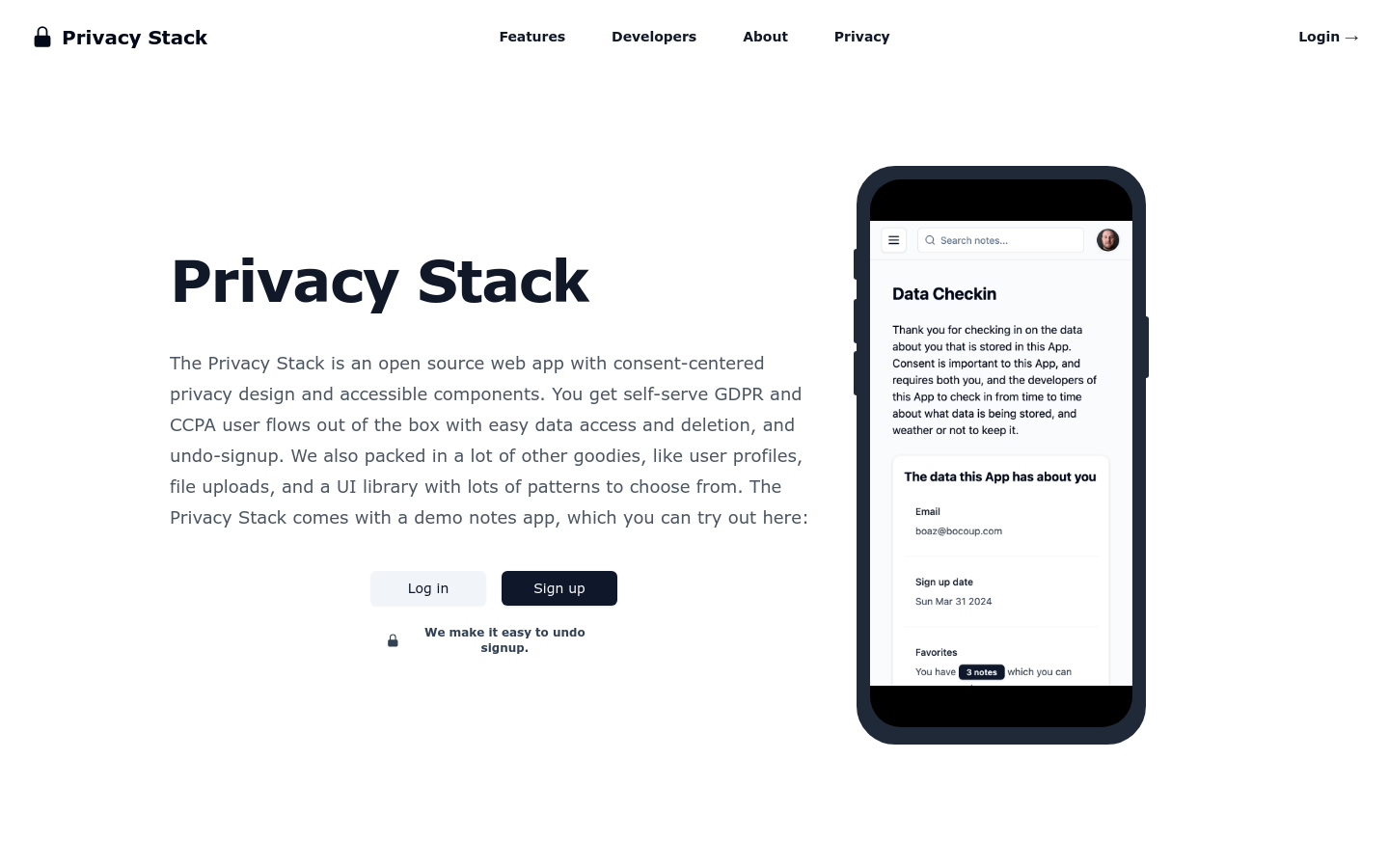
Privacy Stack
An open source starter app that comes with user accounts that include: data access, do not sell, data deletion, undo sign up, and other features.
Massachusetts
2024

Enhancing the privacy and security of national digital identity systems
Governments around the world are committed to supporting the roll out of national digital IDs, but there are privacy and security implications associated with scaling these systems at a national level. Responsible implementation of ID services is a critical enabler for financial inclusion; it enables access to services and enactment of civil rights. According to the World Bank, more than one billion people are currently living without an official digital identity. The Alan Turing Institute is joining a vibrant community of NGOs, charities, private sector providers, universities and think tanks addressing global identity challenges in the digital age. Questions of trust are based around the complex interplay of socio-technical considerations, requiring multi-disciplinary expertise. The ‘trustworthiness’ of digital IDs is characterised by multiple inter-related dimensions that include security, privacy, ethics, resilience, robustness and reliability. These dimensions are required to provide the knowledge, tools and guidance needed to implement privacy-preserving, secure identification systems This initiative has received initial funding through a grant from the Bill & Melinda Gates Foundation.
An open source starter app that comes with user accounts that include: data access, do not sell, data deletion, undo sign up, and other features.
The Electronic Frontier Alliance is a grassroots network of community and campus organizations across the United States working to educate our neighbors about the importance of digital rights. Organized by EFF.
JAAKLAC iniciativa promueve la educación digital crítica para desarrollar el conocimiento sobre cómo las tecnologías digitales afectan a sociedades, al medioambiente y para ampliar la partcipación colectiva hacia futuros más justos.
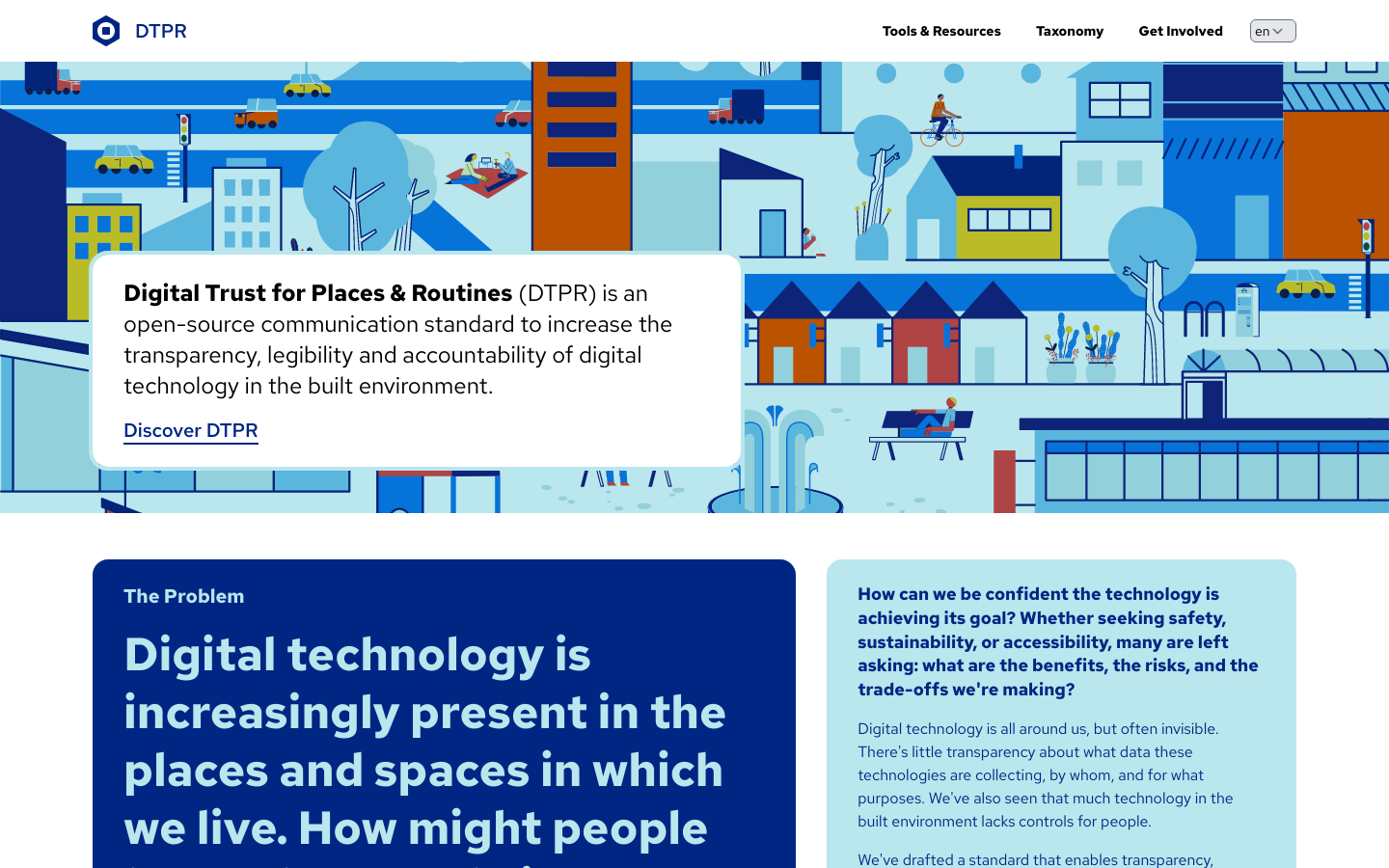
Digital Trust for Places & Routines (DTPR) is an open-source communication standard to increase the transparency, legibility and accountability of digital technology in the built environment.