Mobility Data Specification (MDS)
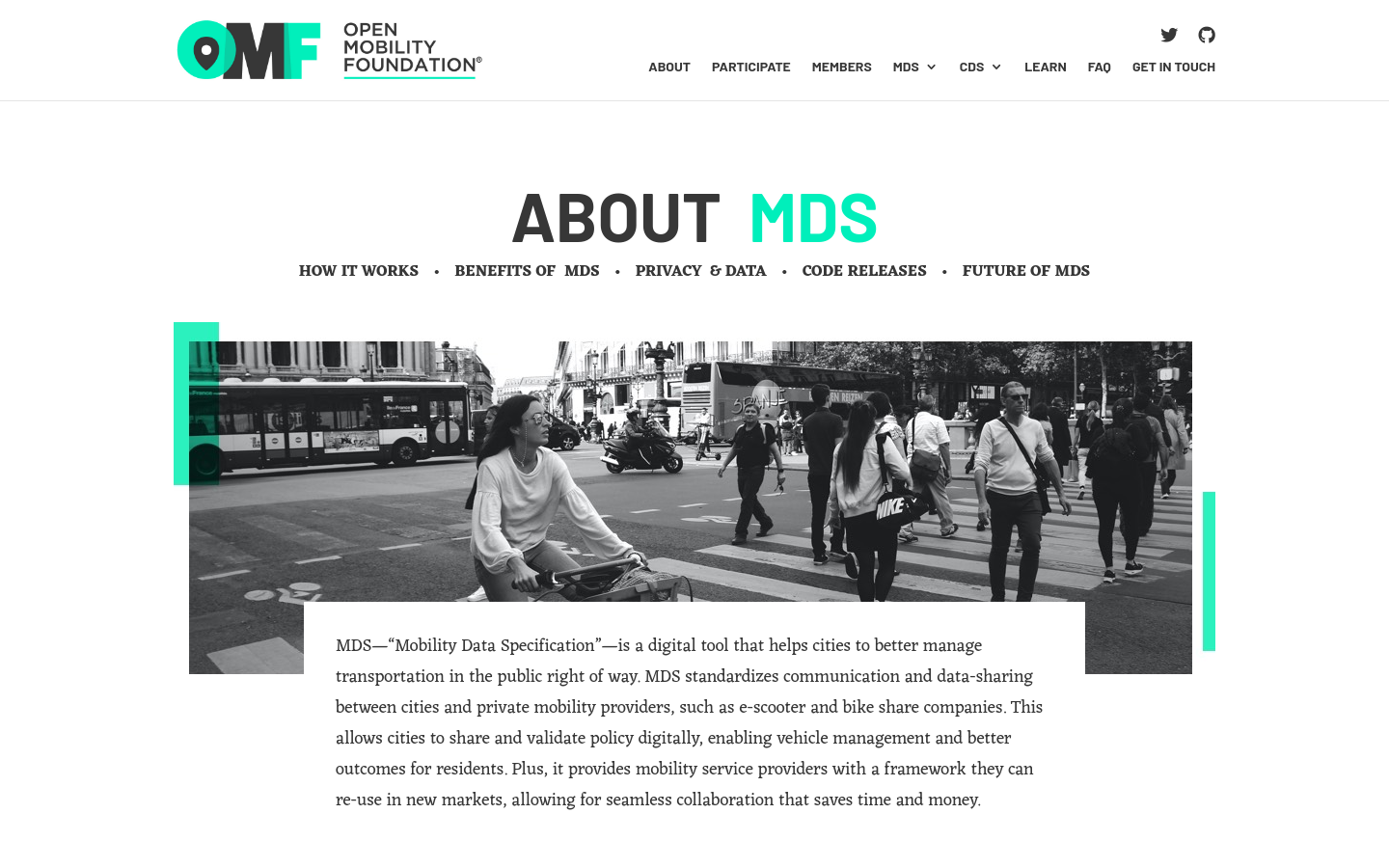
MDS standardizes communication and data-sharing between cities and private mobility providers, such as e-scooter and bike-share companies.
USA
mobility, city, Sustainable cities and communities

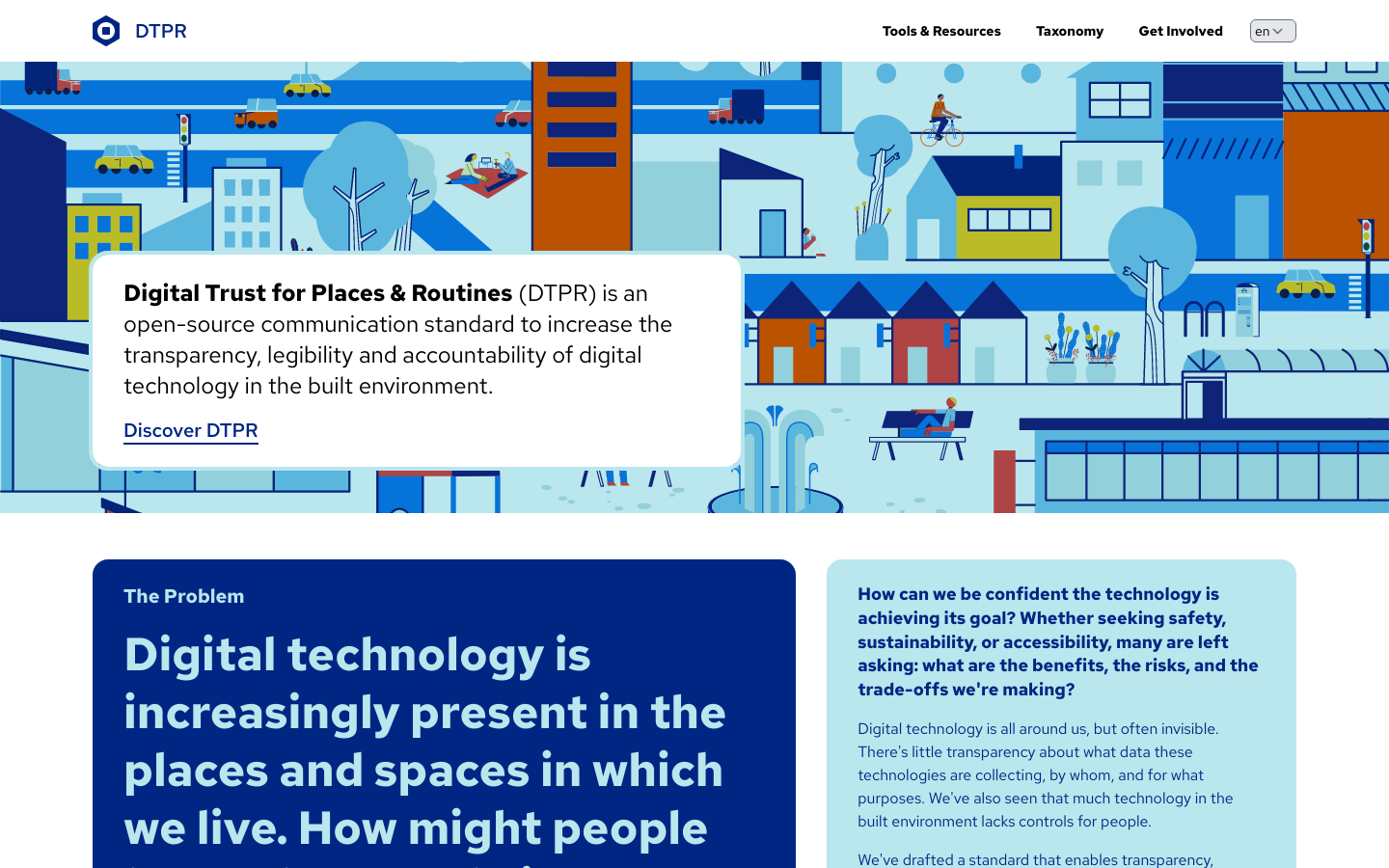
Digital Trust for Places & Routines (DTPR) is an open-source communication standard to increase the transparency, legibility and accountability of digital technology in the built environment.
Digital Trust for Places and Routines (DTPR) is an initiative to provide clarity and transparency regarding technology in public spaces. In an increasingly digitized world, where technologies are widespread yet often poorly understood, DTPR establishes a structured visual language to convey essential information about these technologies. DTPR consists of a standardized data dictionary and structure that describes digital technology and data governance practices and an associated set of icons and usage patterns designed to quickly and clearly communicate those concepts. Inspired by recognizable visual cues such as food labelling and wayfinding symbols, this visual language reveals key elements of the technologies of our public spaces – including who manages them, what their purpose is, and what kind of data is collected or processed through them. Beyond communication, DTPR also facilitates the integration of internal processes within organizations, bringing together place-based operations, technology implementations, and community engagement. This fosters organizational agility and capacity-building, enabling the transparent introduction and deployment of technologies in public spaces. [Learn more about DTPR and how to use it →](https://helpful-places.gitbook.io/a-guide-to-dtpr/) DTPR emerged from collaborative design initiatives and consultation sessions with global experts and the general public, as part of the Digital Transparency in the Public Realm project at Sidewalk Labs. The Sidewalk Labs project in Toronto aimed to transform the Quayside waterfront area by using advanced technology to tackle issues like transportation efficiency and sustainability. However, the project quickly became controversial, sparking intense debates about privacy, data governance, and the broader impacts of digital surveillance in urban development, leading to the development of DTPR. Today, DTPR is piloted globally and maintained by Helpful Places, an independent social impact enterprise. It is available as an open-source project under the Creative Commons license CC BY 4.0, ensuring that it can be freely used and adapted worldwide.
Parent organization: Helpful Places
MDS standardizes communication and data-sharing between cities and private mobility providers, such as e-scooter and bike-share companies.
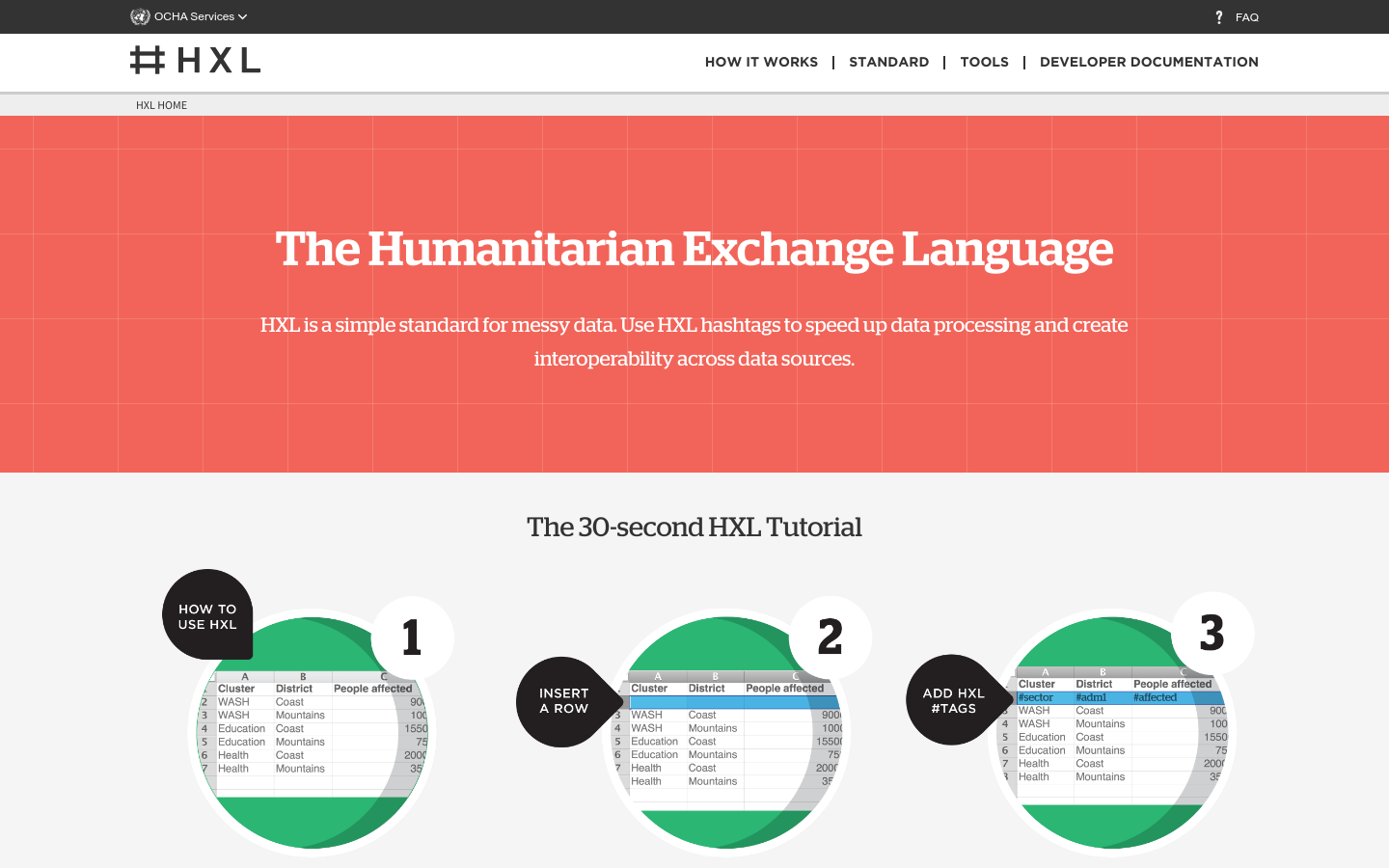
HXL is a different kind of data standard, designed to improve information sharing during a humanitarian crisis without adding extra reporting burdens.
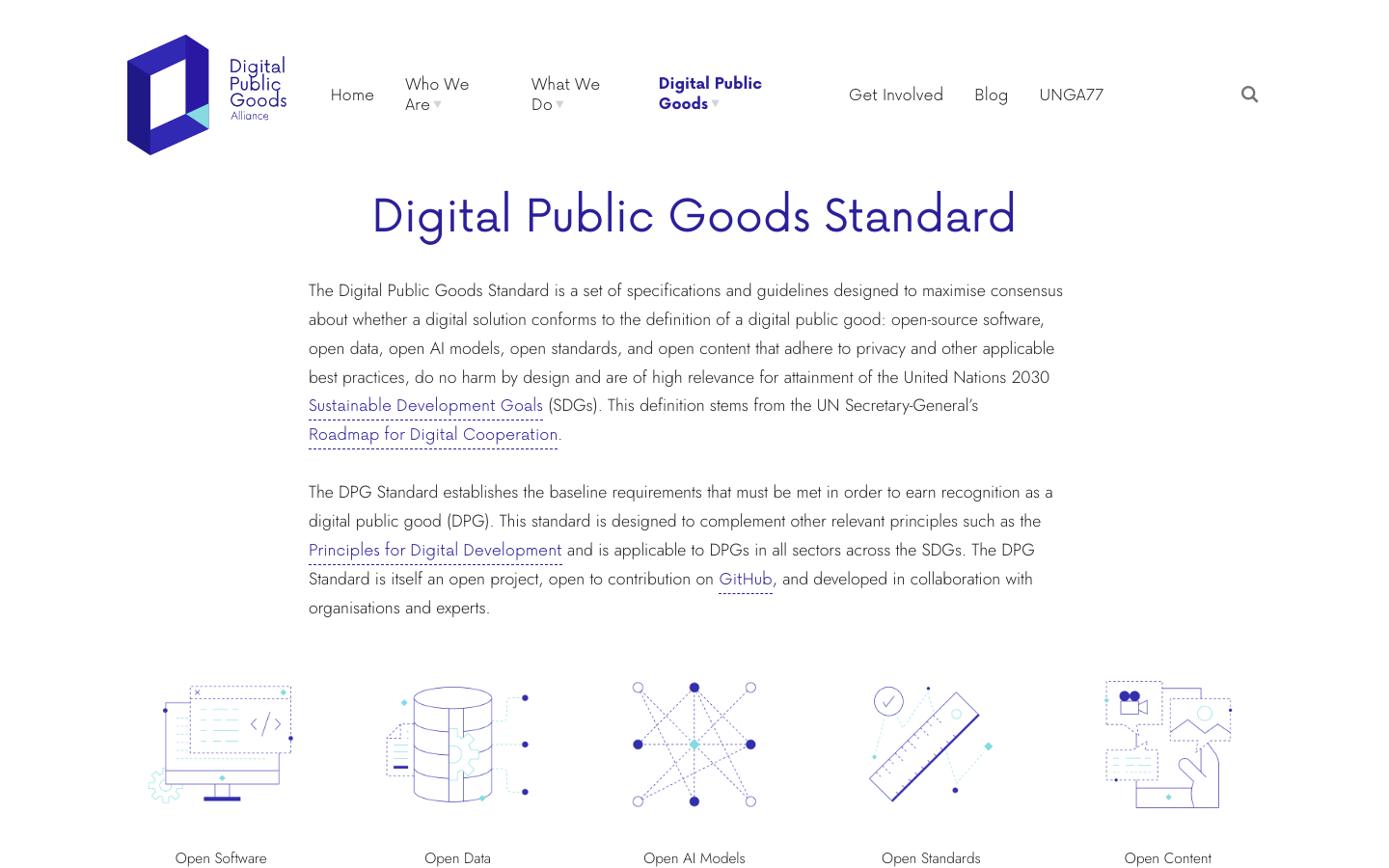
The Digital Public Goods Standard is a set of specifications and guidelines designed to maximise consensus about whether a digital solution conforms to the definition of a digital public good: open-source software, open data, open AI models, open standards, and open content that adhere to privacy and other applicable best practices, do no harm by design and are of high relevance for attainment of the United Nations 2030 Sustainable Development Goals (SDGs).
CityGML is an open data model and XML-based format for the storage and exchange of virtual 3D city models.