The Decidim ‘soft infrastructure’: democratic platforms and technological autonomy in Barcelona
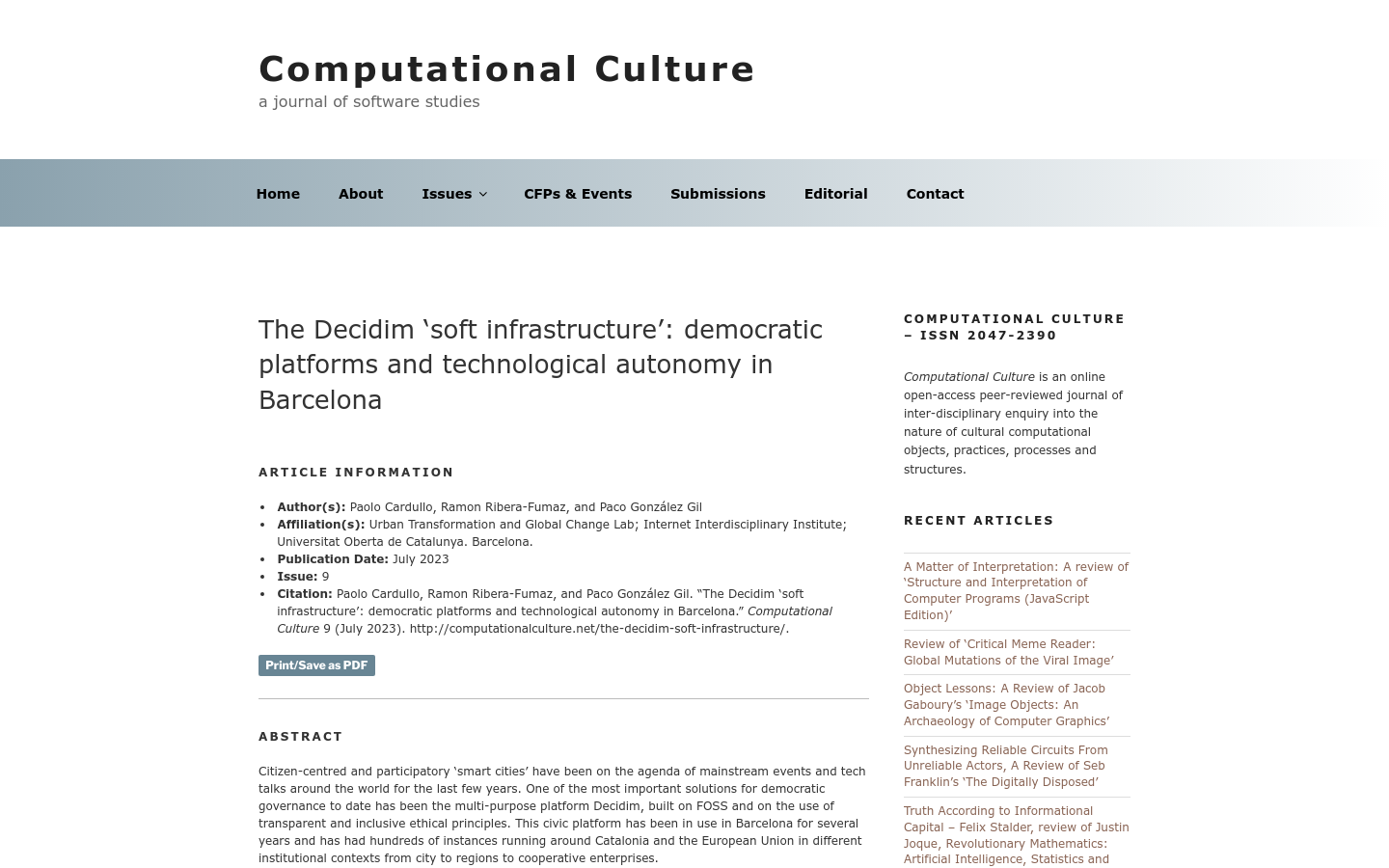
Paper by Paolo Cardullo, Ramon Ribera-Fumaz, and Paco González Gil. "In this paper we focus on the platform’s ‘soft infrastructure’ – the network of developers, ethical hackers, academics, maintainers, advocates and activists, and city administrators but also the agreements with the city and the documentation produced – on its internal governance arrangements and the provincialising relationships these might entail."
Citizen-centred and participatory ‘smart cities’ have been on the agenda of mainstream events and tech talks around the world for the last few years. One of the most important solutions for democratic governance to date has been the multi-purpose platform Decidim, built on FOSS and on the use of transparent and inclusive ethical principles. This civic platform has been in use in Barcelona for several years and has had hundreds of instances running around Catalonia and the European Union in different institutional contexts from city to regions to cooperative enterprises.
In this paper we focus on the platform’s ‘soft infrastructure’ – the network of developers, ethical hackers, academics, maintainers, advocates and activists, and city administrators but also the agreements with the city and the documentation produced – on its internal governance arrangements and the provincialising relationships these might entail. We use a mixed methodology of participation to relevant events and interviews both in presence and online, through mapping of the ecosystem and content analysis of documents concerning the initiative.
We believe that the Decidim soft infrastructure embeds an important part of the cultural change in the understanding and deployment of technologies in the city of Barcelona. Rooted around the 15M movement which shook Spanish politics and society from 2011, it partakes at various levels in the cultural and political tissue of Catalan society. With a strong commitment towards the common good, this infrastructure strives to fund and democratically govern itself in a move towards ‘technological autonomy’. At the same time, Decidim is actively involved in international networks of software development and the global discourse on ‘citizen-centric’ smart cities, following the deployment of many instances of the platform in a variety of uses. In our view, these worlding/provincialising relationships shift the discussion on Decidim beyond the technology in itself and its replicating capabilities, towards politics, cultural values and society at large.
Journal of Deliberative Democracy (previously the Journal of Public Deliberation)
The Journal of Deliberative Democracy (formerly the Journal of Public Deliberation) is an open access journal publishing articles that shape the course of scholarship on deliberative democracy.
We aim to reframe the conversation about technology and labor towards issues of power, inequality, and social justice, and incorporate themes of feminism, anti-racism, and transnationalism.
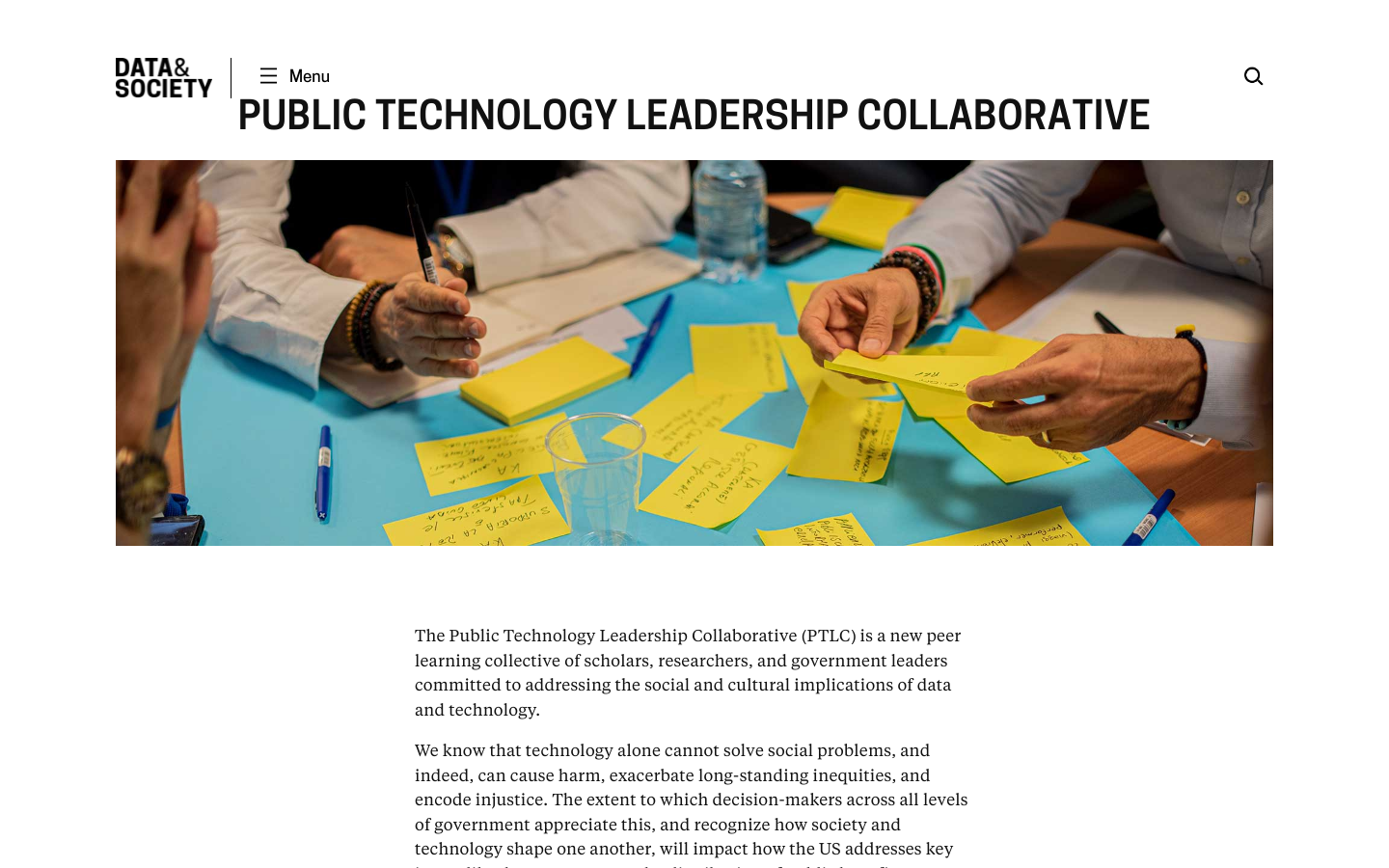
The Public Technology Leadership Collaborative (PTLC) is a new peer learning collective of scholars, researchers, and government leaders committed to addressing the social and cultural implications of data and technology.
Data & Society Research Institute, West 20th Street, New York, NY, USA