
Governance of Emerging Technology and Tech Innovations for Next-Gen Governance (GETTING-Plurality)
A multi-disciplinary research network linking philosophers, social scientists, computer scientists, legal scholars, and technologists.
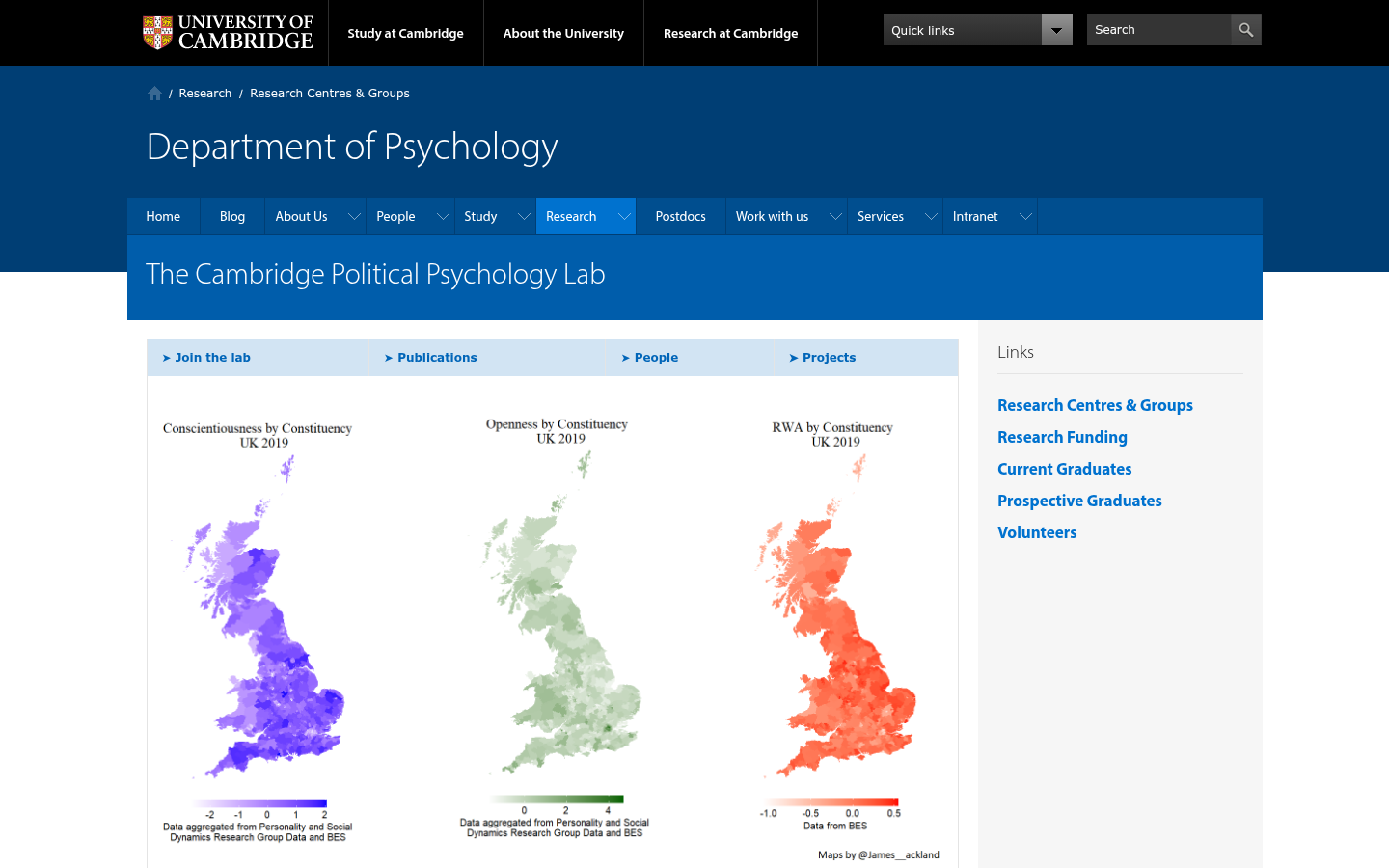
The recently established Cambridge Political Psychology Lab attempts to apply insights from psychology to understand real world political decision making.
This ranges from computational social psychology approaches (such as the anaysis of the distribution and impact of regional variability in psychological traits, as illustrated above in the maps from James Ackland's work), to experimental psychological studies of cognitive biases, to the impact of different voting systems on the psychology of political decision making. The lab is focused on the empirical study of individual voters (not politicians). The immediate goal of the research program is to put psychological theory and methods to the test in this complex real world domain. The longer term ambition is to help us to think about how the democratic progress can be improved through a better understanding of human psychology.
A multi-disciplinary research network linking philosophers, social scientists, computer scientists, legal scholars, and technologists.
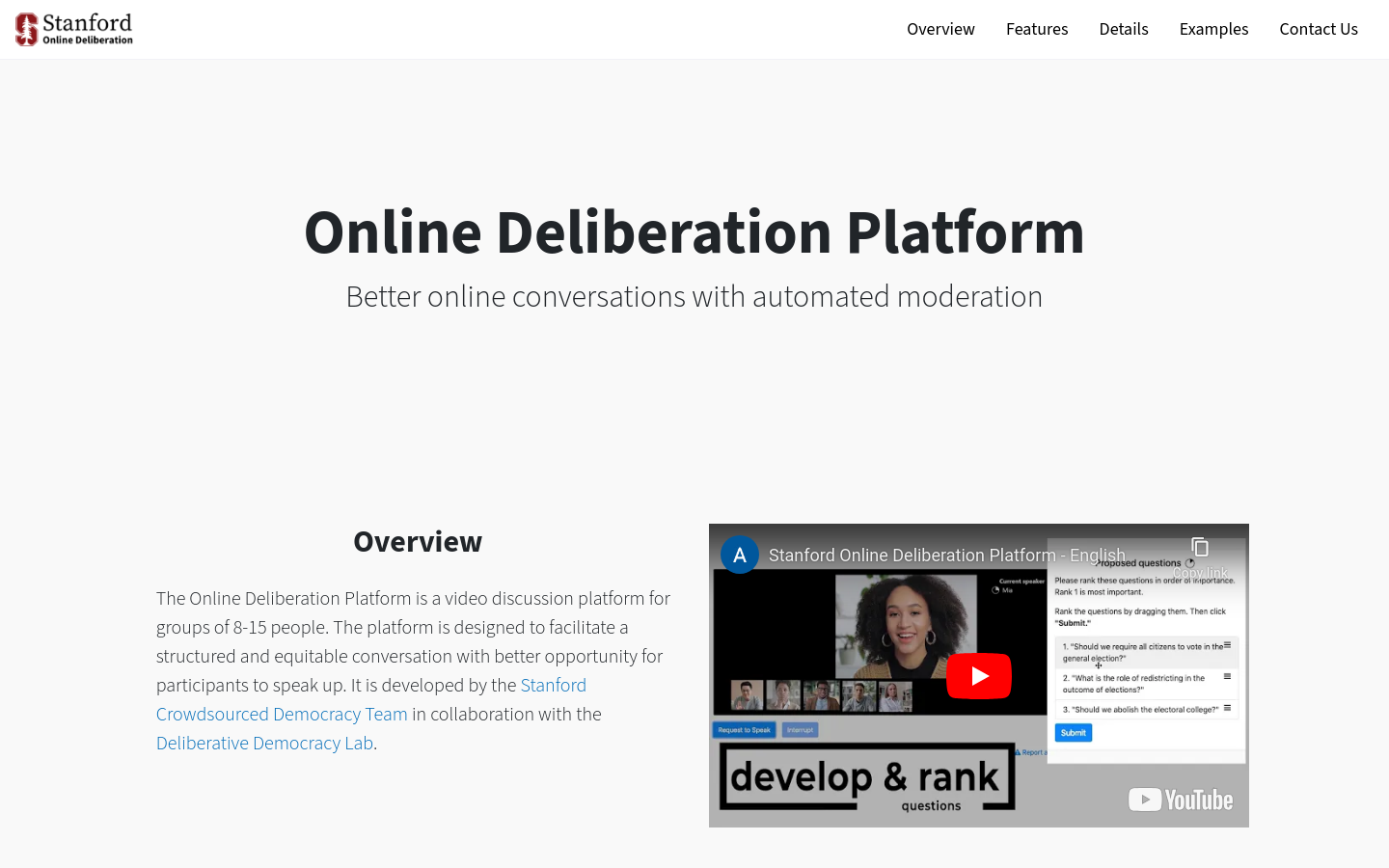
The Online Deliberation Platform is a video discussion platform for groups of 8-15 people.

The Journal of Deliberative Democracy (formerly the Journal of Public Deliberation) is an open access journal publishing articles that shape the course of scholarship on deliberative democracy.

We aim to reframe the conversation about technology and labor towards issues of power, inequality, and social justice, and incorporate themes of feminism, anti-racism, and transnationalism.

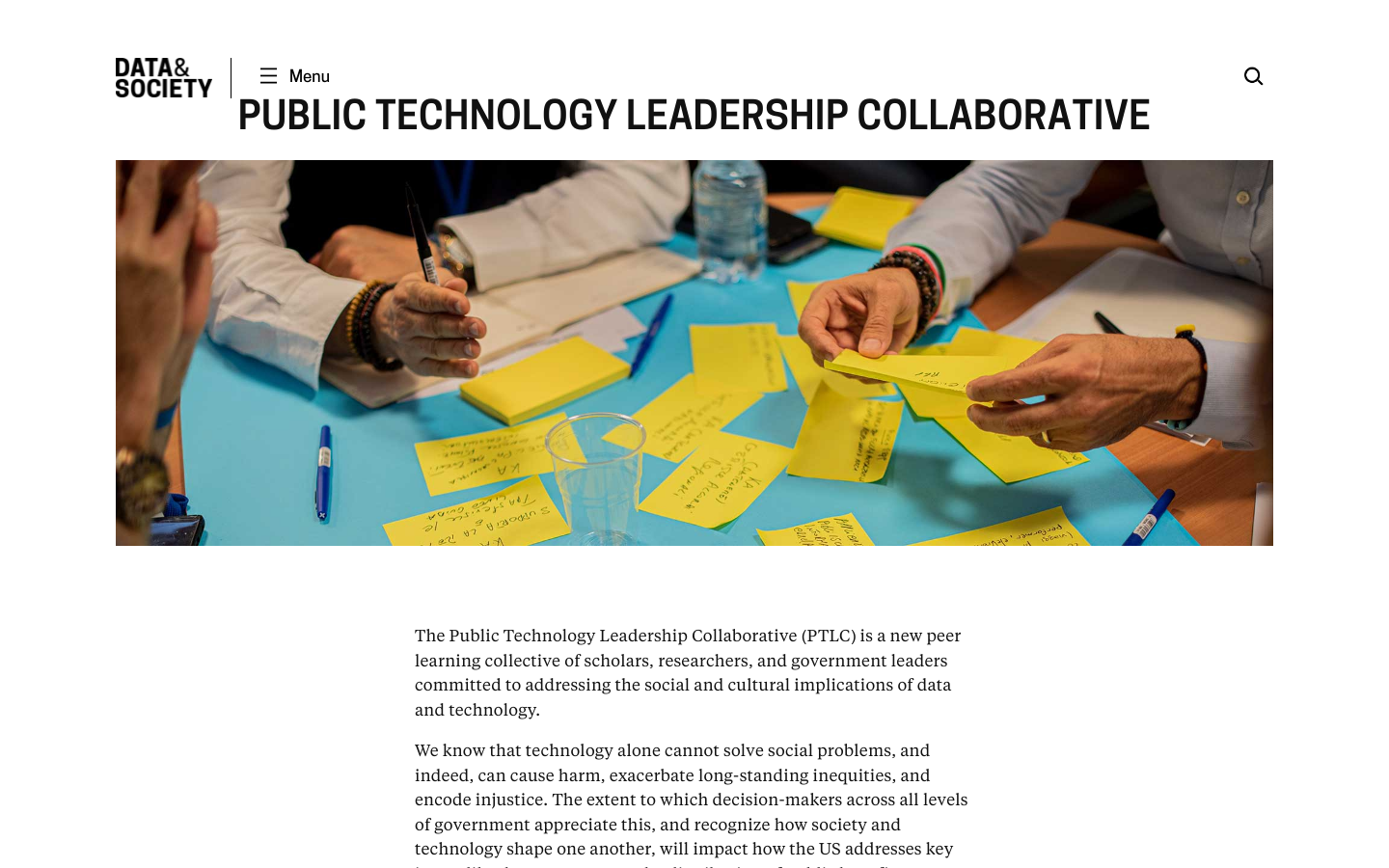
The Public Technology Leadership Collaborative (PTLC) is a new peer learning collective of scholars, researchers, and government leaders committed to addressing the social and cultural implications of data and technology.