Governance of Emerging Technology and Tech Innovations for Next-Gen Governance (GETTING-Plurality)
A multi-disciplinary research network linking philosophers, social scientists, computer scientists, legal scholars, and technologists.
Course designed and taught by Soizic Pénicaud at Sciences Po Paris’ Graduate School of Public Affairs in September-December 2021, 2022, 2023, 2024.
“Artificial intelligence” is a buzzword in the public sector, and agencies increasingly use algorithms and data-driven systems to aid or make decisions. This course is suited for students who want to understand the issue and apply their takeaways to policy, advocacy, research or product management work. The course’s starting point is an algorithm developed by the English government in 2020 to predict A-Level grades, and the backlash that ensued. Other cases are discussed to go deeper into specific aspects of designing and implementing algorithms. The main questions addressed are: when (not) to build algorithms? For and with whom? How to ensure their efficacy and monitor their actual impact, especially with regards to inequalities? How to ensure government remains accountable? What role does civil society play, and how can it push back against abuses?
A multi-disciplinary research network linking philosophers, social scientists, computer scientists, legal scholars, and technologists.
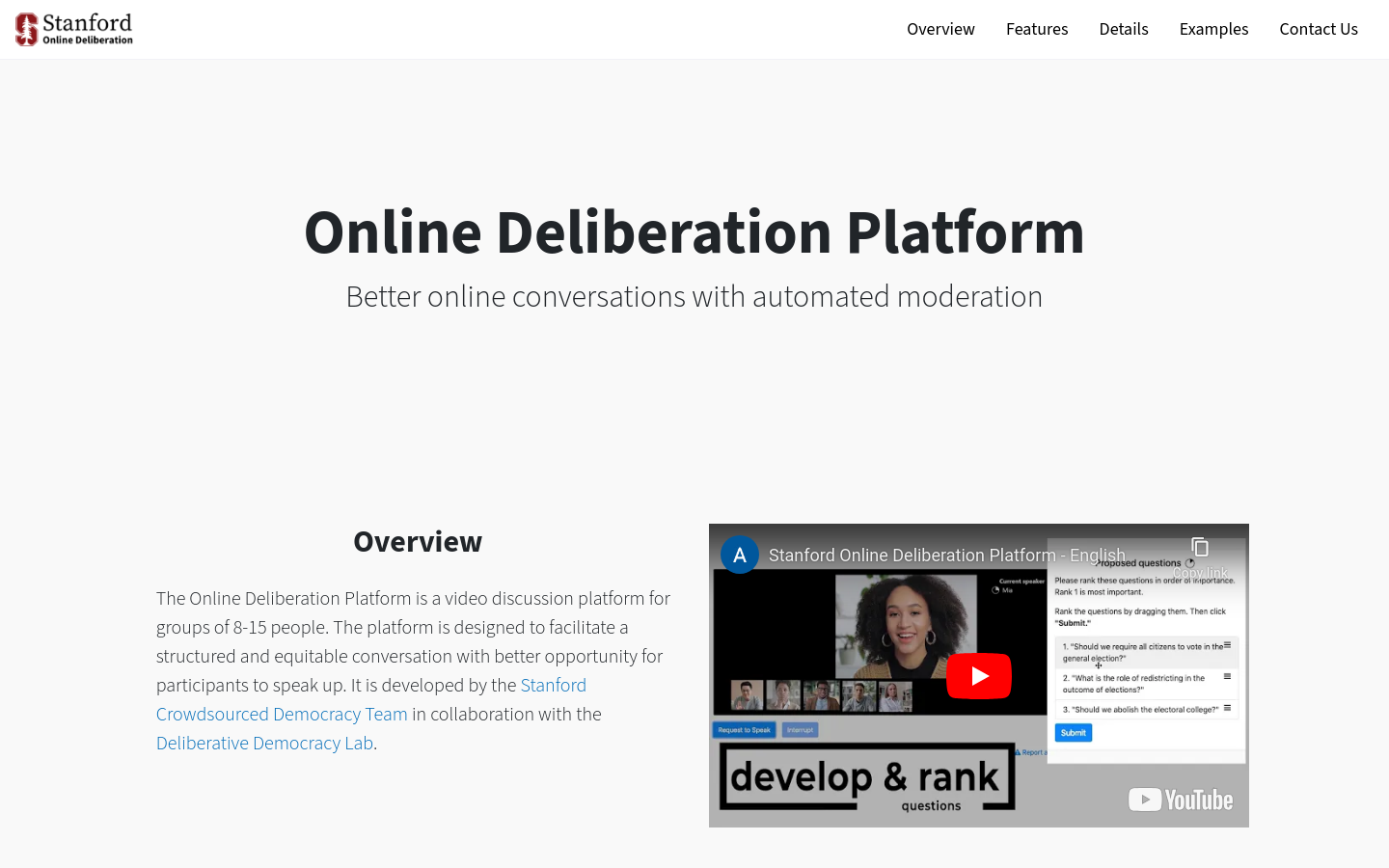
The Online Deliberation Platform is a video discussion platform for groups of 8-15 people.

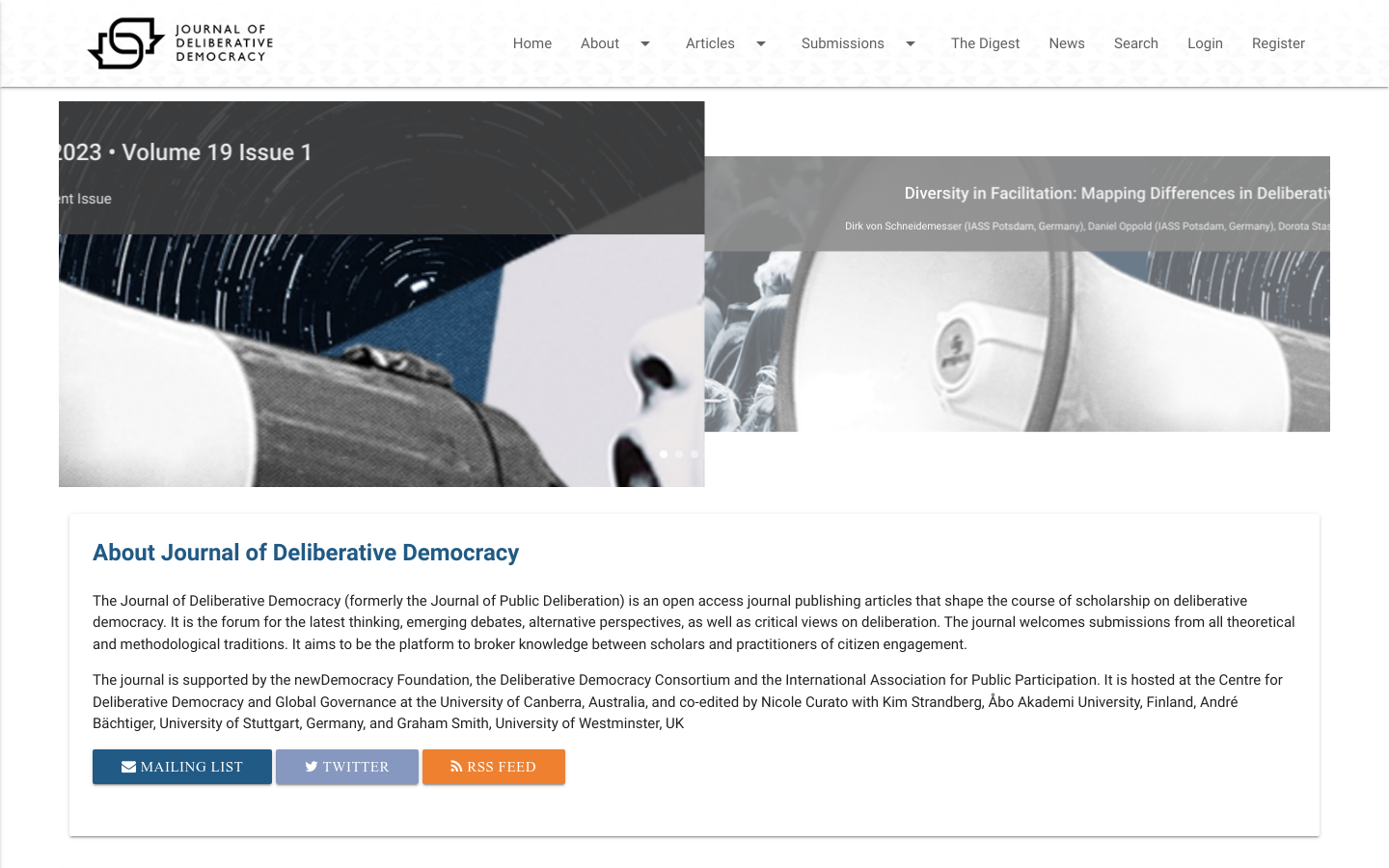
The Journal of Deliberative Democracy (formerly the Journal of Public Deliberation) is an open access journal publishing articles that shape the course of scholarship on deliberative democracy.

We aim to reframe the conversation about technology and labor towards issues of power, inequality, and social justice, and incorporate themes of feminism, anti-racism, and transnationalism.

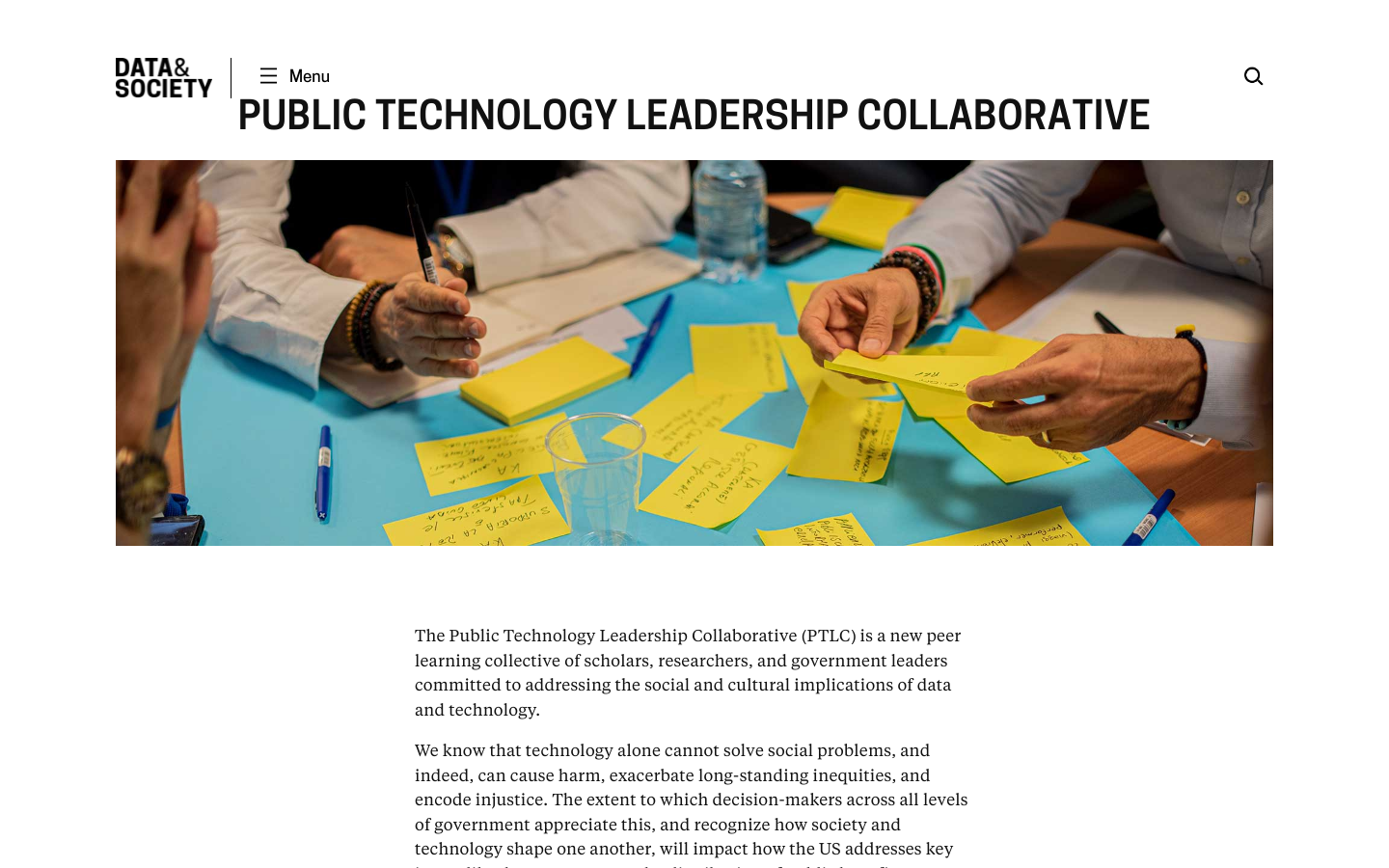
The Public Technology Leadership Collaborative (PTLC) is a new peer learning collective of scholars, researchers, and government leaders committed to addressing the social and cultural implications of data and technology.