Governance of Emerging Technology and Tech Innovations for Next-Gen Governance (GETTING-Plurality)
A multi-disciplinary research network linking philosophers, social scientists, computer scientists, legal scholars, and technologists.
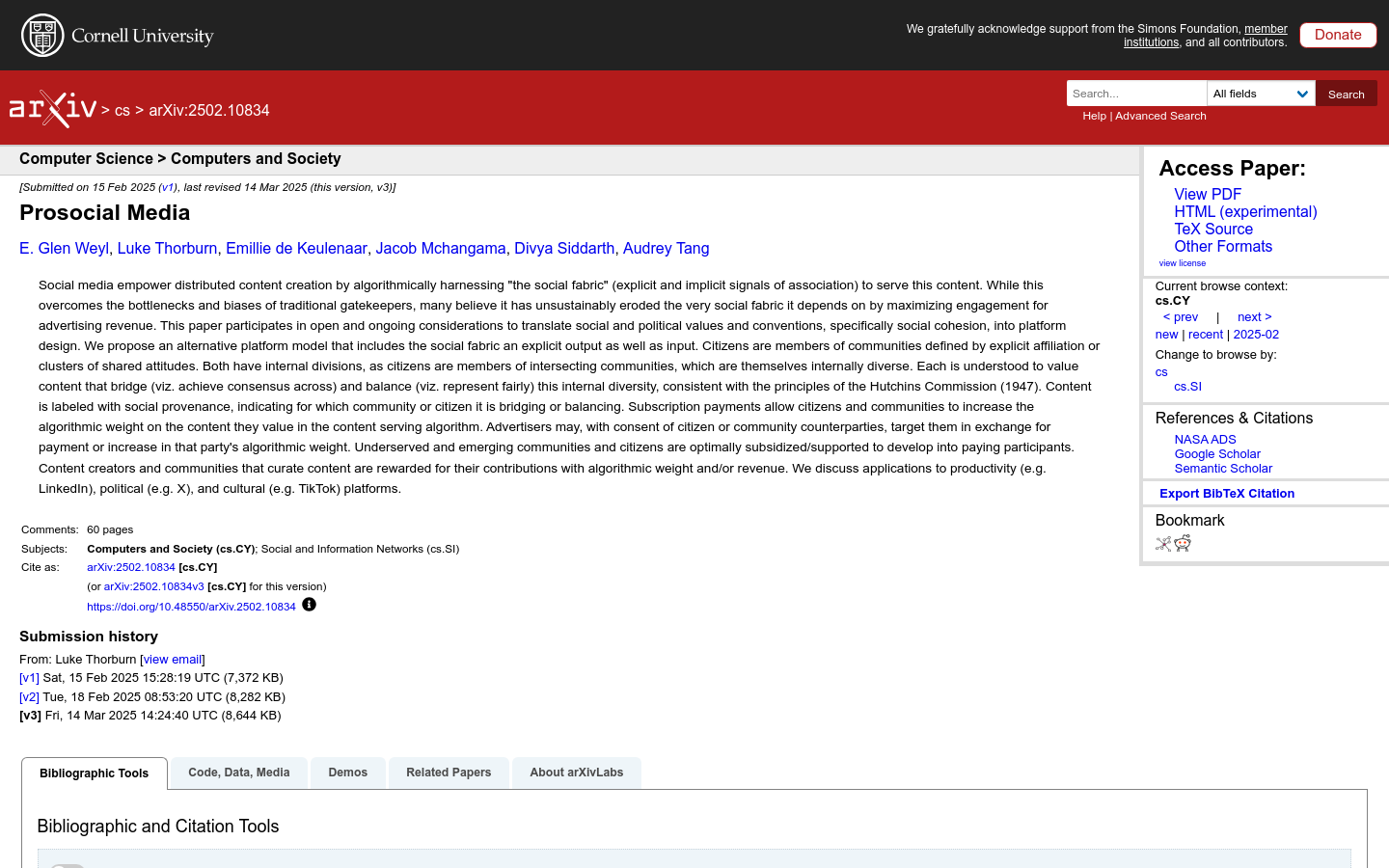
We propose an alternative platform model that the social fabric an explicit output as well as input. By E. Glen Weyl, Luke Thorburn, Emillie de Keulenaar, Jacob Mchangama, Divya Siddarth, Audrey Tang
Social media empower distributed content creation by algorithmically harnessing "the social fabric" (explicit and implicit signals of association) to serve this content. While this overcomes the bottlenecks and biases of traditional gatekeepers, many believe it has unsustainably eroded the very social fabric it depends on by maximizing engagement for advertising revenue. This paper participates in open and ongoing considerations to translate social and political values and conventions, specifically social cohesion, into platform design. We propose an alternative platform model that the social fabric an explicit output as well as input. Citizens are members of communities defined by explicit affiliation or clusters of shared attitudes. Both have internal divisions, as citizens are members of intersecting communities, which are themselves internally diverse. Each is understood to value content that bridge (viz. achieve consensus across) and balance (viz. represent fairly) this internal diversity, consistent with the principles of the Hutchins Commission (1947). Content is labeled with social provenance, indicating for which community or citizen it is bridging or balancing. Subscription payments allow citizens and communities to increase the algorithmic weight on the content they value in the content serving algorithm. Advertisers may, with consent of citizen or community counterparties, target them in exchange for payment or increase in that party's algorithmic weight. Underserved and emerging communities and citizens are optimally subsidized/supported to develop into paying participants. Content creators and communities that curate content are rewarded for their contributions with algorithmic weight and/or revenue. We discuss applications to productivity (e.g. LinkedIn), political (e.g. X), and cultural (e.g. TikTok) platforms.
A multi-disciplinary research network linking philosophers, social scientists, computer scientists, legal scholars, and technologists.
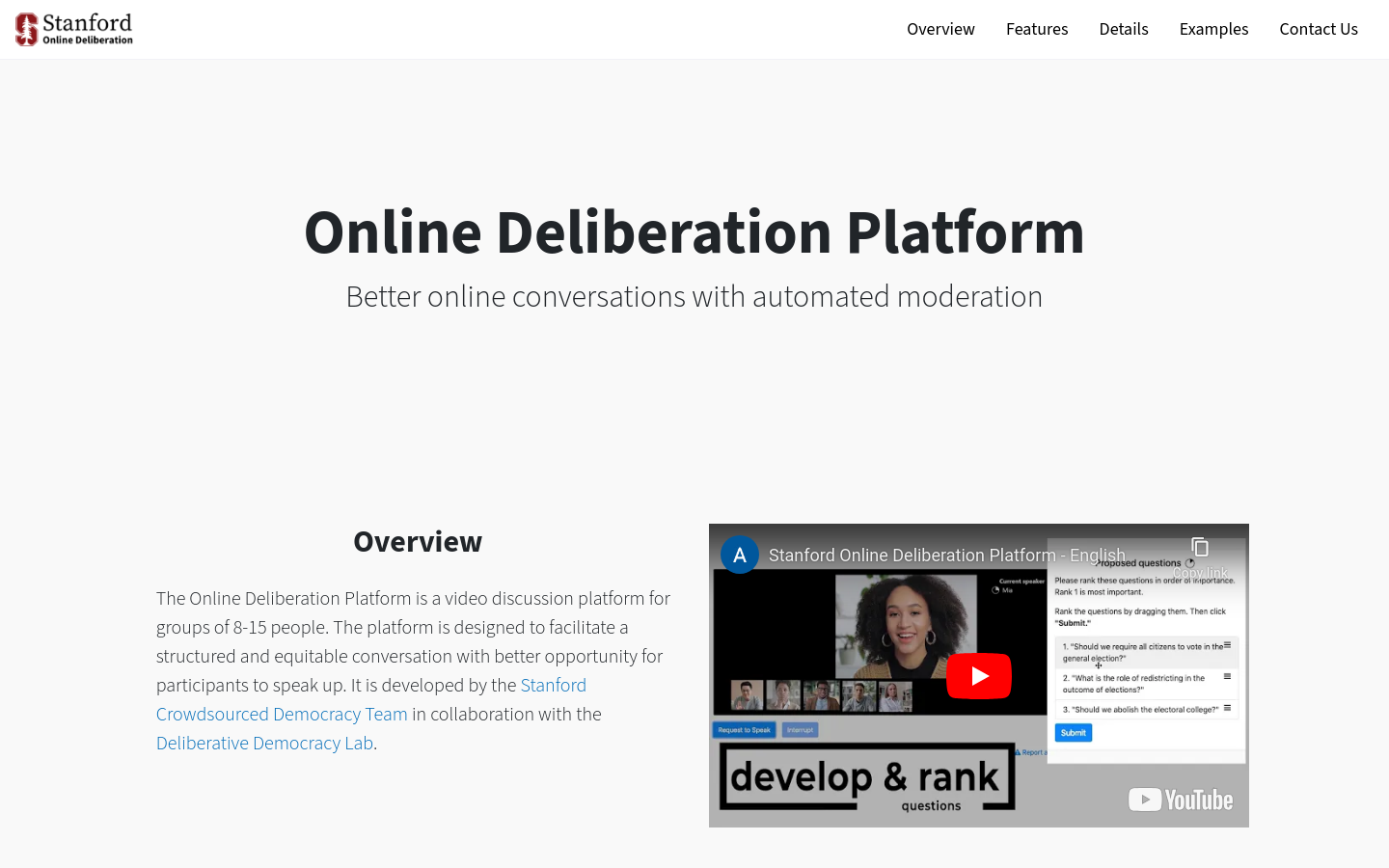
The Online Deliberation Platform is a video discussion platform for groups of 8-15 people.

The Journal of Deliberative Democracy (formerly the Journal of Public Deliberation) is an open access journal publishing articles that shape the course of scholarship on deliberative democracy.

We aim to reframe the conversation about technology and labor towards issues of power, inequality, and social justice, and incorporate themes of feminism, anti-racism, and transnationalism.

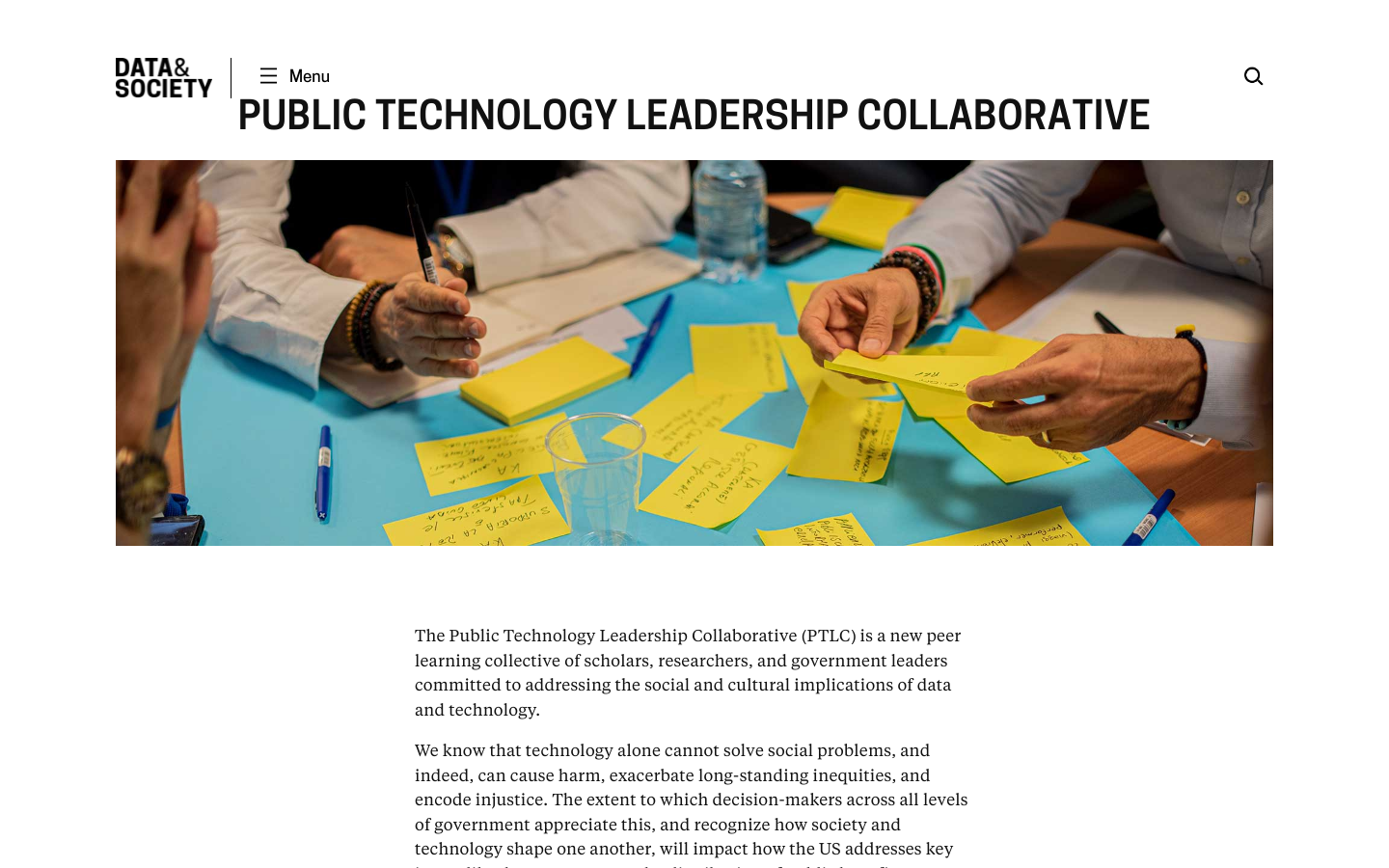
The Public Technology Leadership Collaborative (PTLC) is a new peer learning collective of scholars, researchers, and government leaders committed to addressing the social and cultural implications of data and technology.