

Governance of Emerging Technology and Tech Innovations for Next-Gen Governance (GETTING-Plurality)
A multi-disciplinary research network linking philosophers, social scientists, computer scientists, legal scholars, and technologists.
Article in Journal of Public Administration Research and Theory by Jessica Lasky-Fink and Elizabeth Linos
Many low-income households in the United States miss out on social safety net benefits because of the information, compliance, and psychological costs associated with take-up of government assistance. Yet, the empirical evidence on the impact of learning and psychological costs on take-up, and how to reduce them, is mixed. Leaning on an administrative burden framework, this article measures the role of reducing learning costs and stigma on demand for rental assistance in two field experiments (N = 117,073) conducted in two US cities. We find that providing information about emergency rental assistance increased program application requests by 52% compared to a no-communication control group. Moreover, subtle framing changes aimed at destigmatizing rental assistance increased engagement with the communication by 36% and increased application requests by about 18% relative to an information only group, with potentially larger effects for renters of color. In two subsequent online experiments (N = 1,258), we document that the destigmatizing framing reduces internalized stigma, without affecting perceptions of the program itself.
A multi-disciplinary research network linking philosophers, social scientists, computer scientists, legal scholars, and technologists.
The Online Deliberation Platform is a video discussion platform for groups of 8-15 people.

The Journal of Deliberative Democracy (formerly the Journal of Public Deliberation) is an open access journal publishing articles that shape the course of scholarship on deliberative democracy.

We aim to reframe the conversation about technology and labor towards issues of power, inequality, and social justice, and incorporate themes of feminism, anti-racism, and transnationalism.

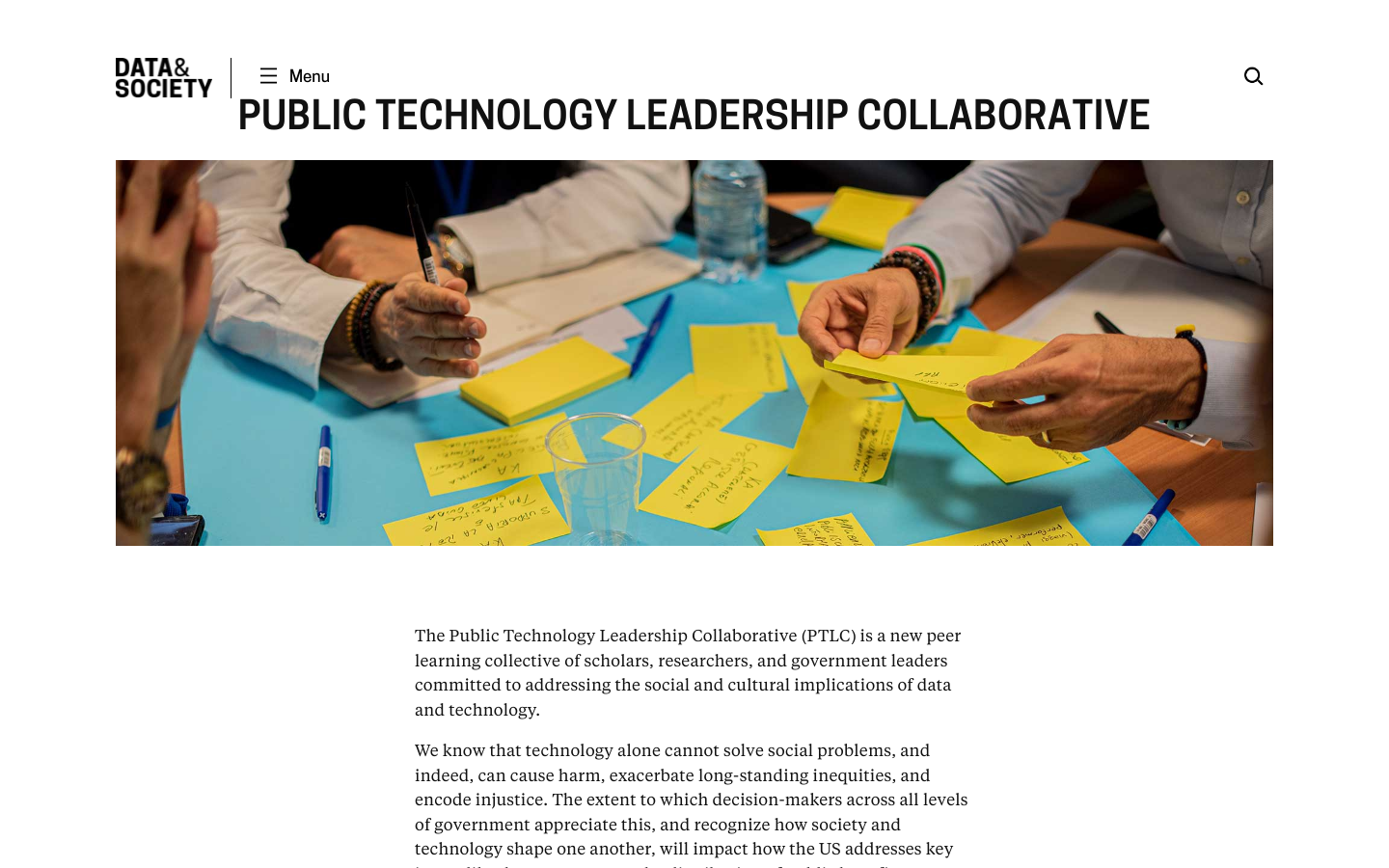
The Public Technology Leadership Collaborative (PTLC) is a new peer learning collective of scholars, researchers, and government leaders committed to addressing the social and cultural implications of data and technology.