

Governance of Emerging Technology and Tech Innovations for Next-Gen Governance (GETTING-Plurality)
A multi-disciplinary research network linking philosophers, social scientists, computer scientists, legal scholars, and technologists.
A circumvention proxy built leveraging the unique benefits of a serverless platform
With the increase in Internet censorship globally, various circumvention tools have been designed and developed. However, the monetary cost of these tools deeply impacts both user choice and the sustainability of provider operations. Recent developments in censorship circumvention research attempted to achieve cost efficiency by utilizing Infrastructure-as-a-Service (IaaS) spot instances as bridges, but still incurred substantial expenses related to network connectivity and instance maintenance. In this work, we present CensorLess, a circumvention proxy built leveraging the unique benefits of a serverless platform. CensorLess comprises three components: a local proxy that handles client-side communication and ensures compliance with serverless functions' security restrictions, a function refresher that periodically regenerates bridges, and a live migration mechanism that maintains continuous connectivity. CensorLess inherits the serverless platform's cost efficiency, ephemerality, scalability, concurrency, and performance. Compared to existing low-cost, state-of-the-art circumvention techniques, CensorLess reduces costs by 97%, while simultaneously enabling robust censorship resistance by employing bridge rotation.

A multi-disciplinary research network linking philosophers, social scientists, computer scientists, legal scholars, and technologists.
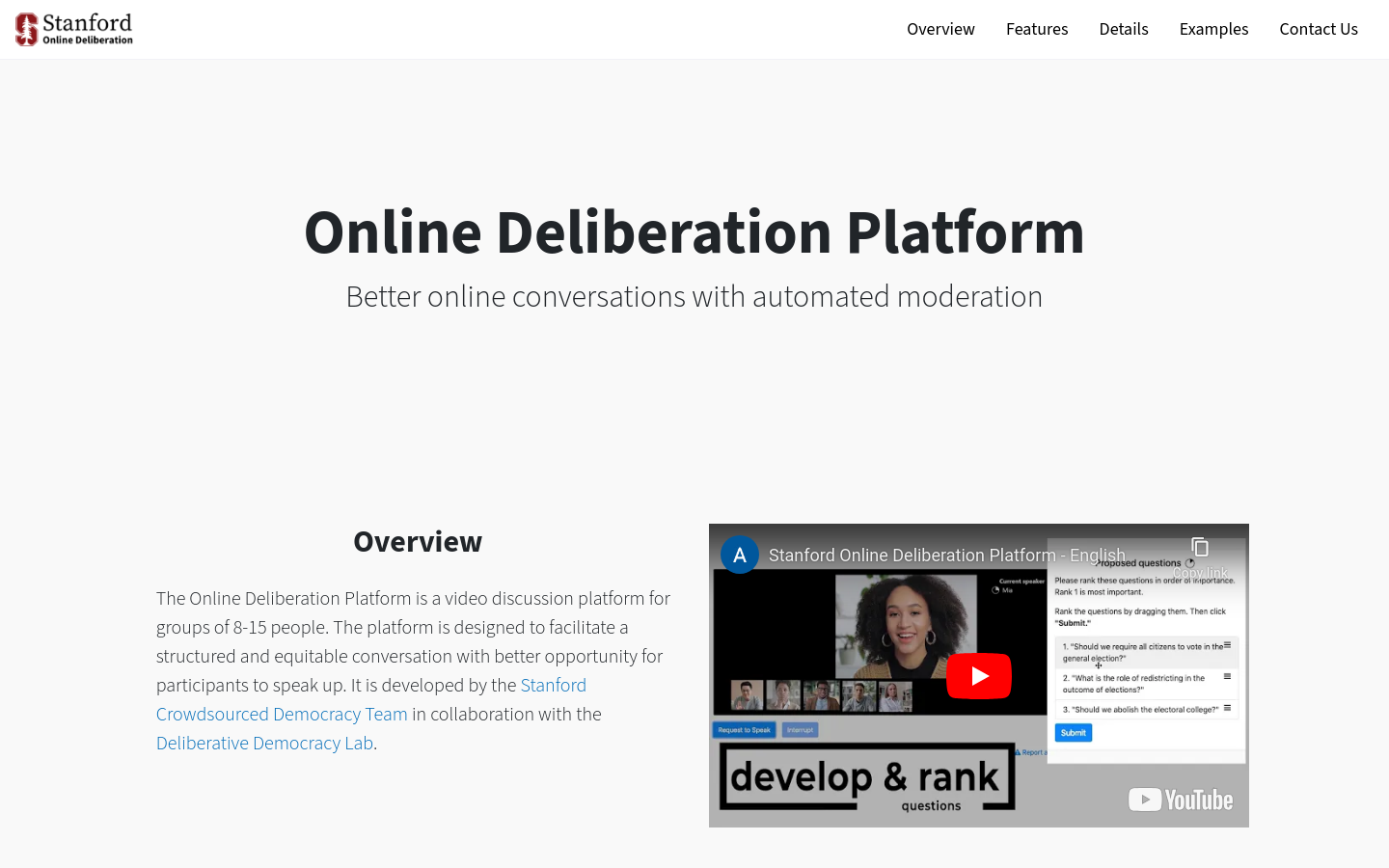
The Online Deliberation Platform is a video discussion platform for groups of 8-15 people.

The Journal of Deliberative Democracy (formerly the Journal of Public Deliberation) is an open access journal publishing articles that shape the course of scholarship on deliberative democracy.

We aim to reframe the conversation about technology and labor towards issues of power, inequality, and social justice, and incorporate themes of feminism, anti-racism, and transnationalism.

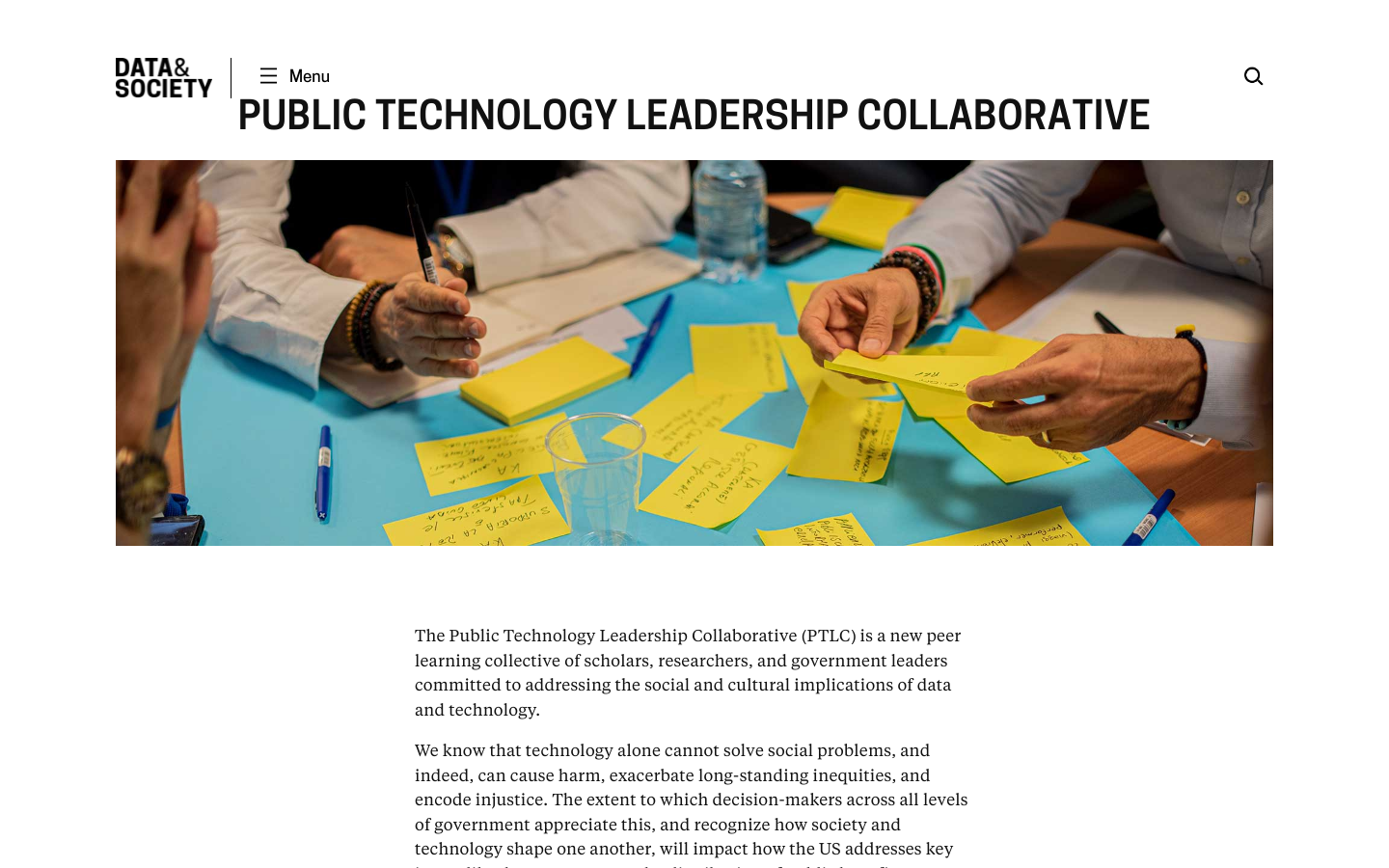
The Public Technology Leadership Collaborative (PTLC) is a new peer learning collective of scholars, researchers, and government leaders committed to addressing the social and cultural implications of data and technology.