Privacy Stack
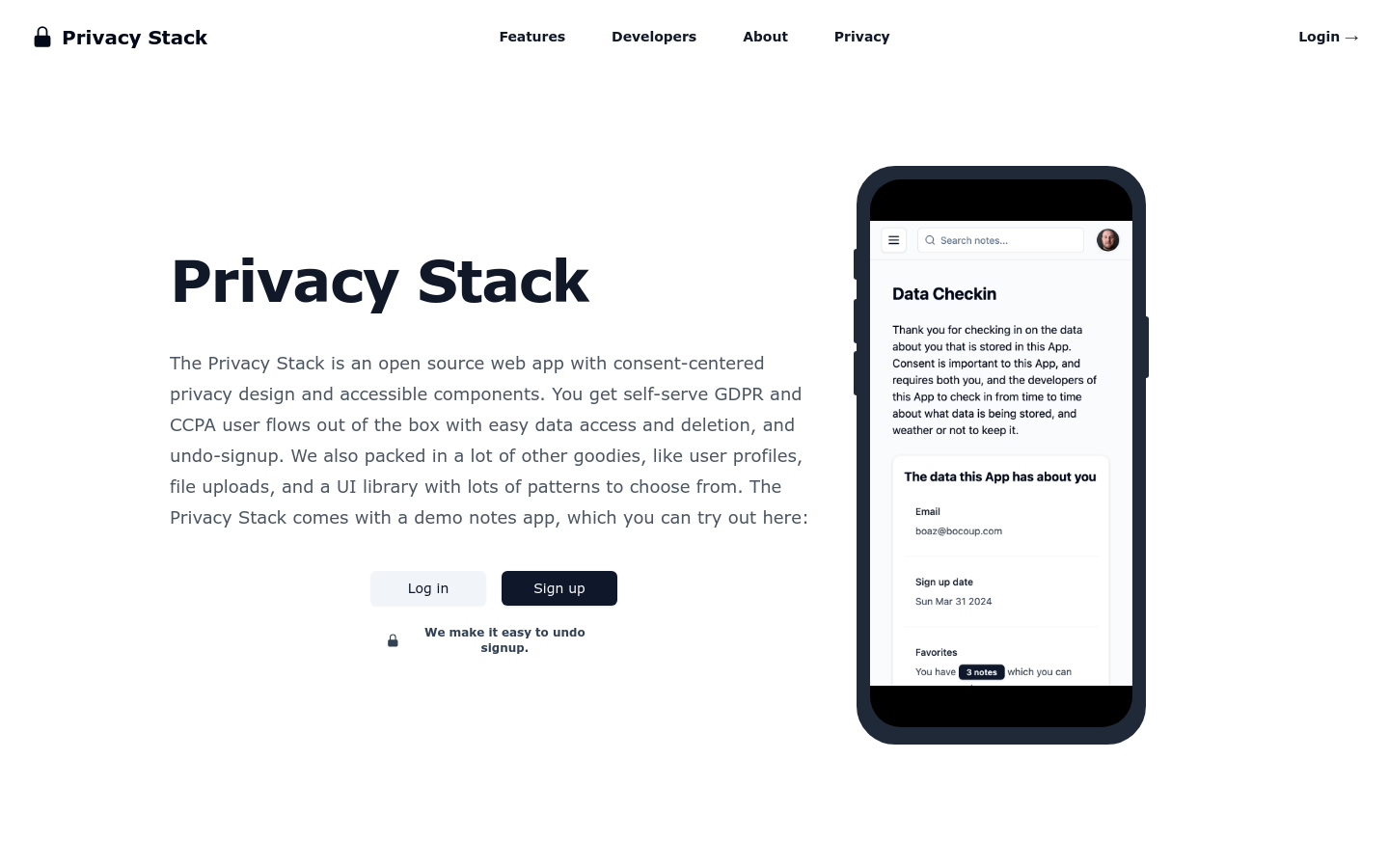
An open source starter app that comes with user accounts that include: data access, do not sell, data deletion, undo sign up, and other features.
Massachusetts
2024

À l'occasion des élections municipales et communautaires des 15 et 22 mars 2026, l'April propose aux personnes candidates de signer le Pacte du Logiciel Libre afin de marquer leur engagement, si elles sont élues, à promouvoir et défendre une priorité aux logiciels libres et aux formats ouverts au sein de leurs collectivités.
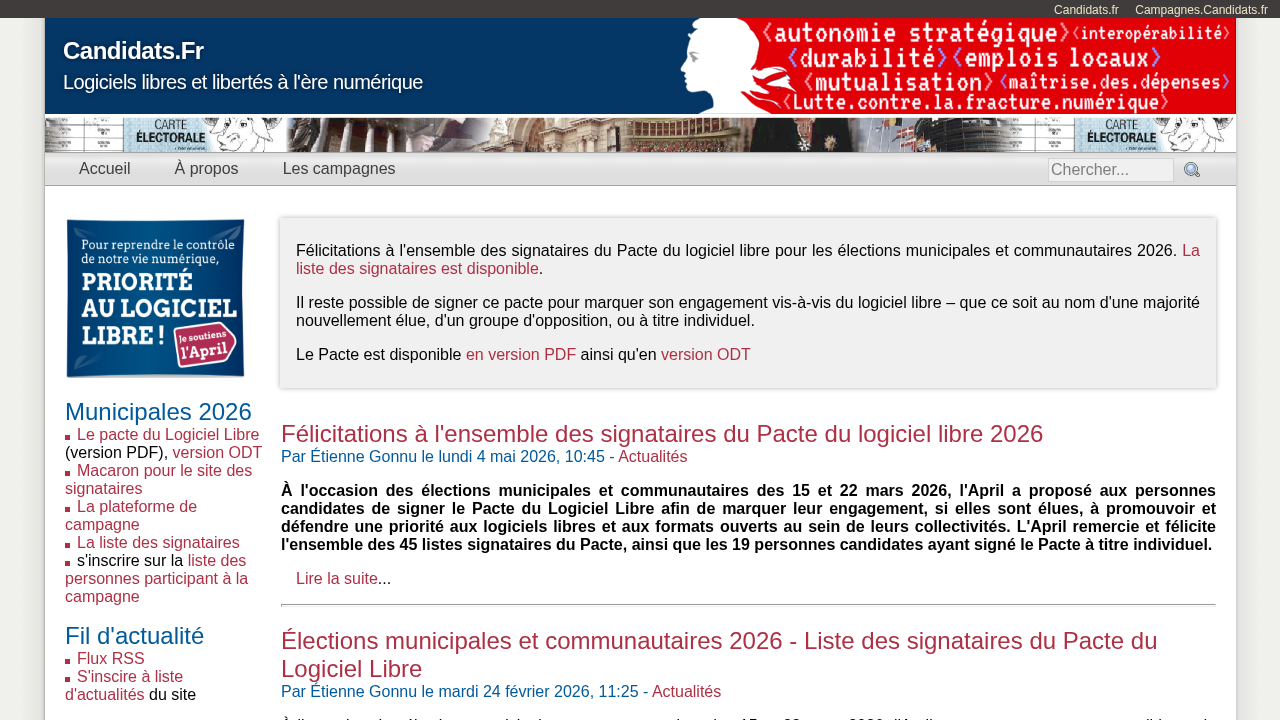
Candidats.Fr Logiciels libres et libertés à l'ère numérique. À l'occasion des élections municipales et communautaires des 15 et 22 mars 2026, l'April a proposé aux personnes candidates de signer le Pacte du Logiciel Libre afin de marquer leur engagement, si elles sont élues, à promouvoir et défendre une priorité aux logiciels libres et aux formats ouverts au sein de leurs collectivités. L'April remercie et félicite l'ensemble des 45 listes signataires du Pacte, ainsi que les 19 personnes candidates ayant signé le Pacte à titre individuel. Il reste possible de signer ce pacte pour marquer son engagement vis-à-vis du logiciel libre – que ce soit au nom d'une majorité nouvellement élue, d'un groupe d'opposition, ou à titre individuel.
An open source starter app that comes with user accounts that include: data access, do not sell, data deletion, undo sign up, and other features.
The Electronic Frontier Alliance is a grassroots network of community and campus organizations across the United States working to educate our neighbors about the importance of digital rights. Organized by EFF.
JAAKLAC iniciativa promueve la educación digital crítica para desarrollar el conocimiento sobre cómo las tecnologías digitales afectan a sociedades, al medioambiente y para ampliar la partcipación colectiva hacia futuros más justos.
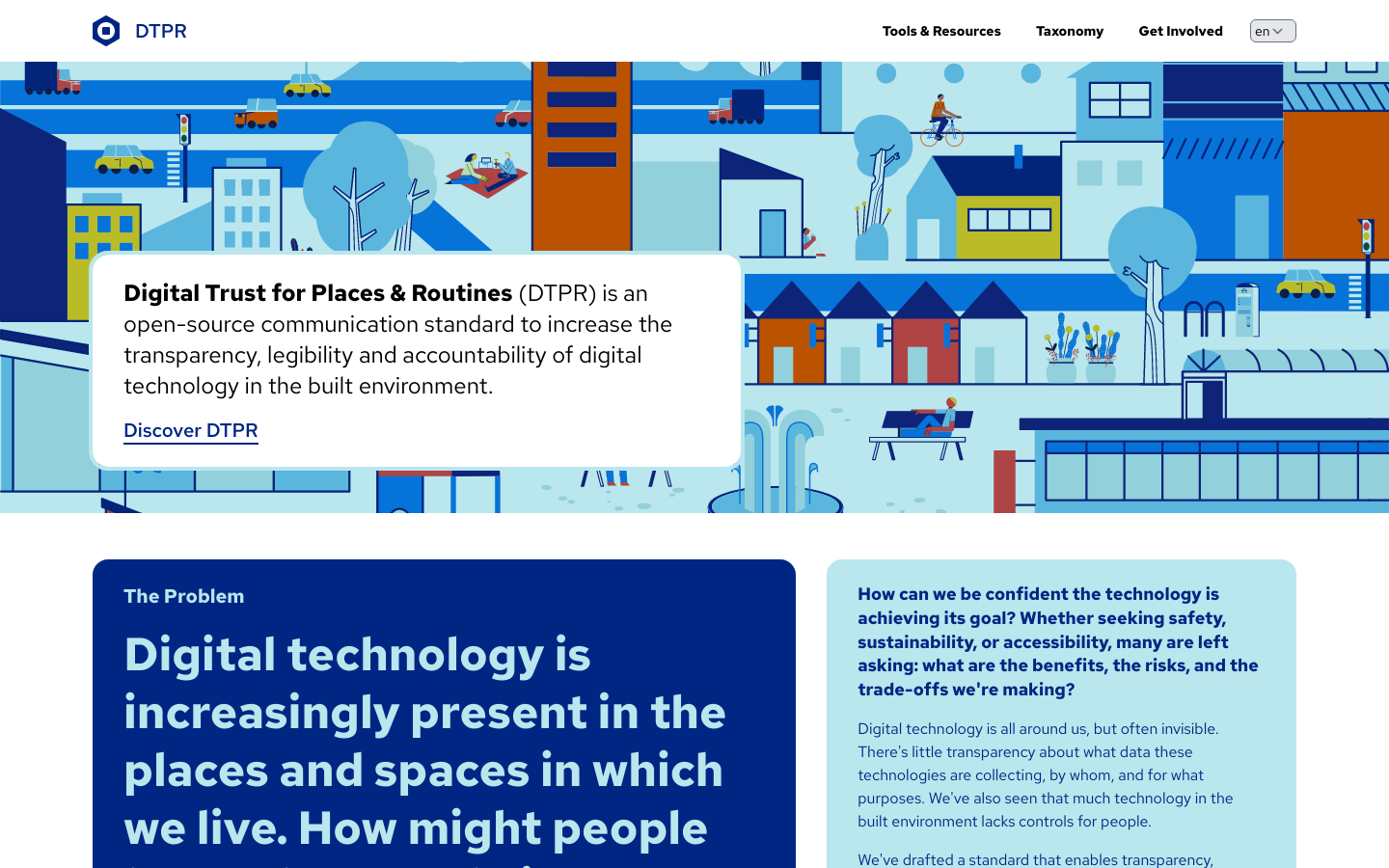
Digital Trust for Places & Routines (DTPR) is an open-source communication standard to increase the transparency, legibility and accountability of digital technology in the built environment.