World Smart City Awards
The World Smart City Awards seek to recognize pioneering projects, ideas and strategies that promote sustainable urban development around the globe.
Barcelona, Spain
2011
city, Sustainable cities and communities

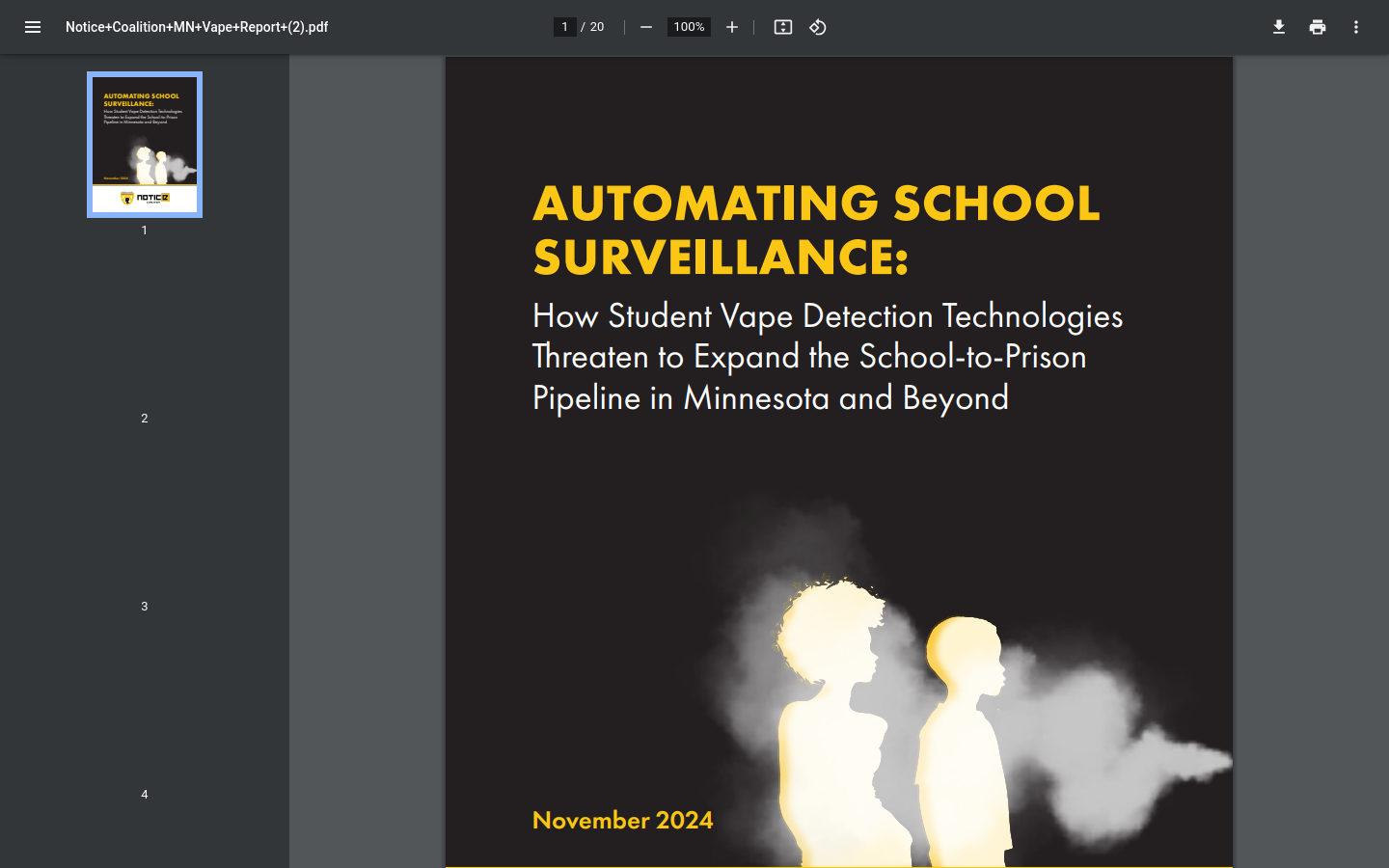
Report by Ending Youth Surveillance and NOTICE Coalition published November 2024
Motivated by more than a decade of school shooting tragedies, policymakers across the United States have made unprecedented investments in school surveillance technologies. School surveillance technologies introduce serious privacy, civil rights, and ethical challenges that directly shape the lives of vulnerable youth and young adults. In this report, we highlight a growing trend in school surveillance across the United States: automated vape detection systems. Schools use automated vape detection sensors to enforce prohibitions on student e-cigarette use. Vape detection technologies use special sensors and complex algorithms to monitor air quality and detect the use of e-cigarette vapors and related prohibited substances. Sensors are often installed in school bathrooms, locker rooms, and other sensitive locations and paired with nearby surveillance cameras to identify students in the vicinity of an alert. Vape sensors generate automatic alerts to school officials, including school-based police, which can result in disciplinary actions against students. Vape detection systems offer a range of controversial add-on surveillance features including speech recognition, “aggression” detection, and facial recognition. Over 1,500 school districts across the United States have purchased vape detection systems.1 In this report, we specifically examine the scope and prevalence of vape detection technologies in Minnesota public schools and offer a socio-technical analysis to better position student activists, parents, educators, advocates and policymakers to understand the potential of this technology to expand the school-to-prison pipeline and systematically violate students’ privacy rights.
Parent organization: No Tech Criminalization in Education (NOTICE)
The World Smart City Awards seek to recognize pioneering projects, ideas and strategies that promote sustainable urban development around the globe.

APPLYING THE BLOOMBERG PHILANTHROPIES APPROACH TO DRIVE INNOVATION IN CITIES
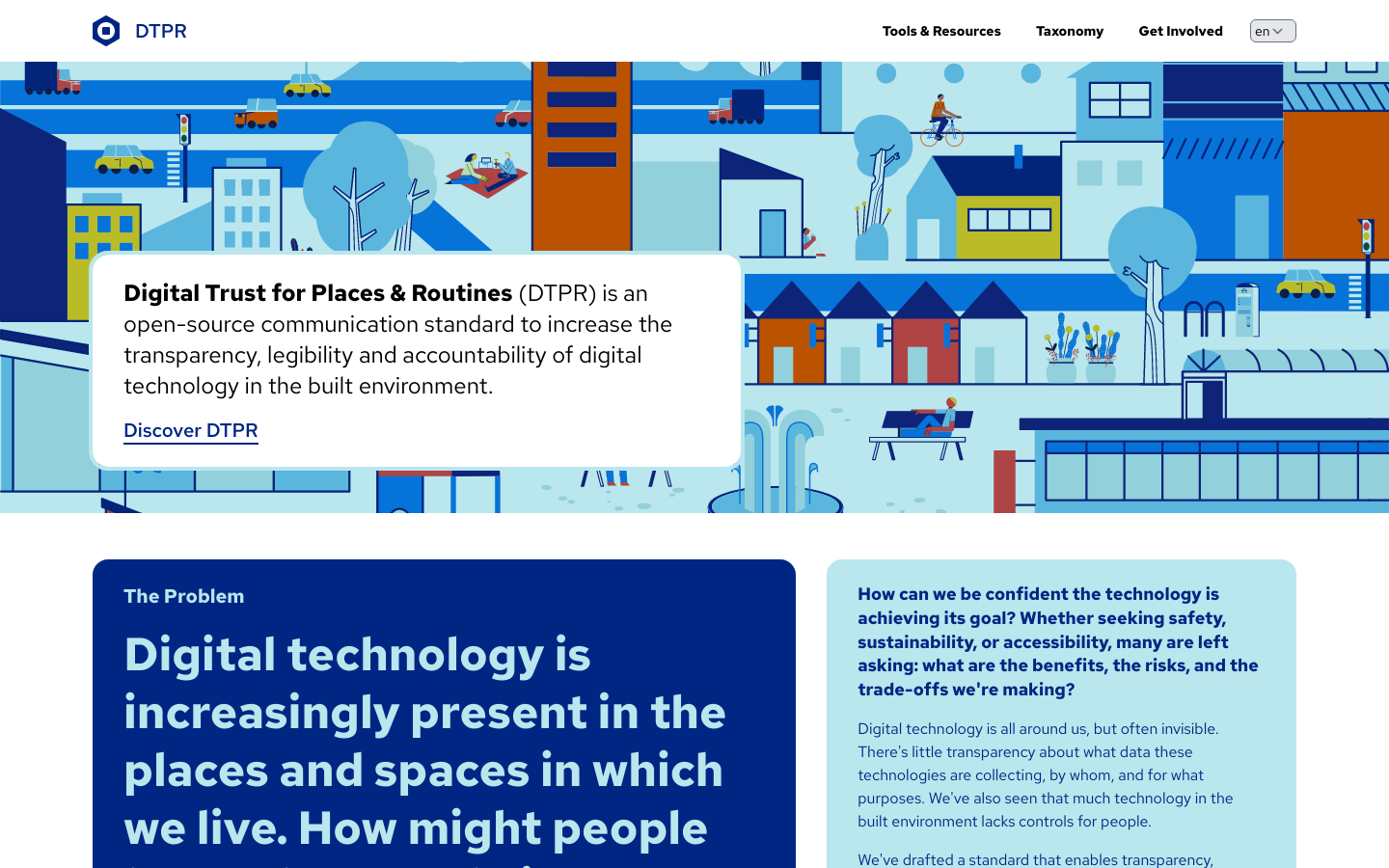
Digital Trust for Places & Routines (DTPR) is an open-source communication standard to increase the transparency, legibility and accountability of digital technology in the built environment.

The certificate in Smart Cities is an interdisciplinary program designed for working or aspiring professionals and upper-level students interested in expanding their knowledge-base in the fields of emerging urban technologies, data science, sustainable design, and public-private partnerships.