Governance of Emerging Technology and Tech Innovations for Next-Gen Governance (GETTING-Plurality)
A multi-disciplinary research network linking philosophers, social scientists, computer scientists, legal scholars, and technologists.
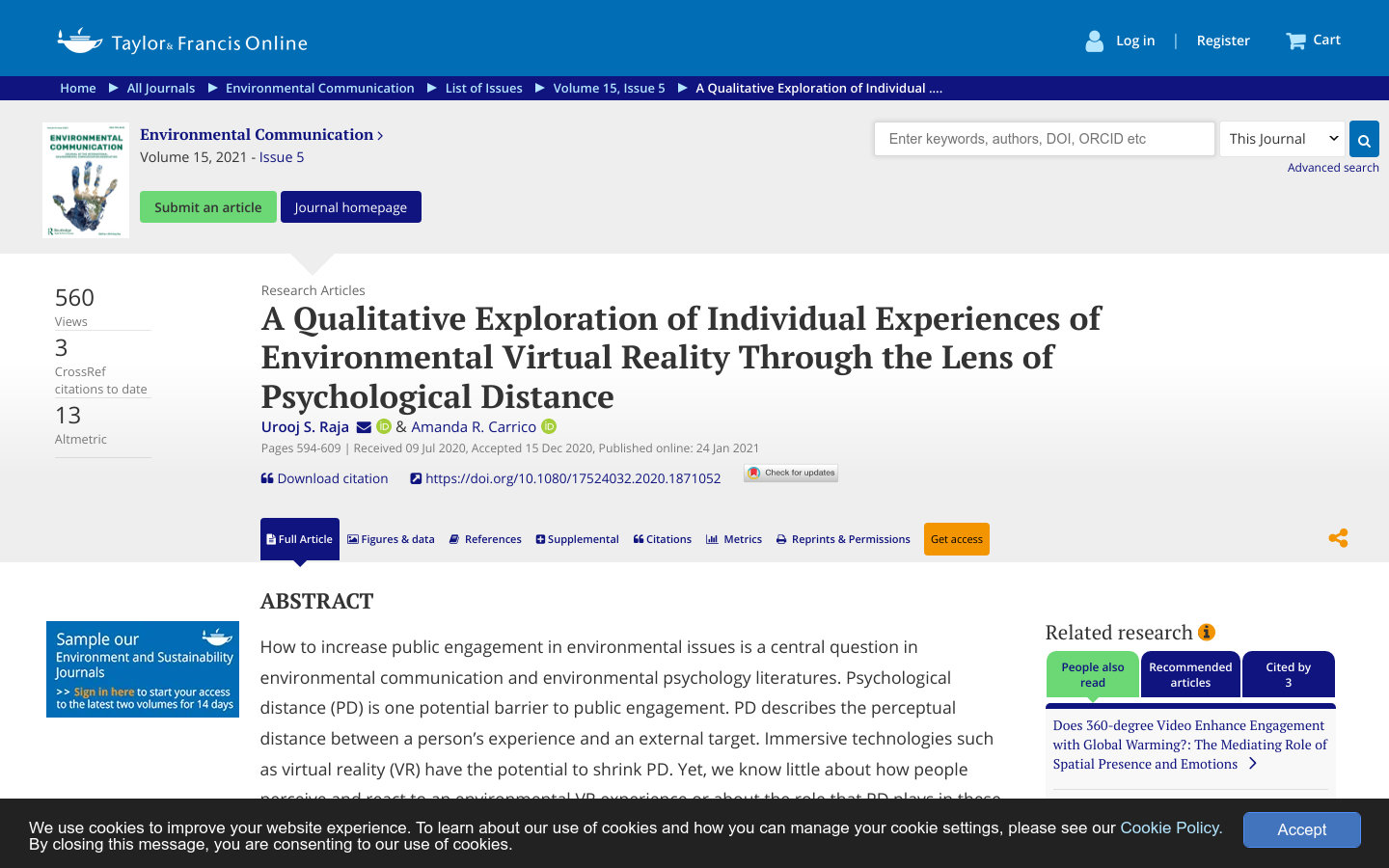
How to increase public engagement in environmental issues is a central question in environmental communication and environmental psychology literatures.
Psychological distance (PD) is one potential barrier to public engagement. PD describes the perceptual distance between a person’s experience and an external target. Immersive technologies such as virtual reality (VR) have the potential to shrink PD. Yet, we know little about how people perceive and react to an environmental VR experience or about the role that PD plays in these reactions. To address this gap, we use interviews and focus groups to examine how people react to a VR experience about ocean acidification. We find that PD is prevalent in the reactions of VR users, especially first-time users, and that 62% of participants described feeling psychologically close to ocean acidification.

A multi-disciplinary research network linking philosophers, social scientists, computer scientists, legal scholars, and technologists.
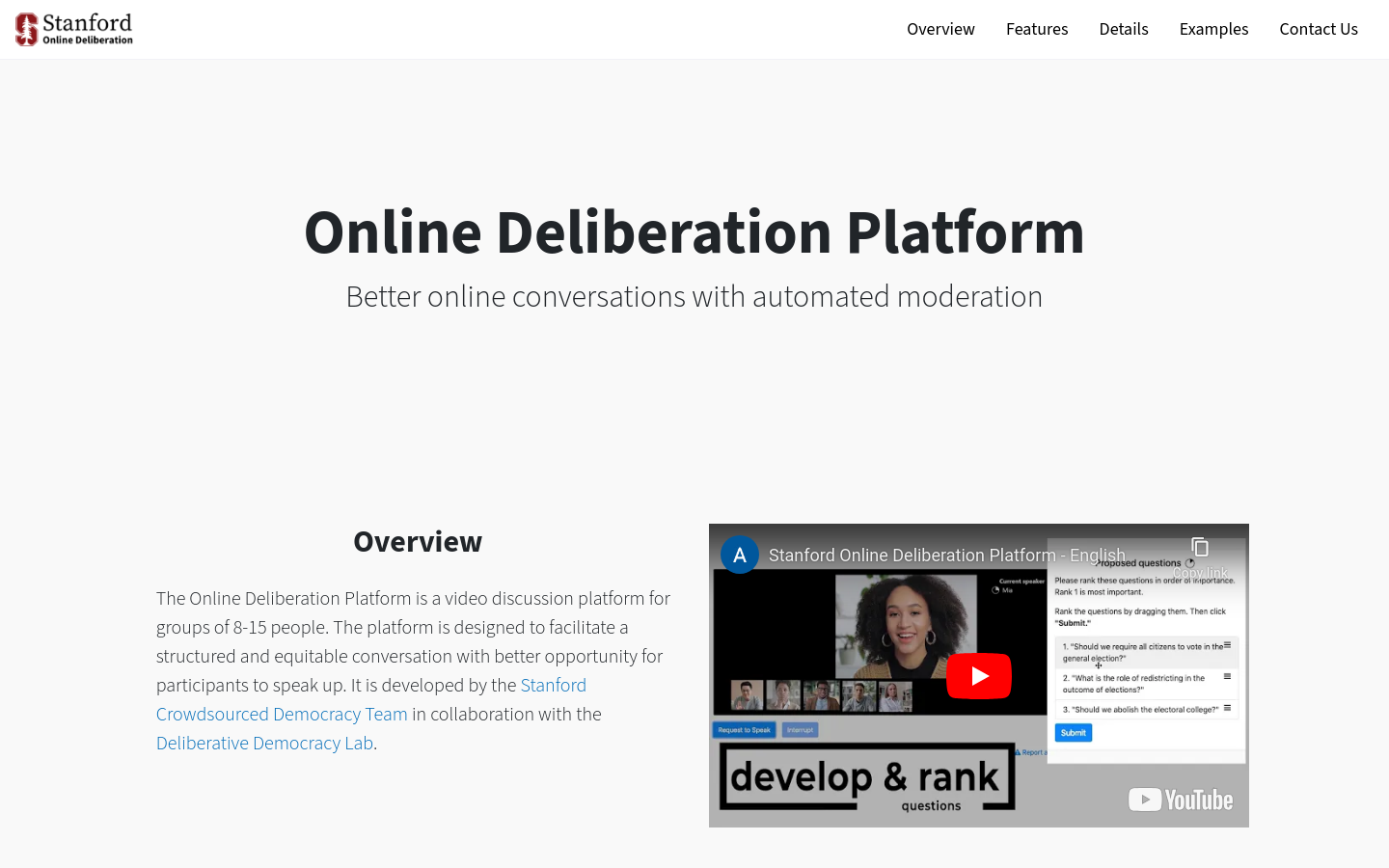
The Online Deliberation Platform is a video discussion platform for groups of 8-15 people.

The Journal of Deliberative Democracy (formerly the Journal of Public Deliberation) is an open access journal publishing articles that shape the course of scholarship on deliberative democracy.

We aim to reframe the conversation about technology and labor towards issues of power, inequality, and social justice, and incorporate themes of feminism, anti-racism, and transnationalism.

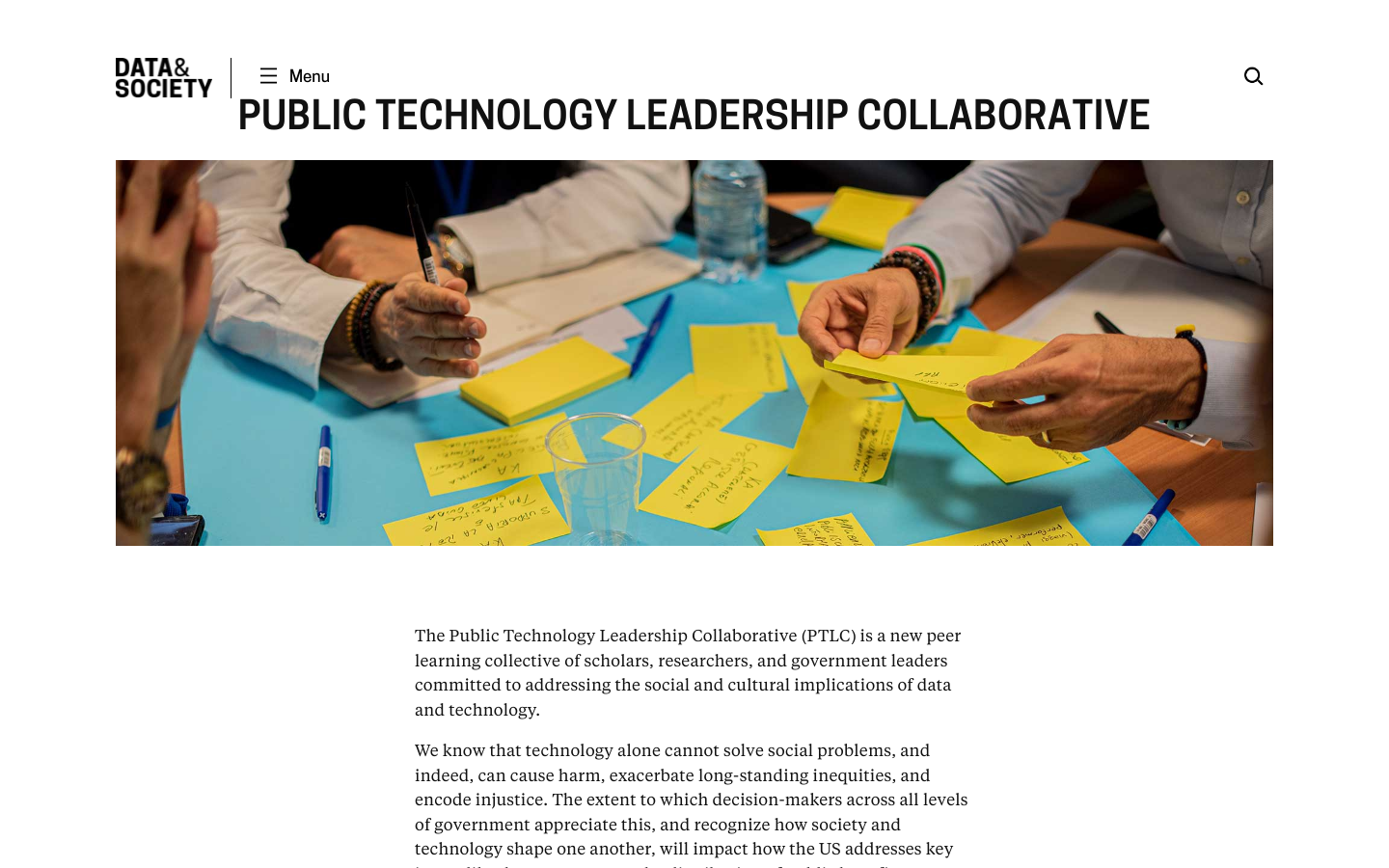
The Public Technology Leadership Collaborative (PTLC) is a new peer learning collective of scholars, researchers, and government leaders committed to addressing the social and cultural implications of data and technology.