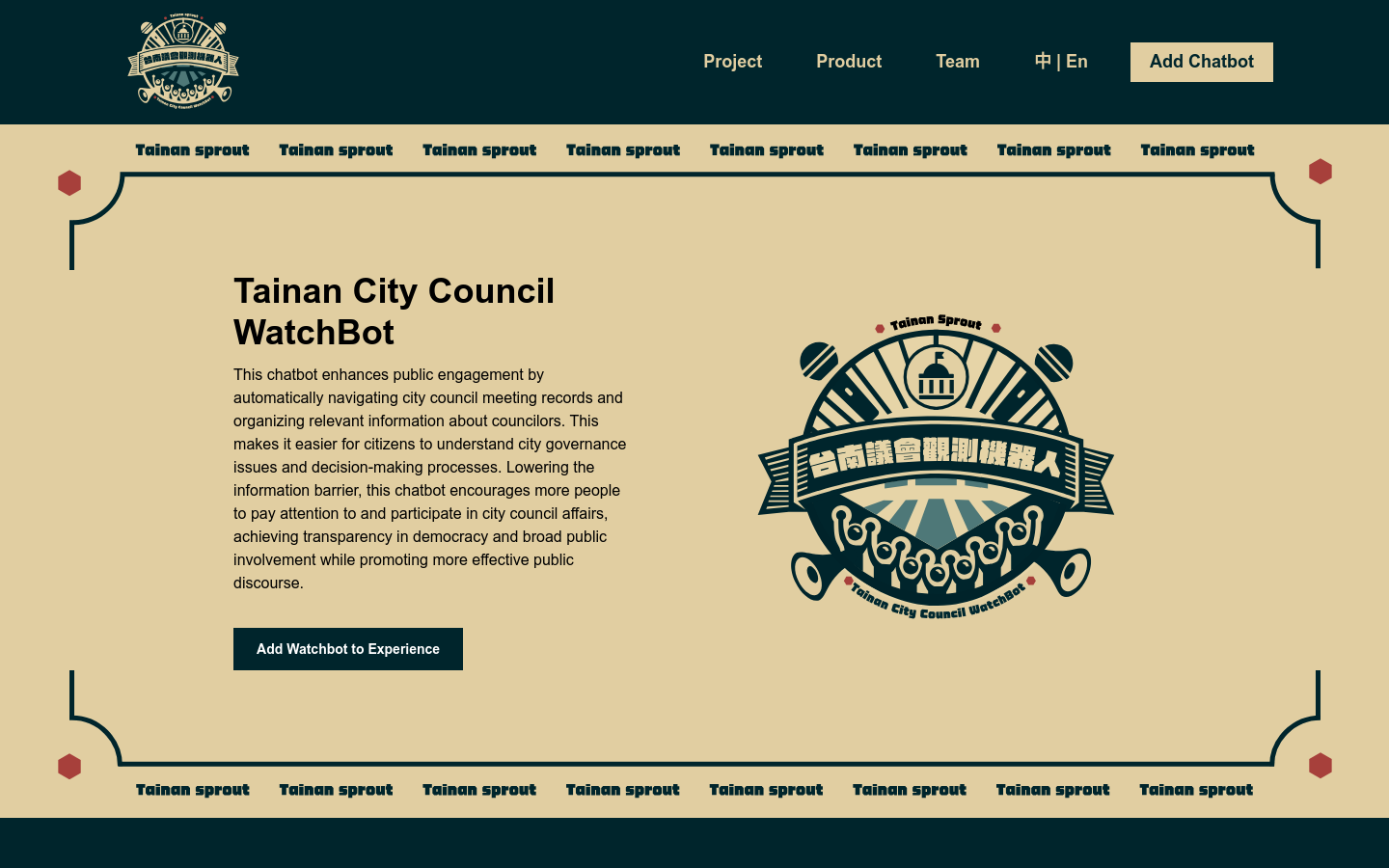
Tainan City Council Watchbot
Line chatbot to help people interact with and understand Tainan City Council data. Users can ask in Mandarin, Taiwanese, English or by voice.
Tainan City

Shira Eve Epstein provides the best practical guide for teachers who want their students to confront social problems.” —Peter Levine, Lincoln Filene Professor of Citizenship & Public Affairs, Tufts University
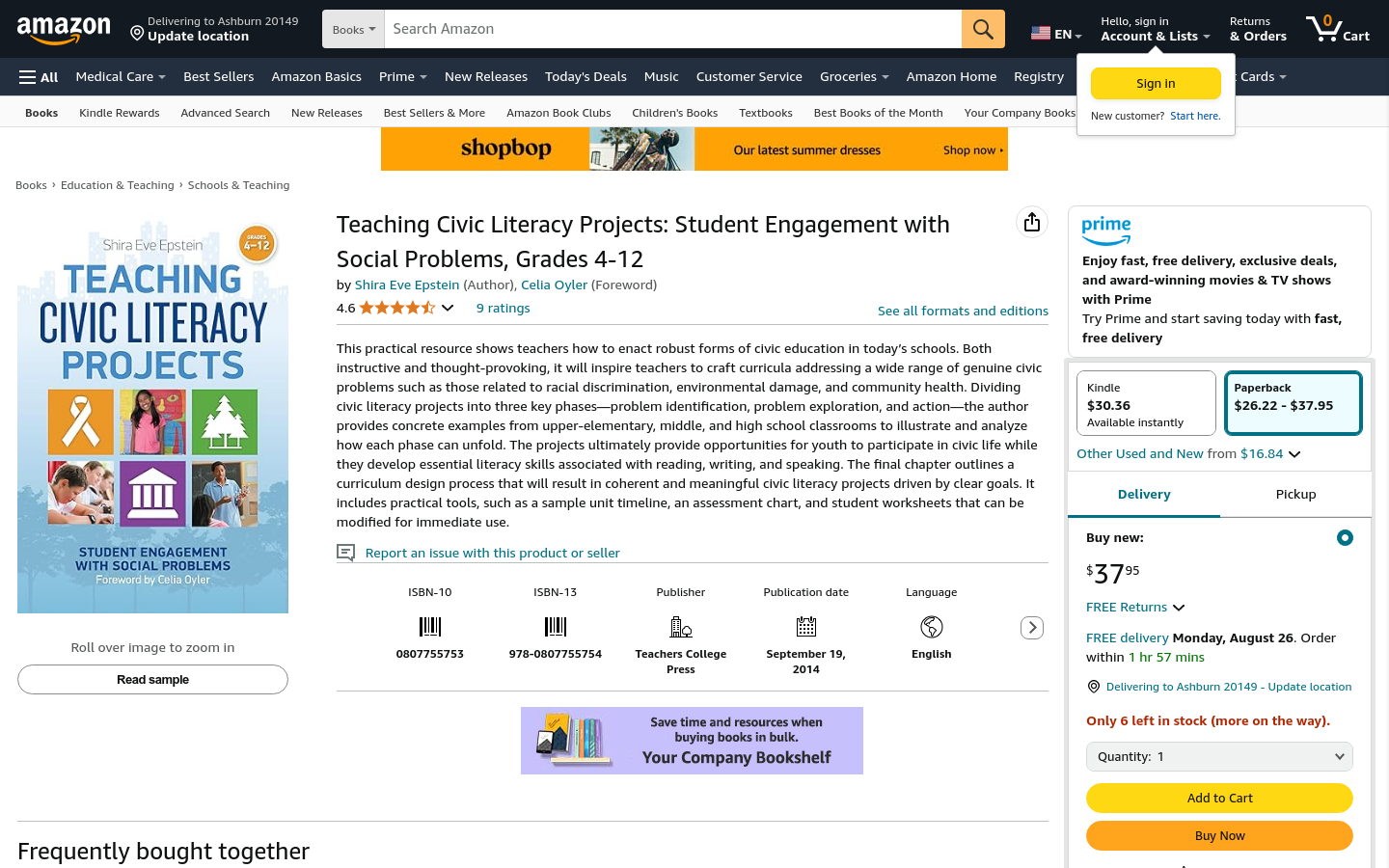
This practical resource shows teachers how to enact robust forms of civic education in today’s schools. Both instructive and thought-provoking, it will inspire teachers to craft curricula addressing a wide range of genuine civic problems such as those related to racial discrimination, environmental damage, and community health. Dividing civic literacy projects into three key phases—problem identification, problem exploration, and action—the author provides concrete examples from upper-elementary, middle, and high school classrooms to illustrate and analyze how each phase can unfold. The projects ultimately provide opportunities for youth to participate in civic life while they develop essential literacy skills associated with reading, writing, and speaking. The final chapter outlines a curriculum design process that will result in coherent and meaningful civic literacy projects driven by clear goals. It includes practical tools, such as a sample unit timeline, an assessment chart, and student worksheets that can be modified for immediate use. “Shira’s work offers us a reflection of democratic practice in the classroom through the teaching of critical reading, persuasive writing, and deliberation. In Teaching Civic Literacy Projects,Shira invites us all to contemplate the depth of the democratic project and the possibility that schools can help uphold our democratic ideals.” —From the Foreword by Celia Oyler, professor, Teachers College, Columbia University. “This book is a gem! Shira Epstein has provided invaluable assistance for teachers interested in engaging their students in the political and civic spheres in ways that build crucial literacy skills. The combination of a powerful framework and rich and detailed case studies provides readers with a clear vision and helpful, specific guidance for creating robust civic learning experiences for young people.” —Diana Hess, senior vice-president, Spencer Foundation and professor, University of Wisconsin–Madison “Excellent civic education means encouraging young people to identify and define problems and take action. That is challenging in our era of political polarization and narrow definitions of education. Shira Eve Epstein provides the best practical guide for teachers who want their students to confront social problems.” —Peter Levine, Lincoln Filene Professor of Citizenship & Public Affairs, Tufts University
Shira Eve Epstein
Line chatbot to help people interact with and understand Tainan City Council data. Users can ask in Mandarin, Taiwanese, English or by voice.
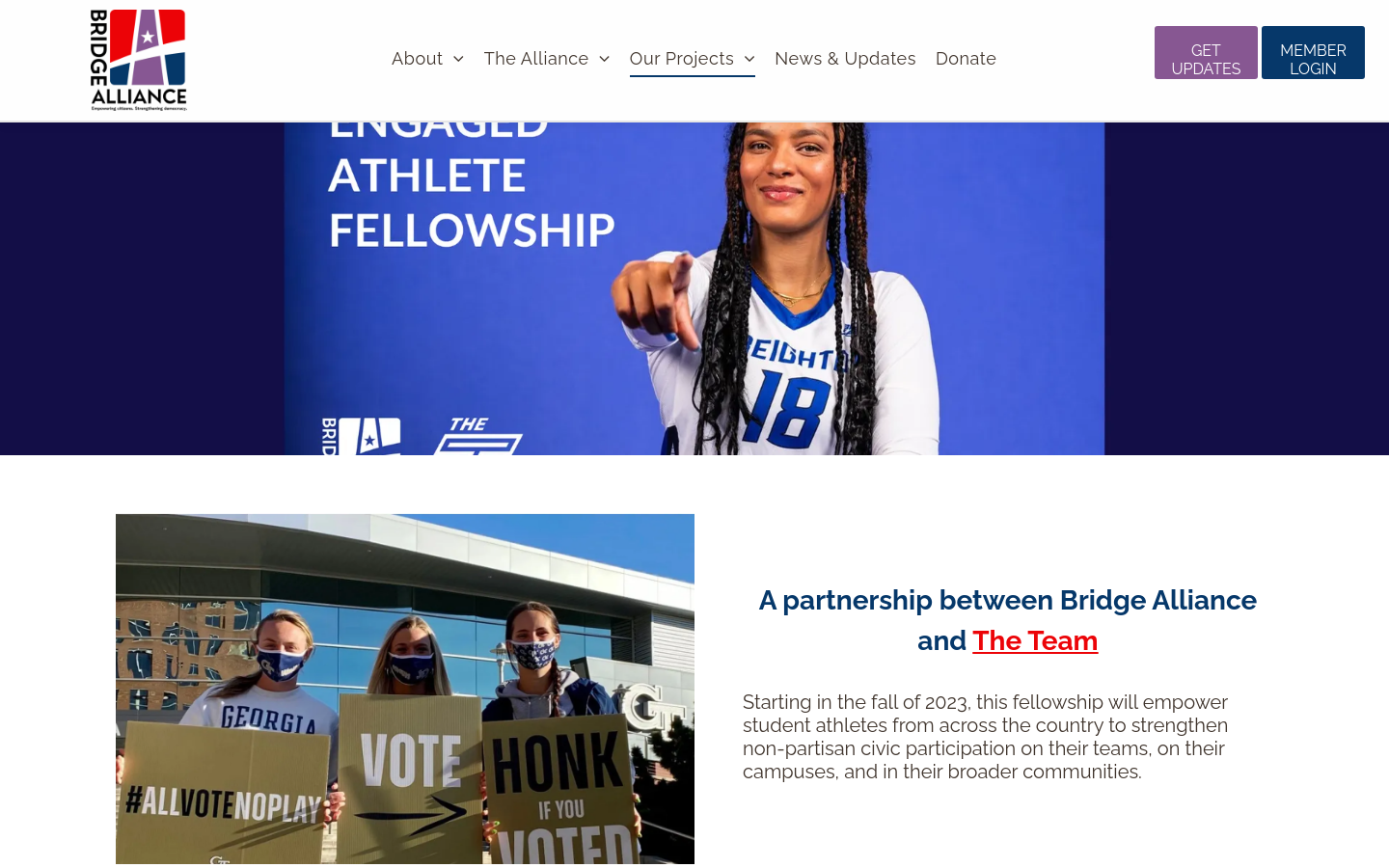
Starting in the fall of 2023, this fellowship will empower student athletes from across the country to strengthen non-partisan civic participation on their teams, on their campuses, and in their broader communities.
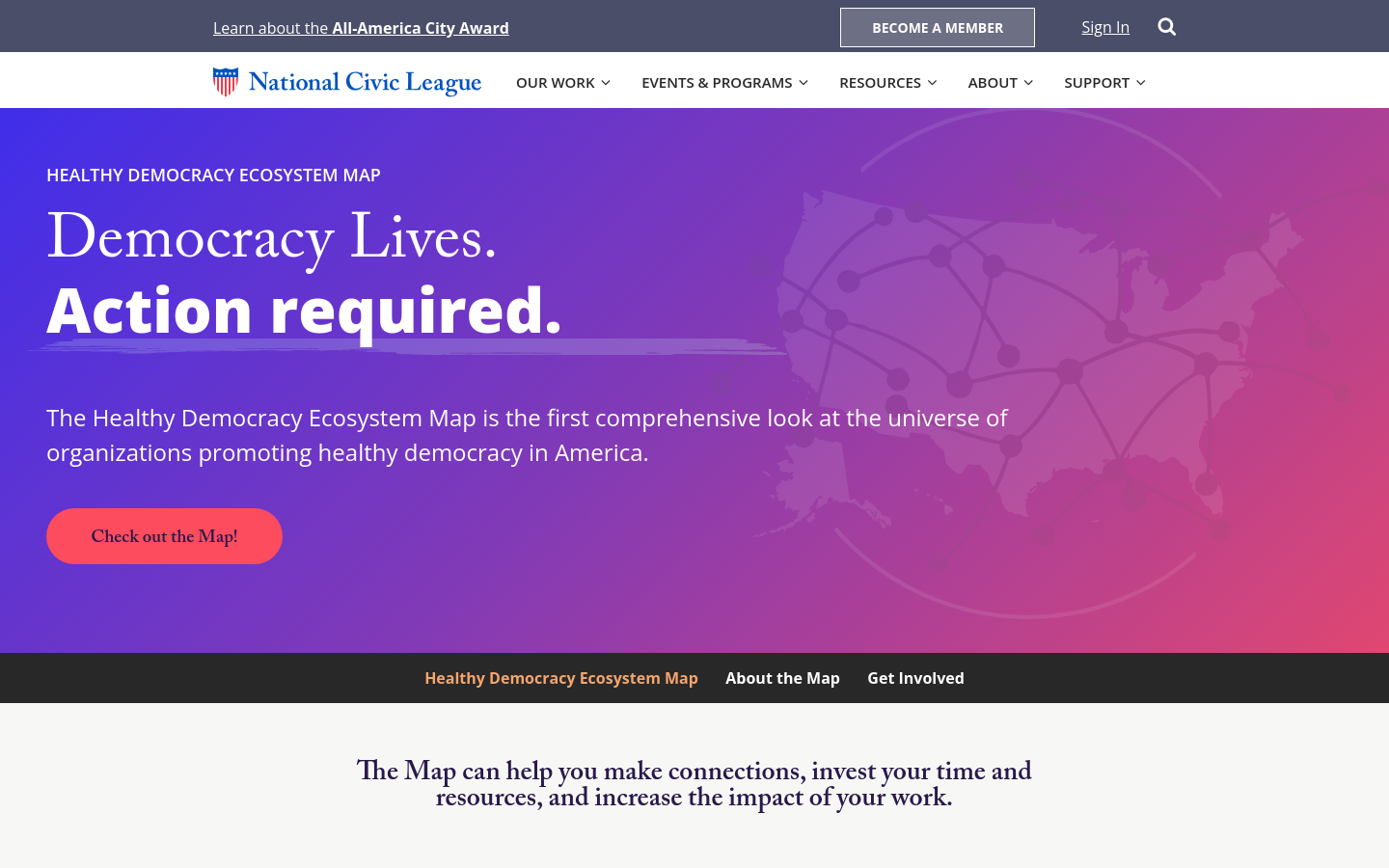
Our goal is to identify, categorize, and quantify existing organizations, networks, and funders who work to promote and protect healthy democracy in America. We aim to create a compelling, interactive resource that educates and empowers users to engage in democracy.
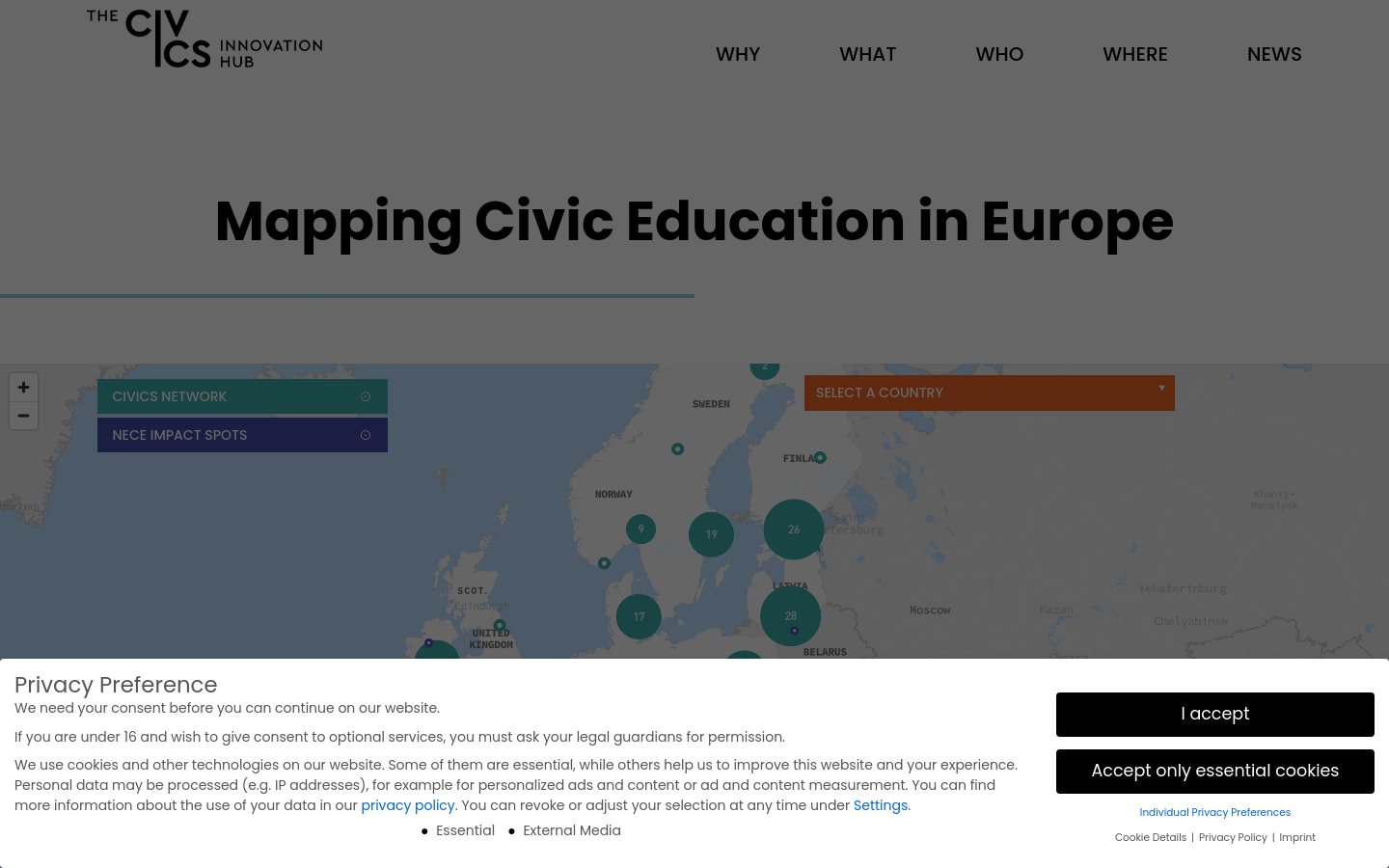
Our Mapping Civic Education in Europe programme is a dynamic initiative continuously evolving by adding new countries to the first-ever pan-European virtual map of civic educators.