Datasphere Fellowship Program
The Datasphere Initiative Fellowship Program provides an opportunity for graduate students and young professionals to work on novel research and dialogue related to data governance.
Geneva, Switzerland
2021

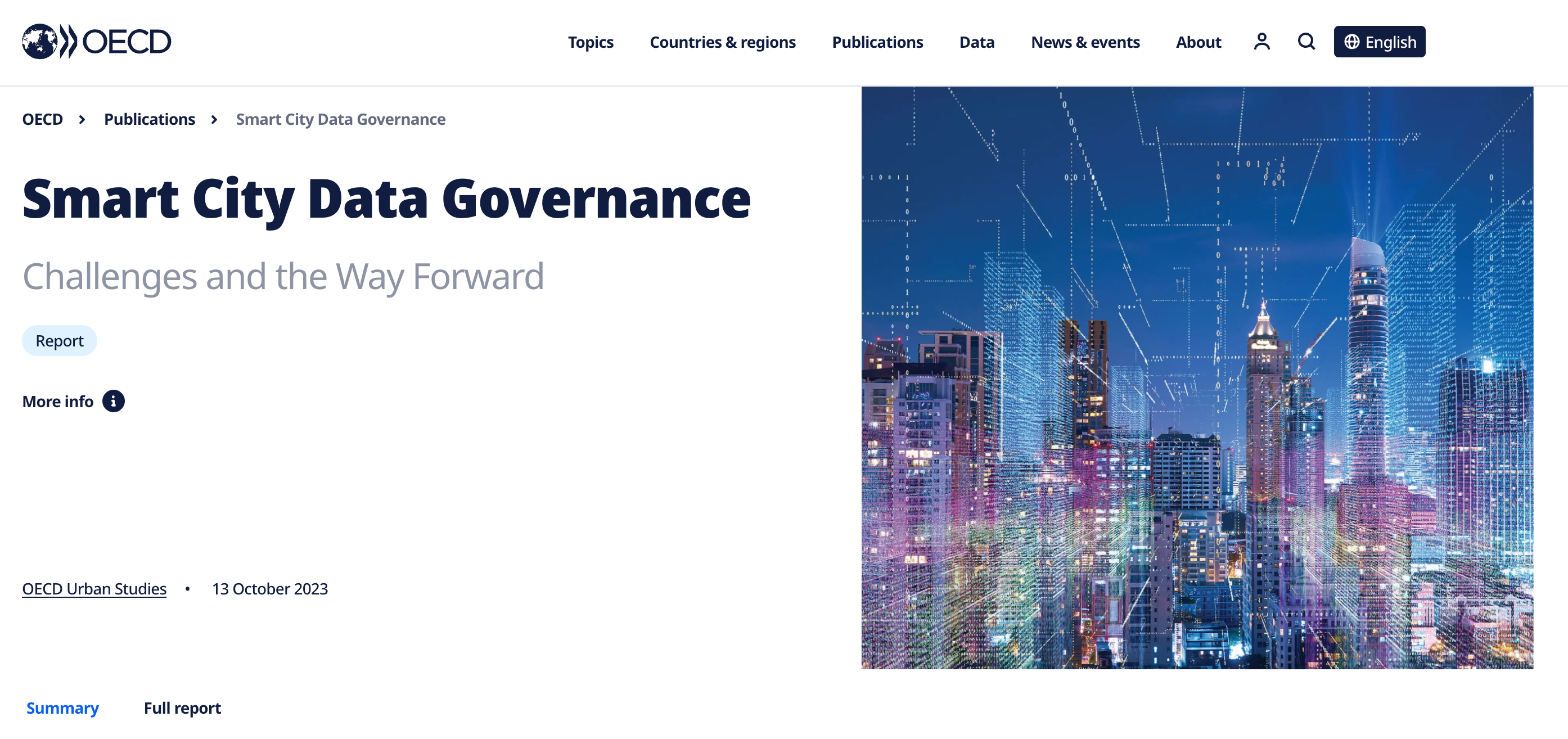
Key trends in smart city data governance
Smart cities leverage technologies, in particular digital, to generate a vast amount of real-time data to inform policy- and decision-making for an efficient and effective public service delivery. Their success largely depends on the availability and effective use of data. However, the amount of data generated is growing more rapidly than governments’ capacity to store and process them, and the growing number of stakeholders involved in data production, analysis and storage pushes cities data management capacity to the limit. Despite the wide range of local and national initiatives to enhance smart city data governance, urban data is still a challenge for national and city governments due to: insufficient financial resources; lack of business models for financing and refinancing of data collection; limited access to skilled experts; the lack of full compliance with the national legislation on data sharing and protection; and data and security risks. Facing these challenges is essential to managing and sharing data sensibly if cities are to boost citizens’ well-being and promote sustainable environments.
The Datasphere Initiative Fellowship Program provides an opportunity for graduate students and young professionals to work on novel research and dialogue related to data governance.

A card game that helps organizations and communities explore governance around a shared codebase, whether hypothetical or in a real-world collaboration.
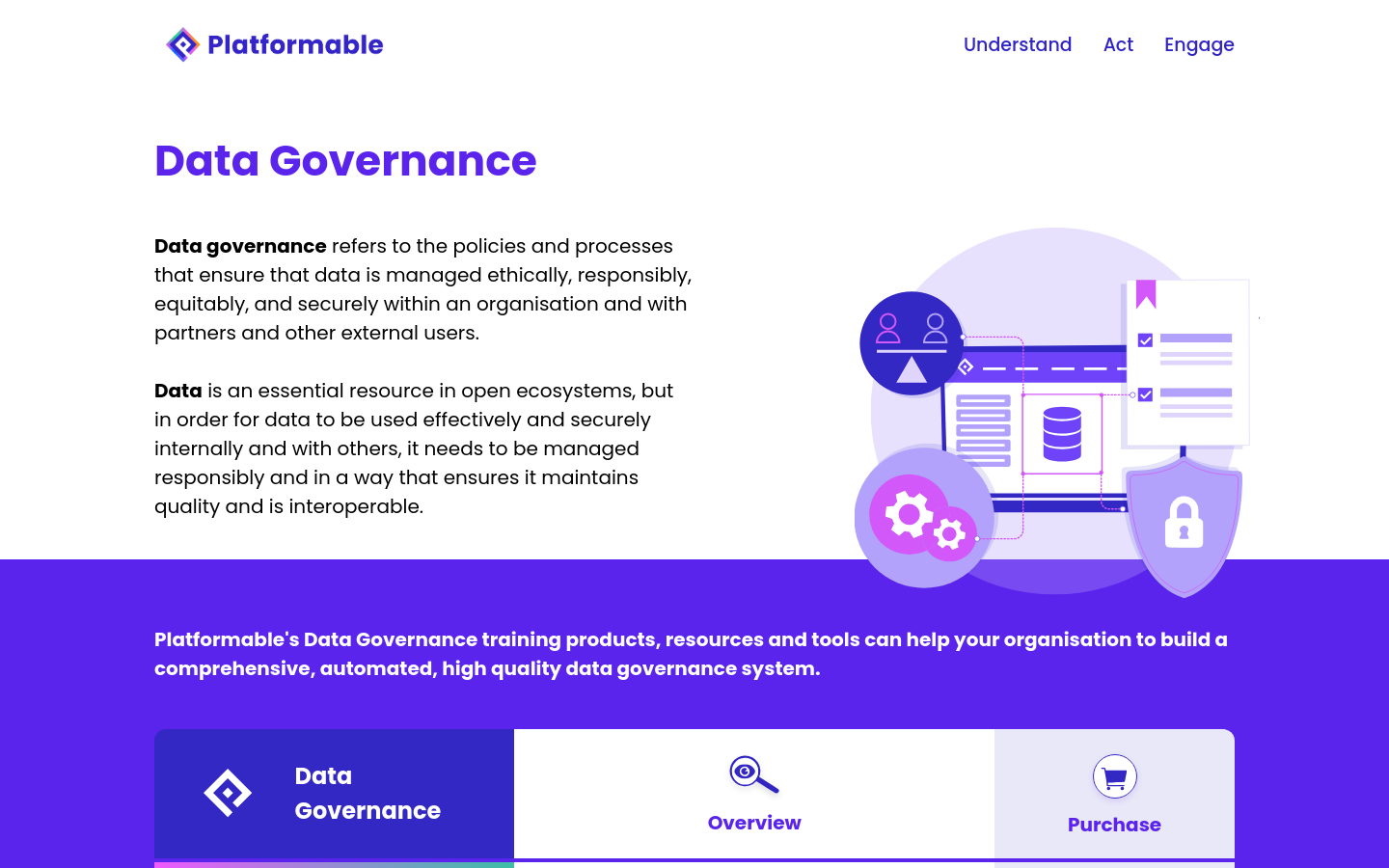
Platformable's Data Governance training products, resources and tools can help your organisation to build a comprehensive, automated, high quality data governance system.
Ranking of countries by their open government data governance processes