Digital Freedom Fund Grants
The Digital Freedom Fund supports strategic litigation on digital rights in Europe that contributes to advancing human rights in the digital context.
Yet, the growing role of social media in everyday life has raised challenging questions about privacy, advertising, and the effect on young people that are addressed in this book.
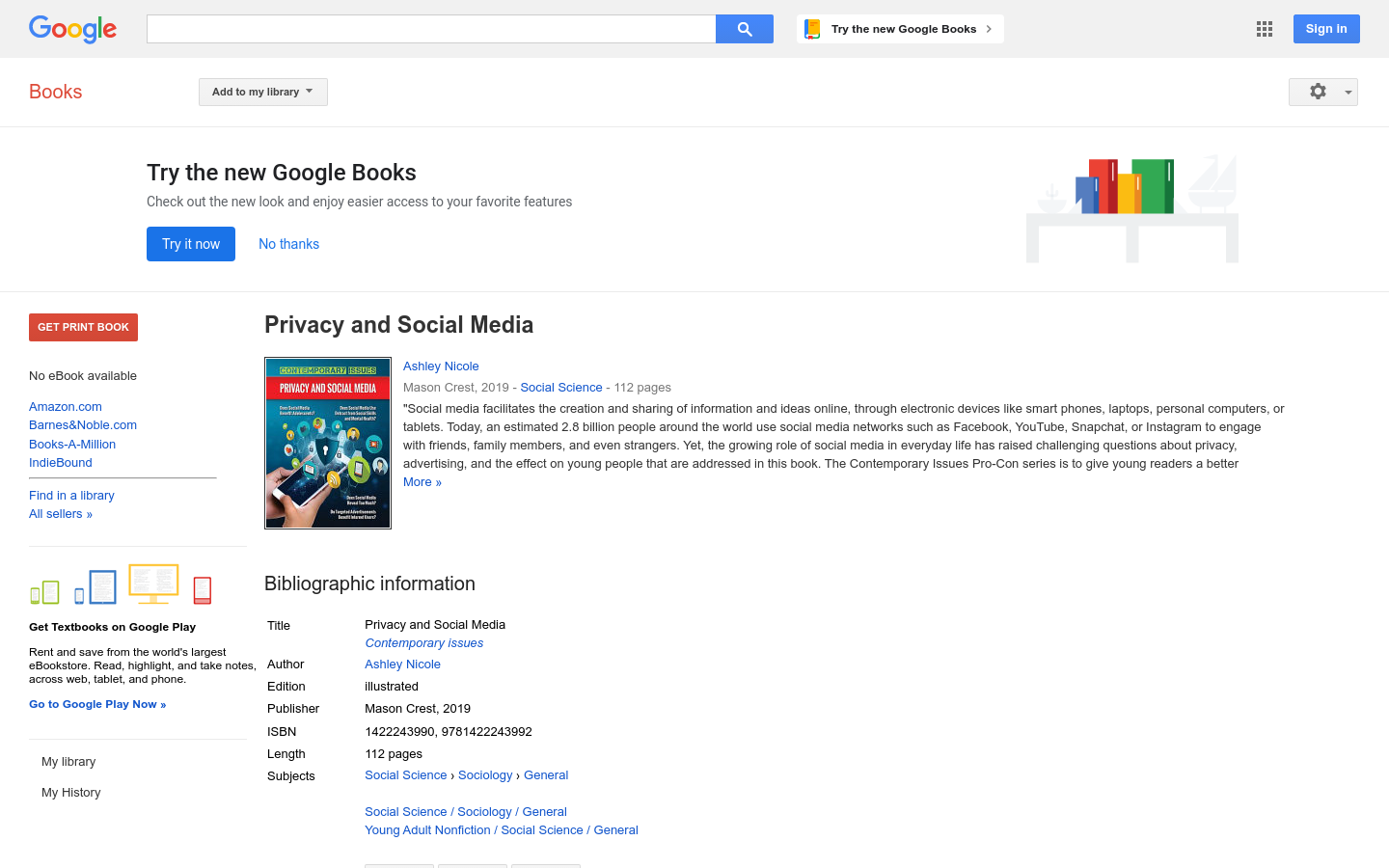
"Social media facilitates the creation and sharing of information and ideas online, through electronic devices like smart phones, laptops, personal computers, or tablets. Today, an estimated 2.8 billion people around the world use social media networks such as Facebook, YouTube, Snapchat, or Instagram to engage with friends, family members, and even strangers. Yet, the growing role of social media in everyday life has raised challenging questions about privacy, advertising, and the effect on young people that are addressed in this book. The Contemporary Issues Pro-Con series is to give young readers a better understanding of major social issues today. Each book examines four key questions related to a controversial topic, with essays that detail the most commonly heard arguments on both sides of the discussion. The arguments contained within are supported by data from experts as well as nonpartisan reports, allowing to reader to make his or her own informed decision on the issue"--Back cover.
Ashley Nicole

The Digital Freedom Fund supports strategic litigation on digital rights in Europe that contributes to advancing human rights in the digital context.

an open-source tool that allows individuals and organizations to centralize and manage reports sent by Tella users, including photos, videos and audios

The Digital Trade Alliance is a collaborative effort of digital rights and consumer groups assembled in 2018. The Alliance model provides effective advice and expertise to us in order to structure the transnational debate on digital trade.

A commitment to make digital technologies work for, not against, democracy and human rights. It underlines the joint responsibility of governments, multilateral organizations, civil society, and technology companies to develop and use digital technologies to the benefit of democracy and human rights.