SSRC Media Well
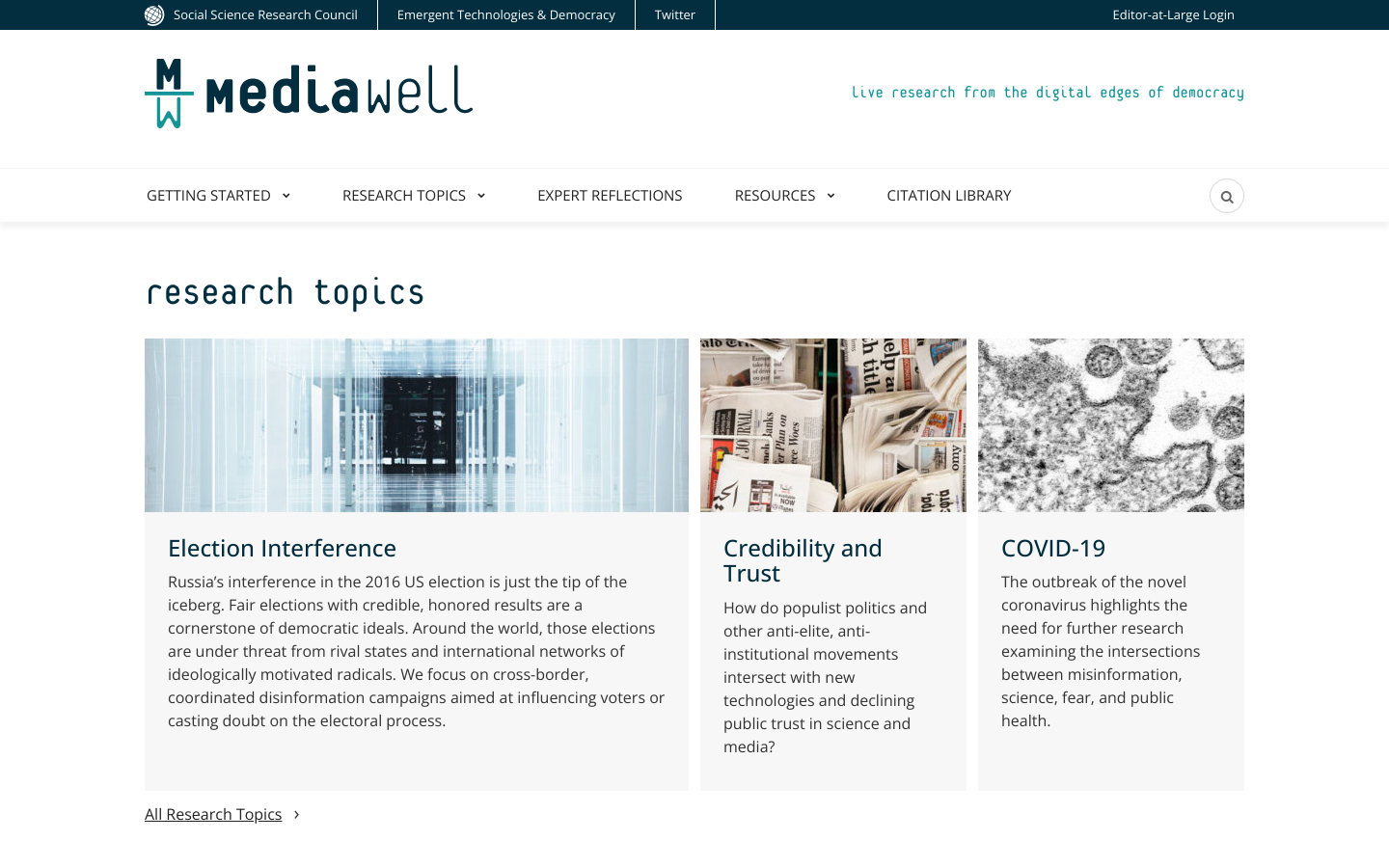
Disinformation, misinformation, and “fake news” are longstanding phenomena that, in the wake of the digital revolution, have become newly politicized and consequential. SSRC's research on the topic.
Brooklyn, NY

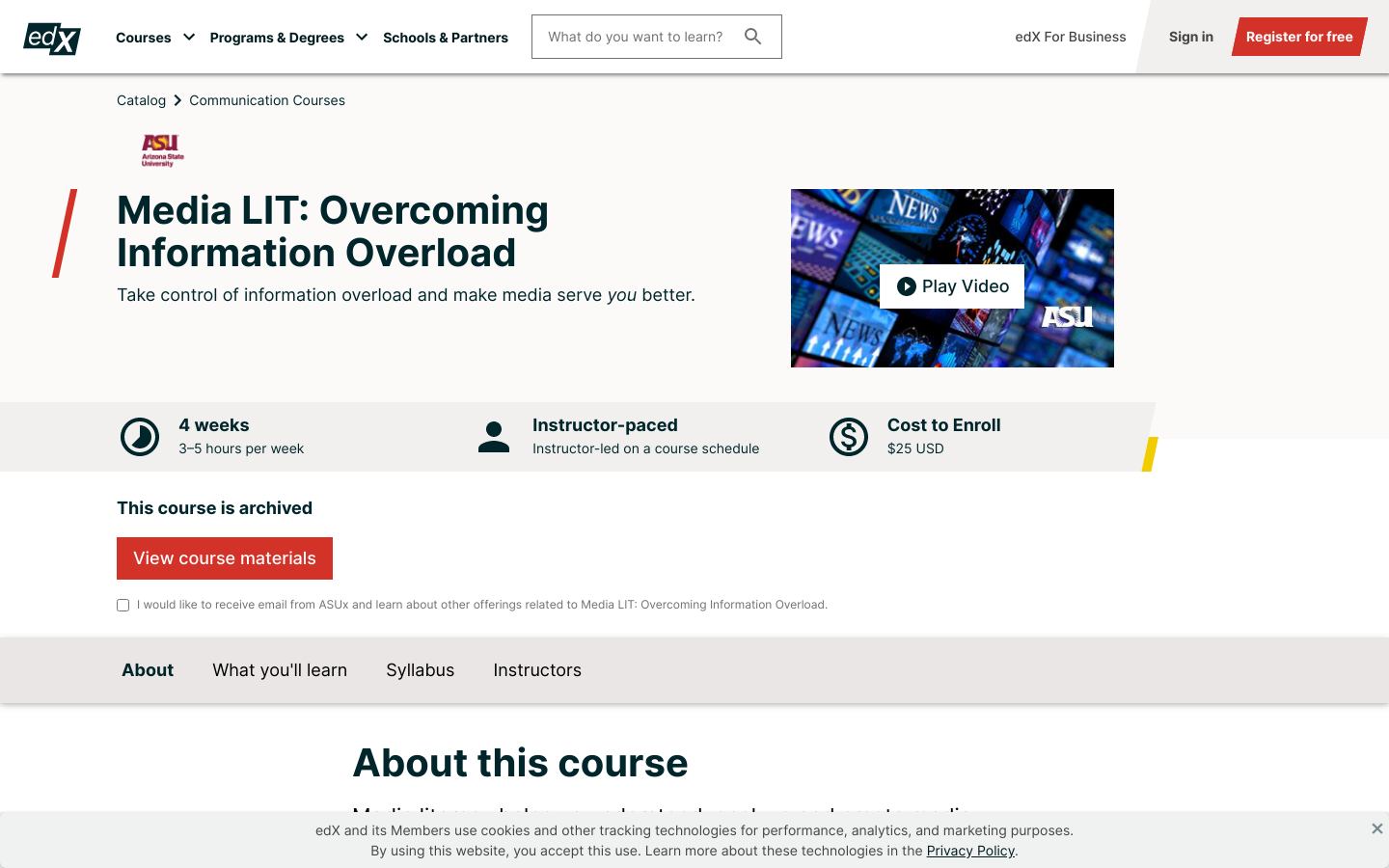
EDx course on media literacy. It helps us understand, analyze and create media.
While we rely on good journalism to provide accurate information, we also have responsibilities of our own in this media-saturated environment. We can no longer be passive consumers of media. We need to be active users of media, as readers, listeners, viewers and creators, so we are all better informed. Our goal is to help you do just that. In this course, you'll hear from some amazing folks who are part, or keen observers, of the news industry—including, among many others, Wikipedia's Jimmy Wales, craigslist founder Craig Newmark, New York Times Public Editor Margaret Sullivan, and Buzzfeed editor Ben Smith. You'll learn to: \- Describe the changes that have transformed the way we create and consume media \- List essential principles for being an active media consumer \- Evaluate the tools and techniques of media creation \- Employ a “slow news” approach, especially as a consumer of news
Disinformation, misinformation, and “fake news” are longstanding phenomena that, in the wake of the digital revolution, have become newly politicized and consequential. SSRC's research on the topic.
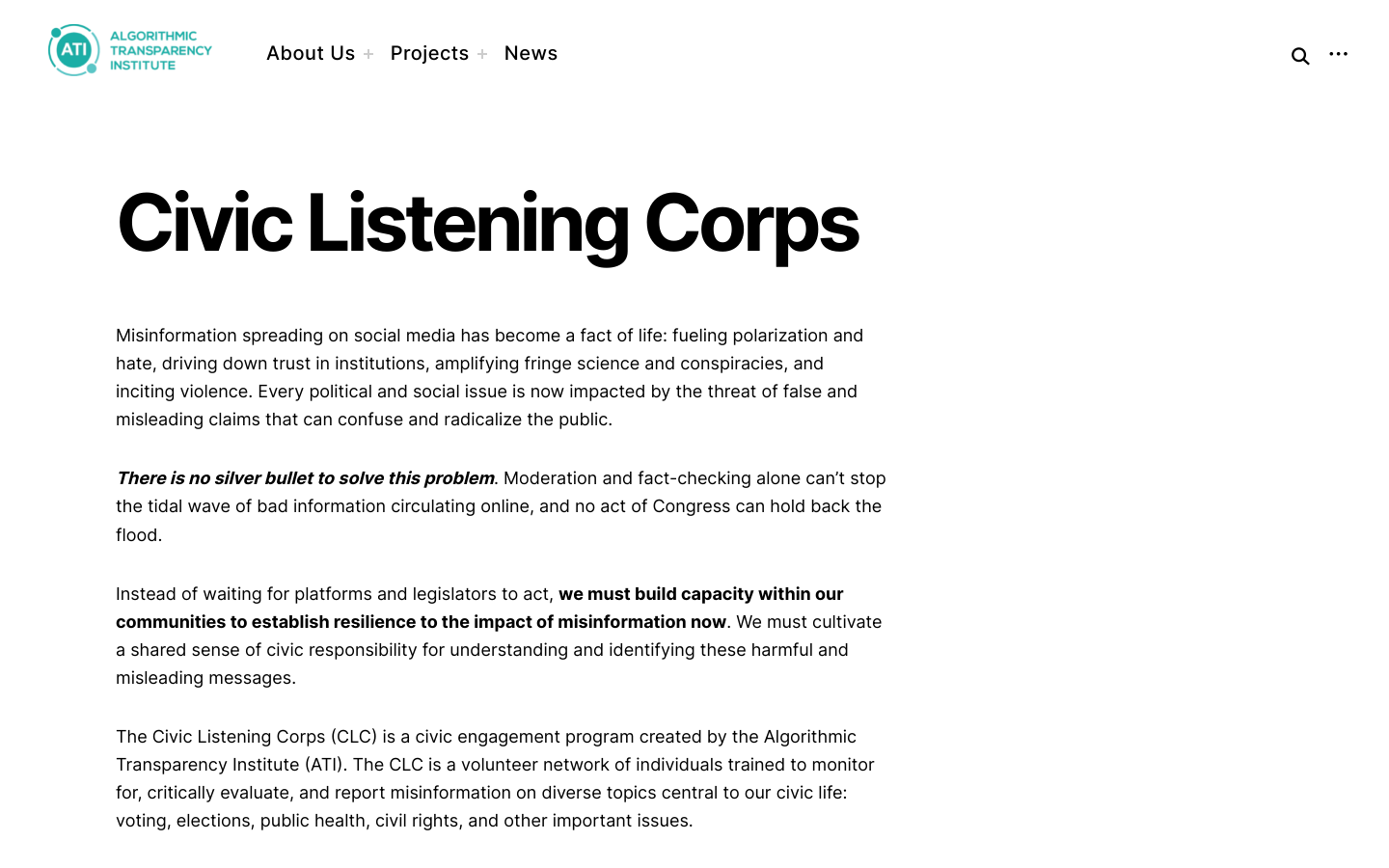
The CLC is a volunteer network of individuals trained to monitor for, critically evaluate, and report misinformation on diverse topics central to our civic life: voting, elections, public health, civil rights, and other important issues.

A collection of easy to use resources for identifying misinformation and its psychological tricks
For this first phase of our program, WhatsApp is commissioning a competitive set of awards to researchers interested in exploring issues that are related to misinformation on WhatsApp.