Civic Tech Field Guide
Donate

https://pollicy.org/resource/language-coloniality-non-dominant-languages-in-the-digital-landscape/

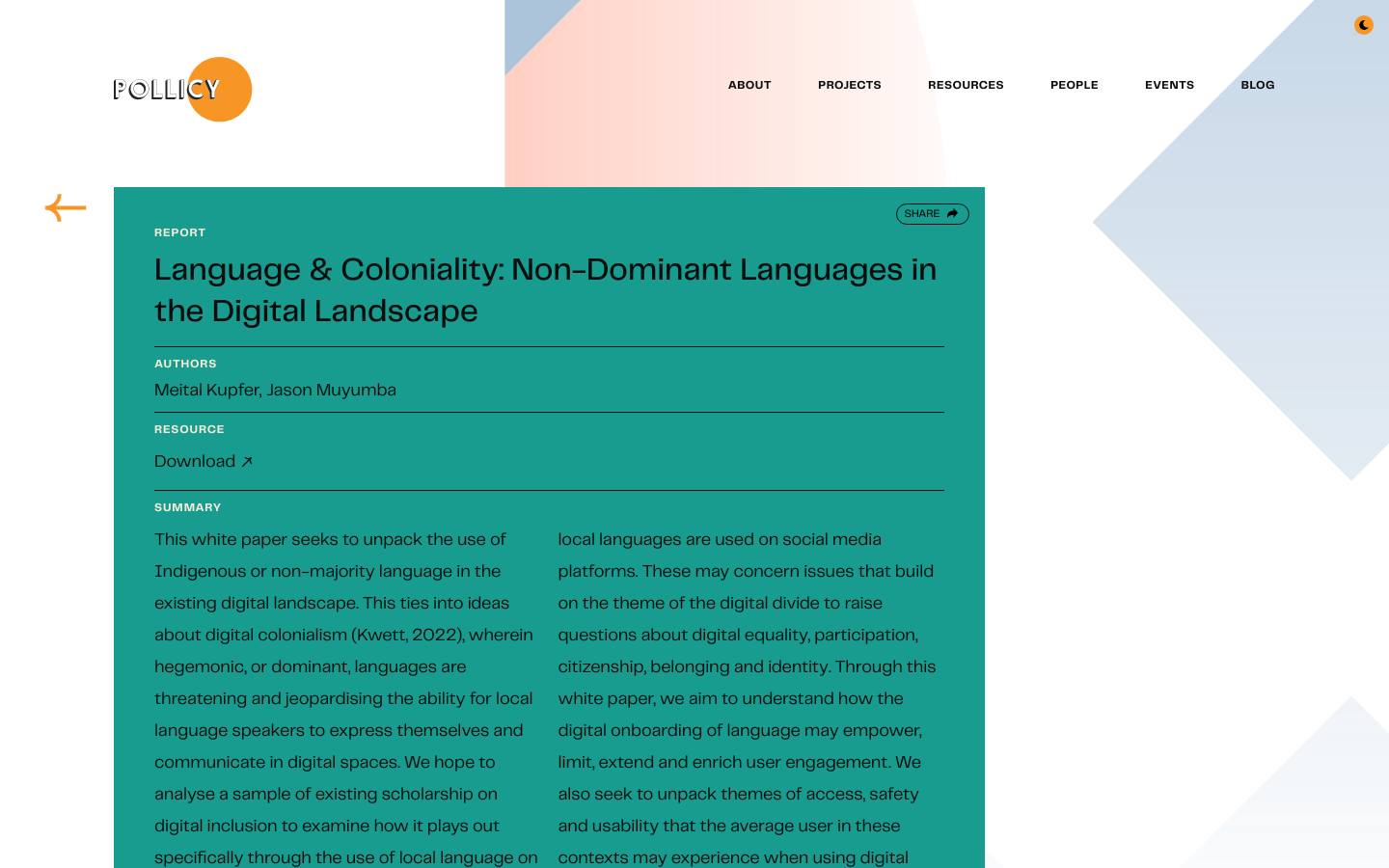
Language & Coloniality: Non-Dominant Languages in the Digital Landscape

This white paper seeks to unpack the use of Indigenous or non-majority language in the existing digital landscape.

Active
Since 2023
Kampala, Uganda

This ties into ideas about digital colonialism (Kwett, 2022), wherein hegemonic, or dominant, languages are threatening and jeopardising the ability for local language speakers to express themselves and communicate in digital spaces. We hope to analyse a sample of existing scholarship on digital inclusion to examine how it plays out specifically through the use of local language on social media. We map key issues at work when local languages are used on social media platforms. These may concern issues that build on the theme of the digital divide to raise questions about digital equality, participation, citizenship, belonging and identity. Through this white paper, we aim to understand how the digital onboarding of language may empower, limit, extend and enrich user engagement. We also seek to unpack themes of access, safety and usability that the average user in these contexts may experience when using digital platforms for communication and daily life.

Project type
Document
Founded
2023
Language(s)
English
Added
2023-03-27
Last modified
2026-07-12T16:44:34.000Z

Additional details

Formats
reports
Number of integrations
0

More in Adjacent Fields

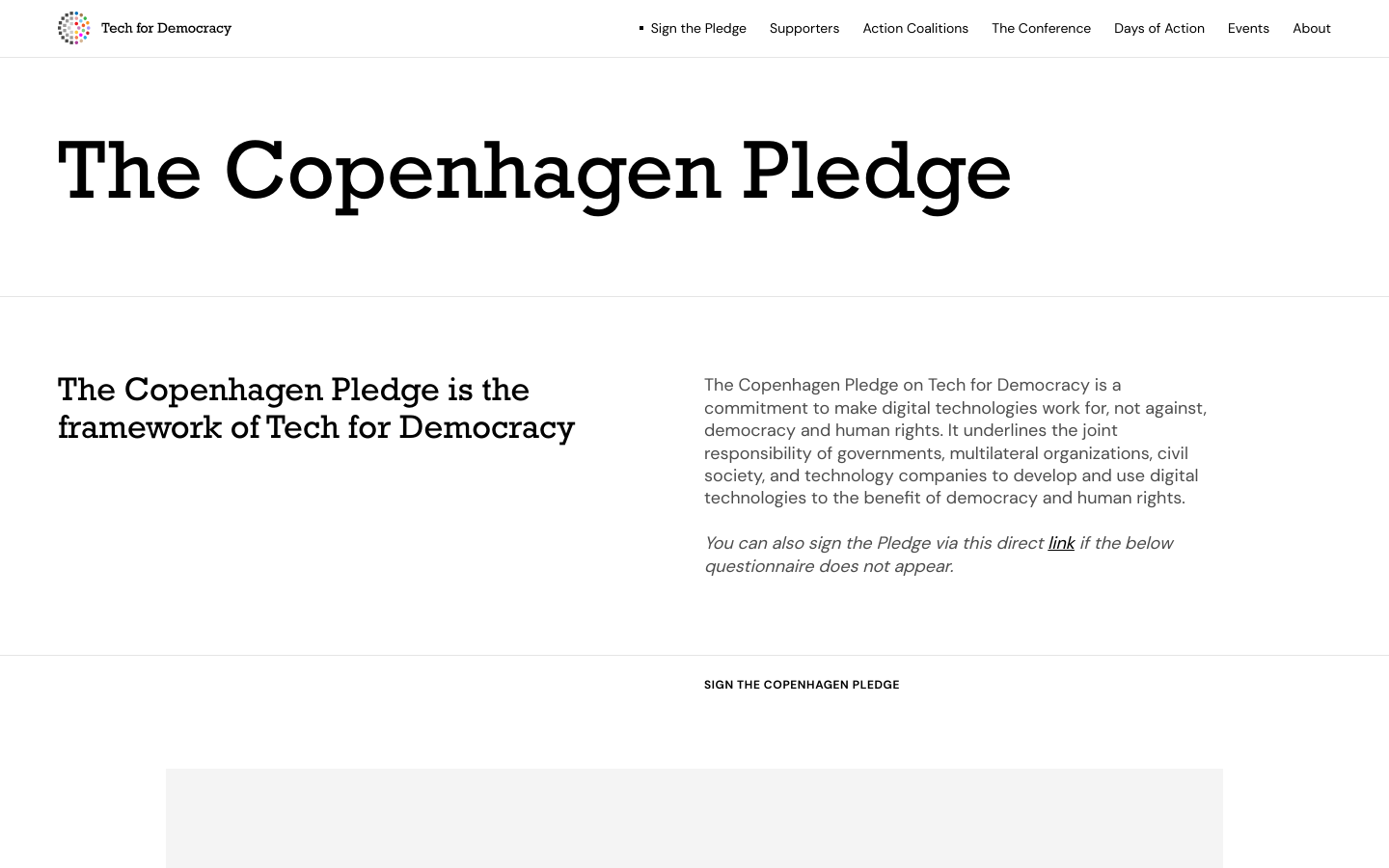
The Copenhagen Pledge on Tech for Democracy

A commitment to make digital technologies work for, not against, democracy and human rights. It underlines the joint responsibility of governments, multilateral organizations, civil society, and technology companies to develop and use digital technologies to the benefit of democracy and human rights.

Copenhagen
2021