As countries ramp up digital transformation efforts to tackle complex challenges, digital public goods (DPGs) and open-source technologies have emerged as promising tools that the public sector could leverage to fulfil their mandates. This course provides government officials and policymakers with a comprehensive overview on DPGs and open-source technologies, including their importance in enhancing service delivery, fostering innovation, and promoting sustainable development. Participants will be equipped with practical knowledge and skills to identify and implement DPGs/ OSS from conception to deployment, evaluate their organizations’ readiness and needs, and advocate for DPGs/OSS to leadership and stakeholders. The course will heavily feature examples from the Global South, highlighting the potential of leveraging DPGs and open source in driving inclusive development.
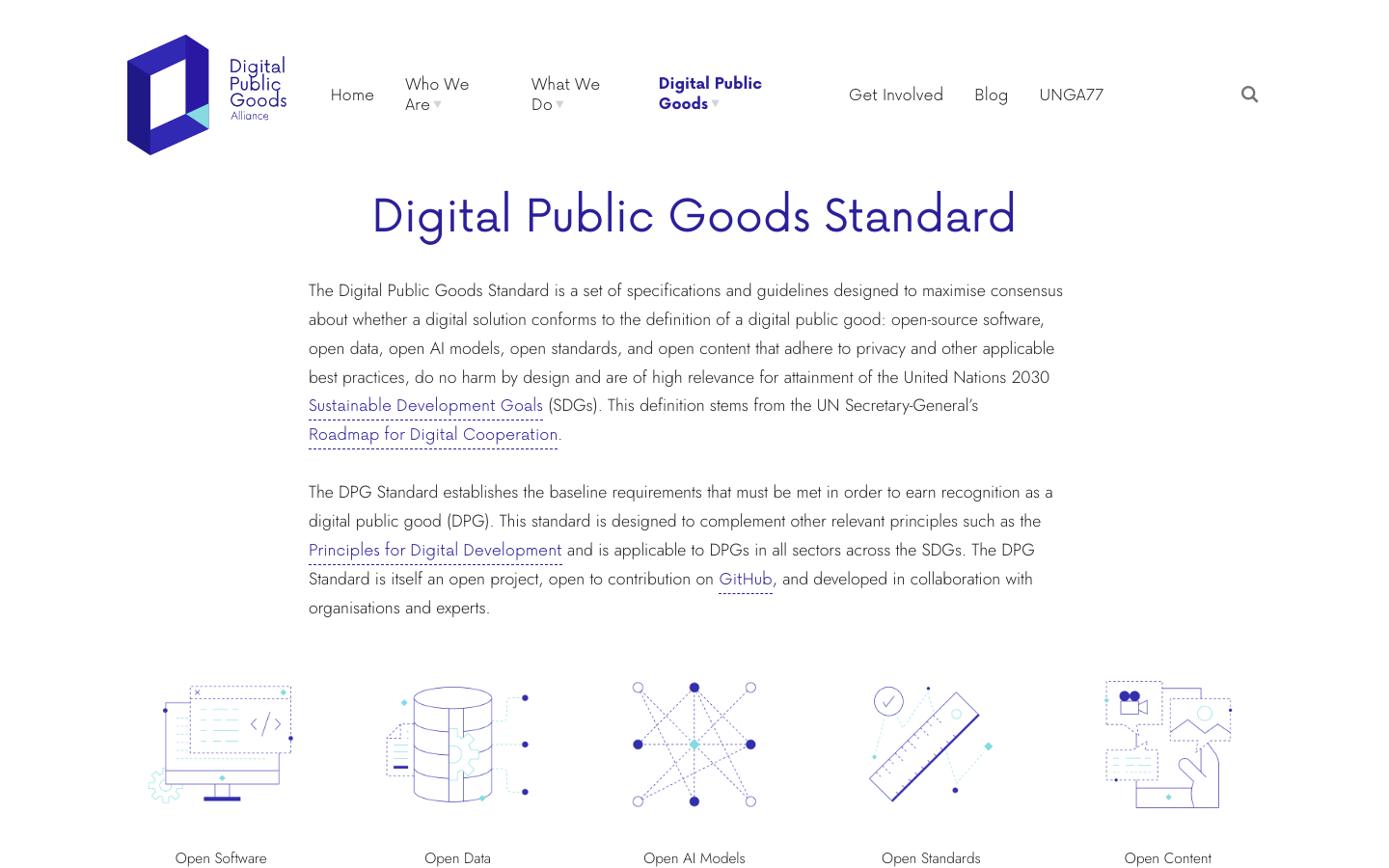
The Digital Public Goods Standard is a set of specifications and guidelines designed to maximise consensus about whether a digital solution conforms to the definition of a digital public good: open-source software, open data, open AI models, open standards, and open content that adhere to privacy and other applicable best practices, do no harm by design and are of high relevance for attainment of the United Nations 2030 Sustainable Development Goals (SDGs).
The Digital Public Goods Alliance is a multi-stakeholder initiative to accelerate the attainment of the sustainable development goals in low- and middle-income countries by facilitating the discovery, development, use of, and investment in digital public goods.
The DPG Charter is a multi-stakeholder campaign to align and mobilize diverse stakeholders and initiatives around a compelling shared vision for digital public goods (open-source technologies designed for the public good) and their role in driving safe, trusted and inclusive digital public infrastructure at scale.