The Human Rights Data Analysis Group is a non-profit, non-partisan organization that applies rigorous science to the analysis of human rights violations around the world.
As scientists, we work to support our partners—the advocates and human rights defenders who "speak truth to power"—by producing unbiased, scientific results that bring clarity to human rights violence and by ensuring that the “truth” is the most accurate truth possible.
We are scientists, not advocates. As scientists, we work to support our partners—the advocates and human rights defenders who “speak truth to power”—by producing unbiased, scientific results that bring clarity to human rights violence and by ensuring that the “truth” is the most accurate truth possible. While our partners—international and local human rights groups—advance human rights by listening to and amplifying the voices of victims of human rights violations, by shaping the questions we address and by guiding the data collection, we use technical and scientific expertise to analyze the invaluable data they collect. With this data, we use rigorous quantitative reasoning to understand patterns of violence, and even to make statistical estimates of events that are not in the data.
For our projects, data come from many sources. We have used individual testimonies, legal depositions, probability surveys, administrative records from morgues and cemeteries, exhumation reports, operational records from a prison, career information on military and police officers, eyewitness interviews, and official customs and immigration records. We work with partners to help them make decisions about the databases and systems they might use to collect and manage data; our primary focus, however, is on the rigorous scientific analysis of our partners' data.
The Digital Trade Alliance is a collaborative effort of digital rights and consumer groups assembled in 2018. The Alliance model provides effective advice and expertise to us in order to structure the transnational debate on digital trade.
Bookshare makes reading easier. People with dyslexia, blindness, cerebral palsy, and other reading barriers can customize their experience to suit their learning style and find virtually any book they need for school, work, or the joy of reading.
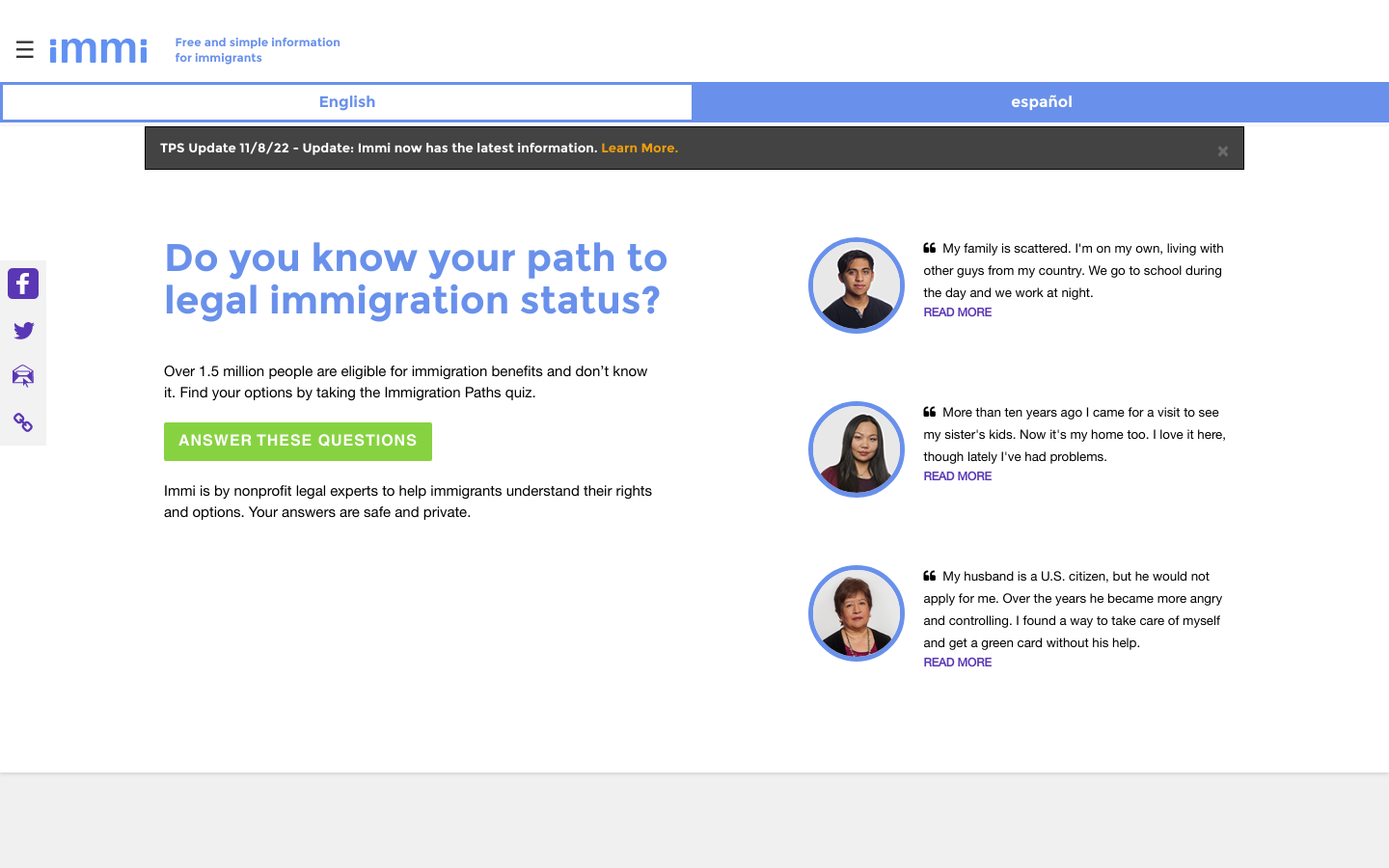
Immi helps immigrants understand their rights and options during the immigration process. The website’s guided process helps users determine their path to legal immigration, and offers a list of organisations and self-help resources.
A commitment to make digital technologies work for, not against, democracy and human rights. It underlines the joint responsibility of governments, multilateral organizations, civil society, and technology companies to develop and use digital technologies to the benefit of democracy and human rights.