SSRC Media Well
Disinformation, misinformation, and “fake news” are longstanding phenomena that, in the wake of the digital revolution, have become newly politicized and consequential. SSRC's research on the topic.
Brooklyn, NY

We provide initial evidence that people’s ability to spot and resist misinformation improves after gameplay, irrespective of education, age, political ideology, and cognitive style.
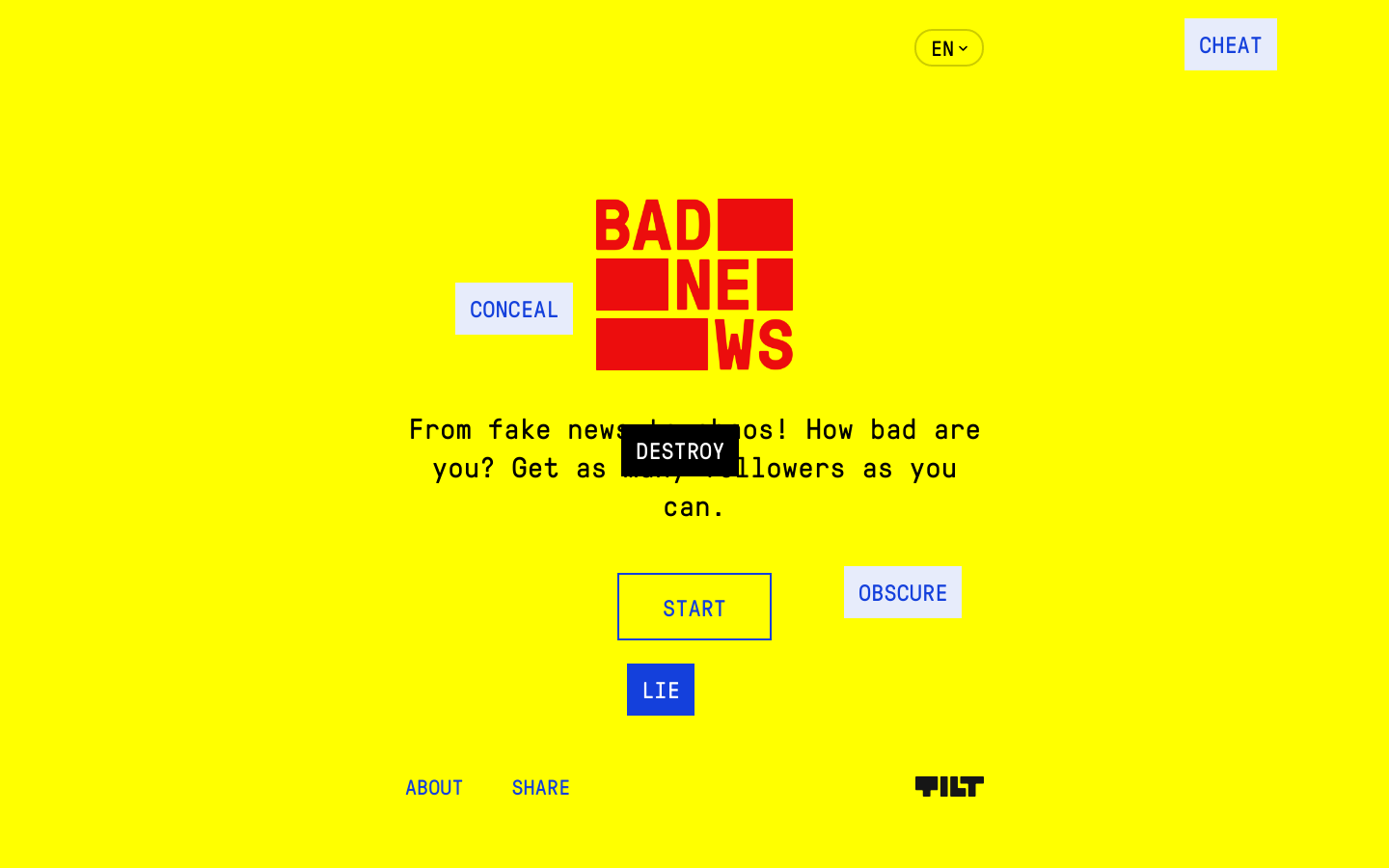
The spread of online misinformation poses serious challenges to societies worldwide. In a novel attempt to address this issue, we designed a psychological intervention in the form of an online browser game. In the game, players take on the role of a fake news producer and learn to master six documented techniques commonly used in the production of misinformation: polarisation, invoking emotions, spreading conspiracy theories, trolling people online, deflecting blame, and impersonating fake accounts. The game draws on an inoculation metaphor, where preemptively exposing, warning, and familiarising people with the strategies used in the production of fake news helps confer cognitive immunity when exposed to real misinformation. We conducted a large-scale evaluation of the game with N = 15,000 participants in a pre-post gameplay design. We provide initial evidence that people’s ability to spot and resist misinformation improves after gameplay, irrespective of education, age, political ideology, and cognitive style.
Disinformation, misinformation, and “fake news” are longstanding phenomena that, in the wake of the digital revolution, have become newly politicized and consequential. SSRC's research on the topic.
The CLC is a volunteer network of individuals trained to monitor for, critically evaluate, and report misinformation on diverse topics central to our civic life: voting, elections, public health, civil rights, and other important issues.

A collection of easy to use resources for identifying misinformation and its psychological tricks
For this first phase of our program, WhatsApp is commissioning a competitive set of awards to researchers interested in exploring issues that are related to misinformation on WhatsApp.