Civic Tech Field Guide
Donate

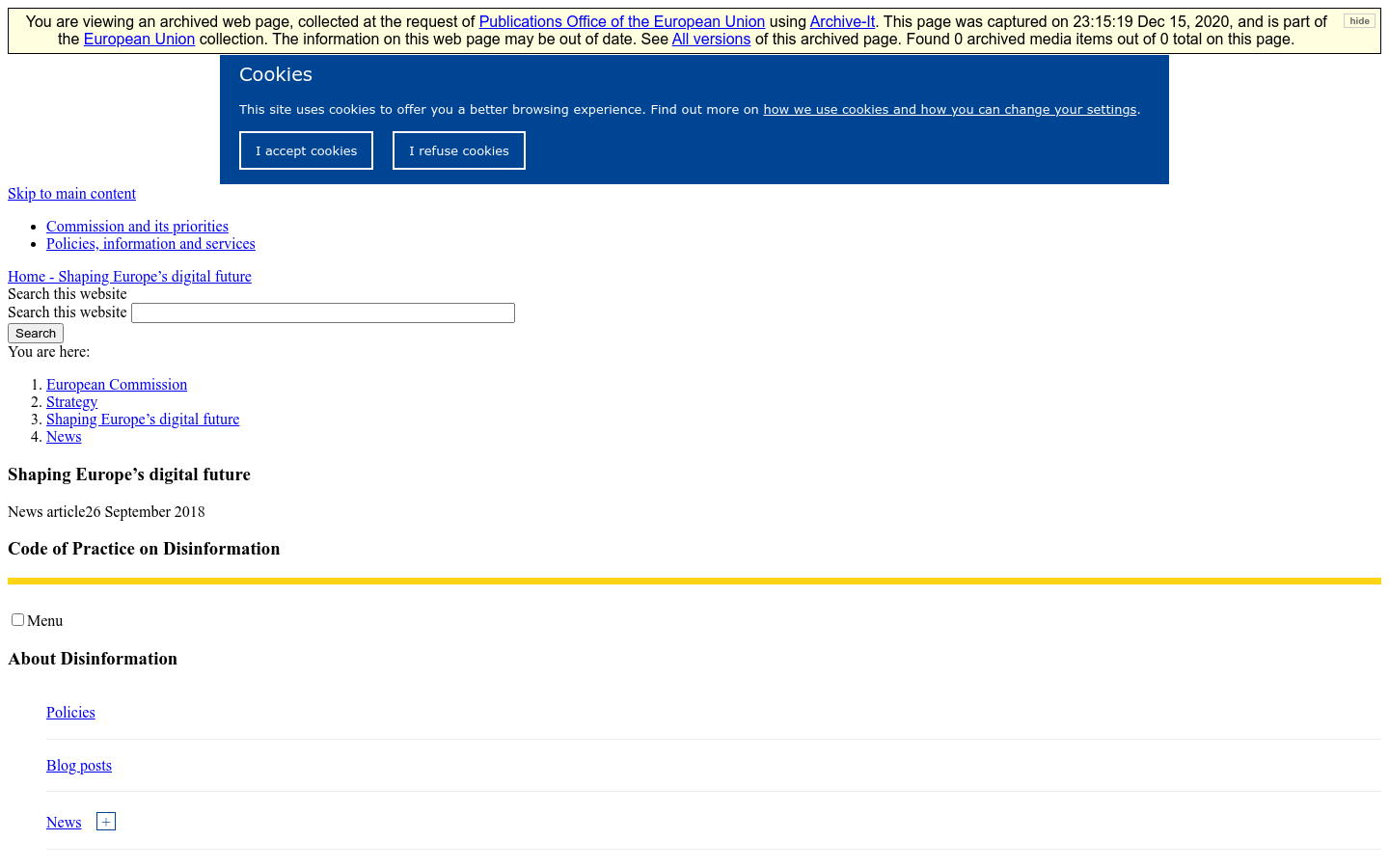
https://digital-strategy.ec.europa.eu/en/news/code-practice-disinformation

EU Code of Practice on Disinformation

The European Union developed a Code of Practice on Disinformation based on the findings of its High Level Working Group on the issue.

Active
Europe

This included recommendations for companies operating in the EU, suggestions for developing media literacy programs for members responding to the issues, and developing technology supporting the code. It is an established common set of practices for EU member states on dealing with disinformation. It includes an annex identifying best practices that signatories will apply to implement the Code's commitments. The European Commission has also published the opinions of a "Sounding Board" of the Multi-stakeholder forum on the Code of Practice. This is the first time worldwide that industry agrees, on a voluntary basis, to self-regulatory standards to fight disinformation. The Code aims at achieving the objectives set out by the Commission's Communication presented in April 2018 by setting a wide range of commitments, from transparency in political advertising to the closure of fake accounts and demonetization of purveyors of disinformation. The Code includes an annex identifying best practices that signatories will apply to implement the Code's commitments. The Commission has also published the opinion of the Sounding board of the Multi-stakeholder forum on the Code of Practice. Online platforms and trade associations representing the advertising sector have submitted a baseline report in January 2019 setting out the state of play of the measures taken to comply with their commitments under the Code of Practice on Disinformation. Between January and May 2019, the European Commission carried out a targeted monitoring of the implementation of the commitments by Facebook, Google and Twitter with particular pertinence to the integrity of the European Parliament elections. In particular, the Commission asked the three platforms signatory to the Code of Practice to report on a monthly basis on their actions undertaken to improve the scrutiny of ad placements, ensure transparency of political and issue-based advertising and to tackle fake accounts and malicious use of bots. The Commission published the reports received for the five months together with its own assessment (for more details, see the intermediate reports for January, February, March, April, and May 2019). The Code and other initiatives set forth by the Commission are essential steps in ensuring transparent, fair and trustworthy online campaign activities ahead of the European elections in spring 2019.

Related projects

Project(s): EU Transparency Centre Reports Archive

Project type
Document
Country
Europe
Language(s)
English
Added
2022-05-31
Last modified
2026-07-12T16:44:23.000Z

Additional details

Number of integrations
0
Geographic focus
Europe
Geographic focus — country
Europe
Political unit
European Union (government of)
Source
[Database of Informational Interventions](https://counteringdisinformation.org/interventions)

More in Civic tech legislation and policy

The Copenhagen Pledge on Tech for Democracy

A commitment to make digital technologies work for, not against, democracy and human rights. It underlines the joint responsibility of governments, multilateral organizations, civil society, and technology companies to develop and use digital technologies to the benefit of democracy and human rights.

Copenhagen
2021