Civic Tech Field Guide
Donate

https://www.aaas.org/resources/developing-ethical-guidelines-and-best-practices-use-volunteered-geographic-information-and

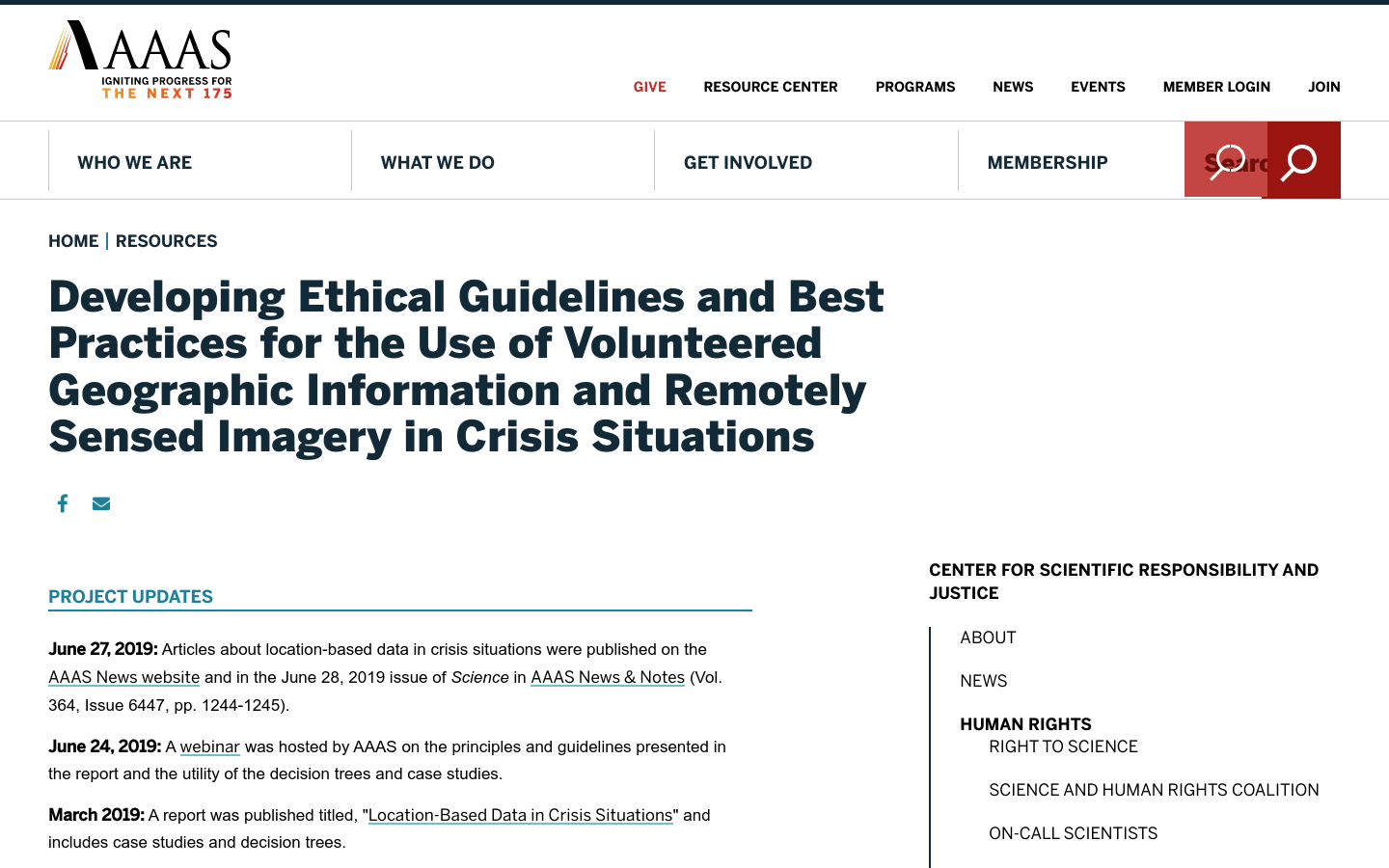
Ethical Guidelines and Best Practices for the Use of Volunteered Geographic Information and Remotely Sensed Imagery in Crisis Situations

This project will develop ethical principles and guidelines, as well as draft best practices for the use of remote sensing and volunteered geographic information (VGI) in crisis situations.

Active
1200 New York Ave

This project will develop ethical principles and guidelines, as well as draft best practices for the use of remote sensing and volunteered geographic information (VGI) in crisis situations. Since there are no existing guidelines or best practices to guide such research, the results of the project will be transformative for researchers and collaborators in the field. Moreover, it will have a ripple effect through development of educational materials to prepare future researchers to understand and give priority to their responsibilities when conducting collaborative research with non-scientists. Remote sensing and VGI generate geolocated data used not just by scientists, but also by practitioners with little scientific training seeking to intervene in crisis situations, which often unfold in remote and dangerous locations inhabited by vulnerable populations and may involve human rights abuses, humanitarian and disaster responses, and threats to cultural heritage during conflict. Hence, the project will not only promote the ethical and rigorous use of these techniques for researchers, it will also guide the work of stakeholders outside academia, a crucial step to reducing risks to populations. Given the global settings in which crises emerge, this project reaches beyond traditional scholarly audiences to disseminate research findings and approaches. It will include non-scientist users and the voices of under-represented groups, such as people in the developing world and women, in order to diversify discussions on the best ways to protect on-the-ground researchers, the volunteers of information, and those threatened by the misuse or careless distribution of geolocated information.

Funding details

Funded byDateAmount
US National Science Foundation (NSF Award No. 1560948).2020-03-28

Resources

Language(s)
English
Added
2021-06-22
Last modified
2026-06-11T17:14:48.000Z

Additional details

Number of integrations
0

More in Adjacent Fields

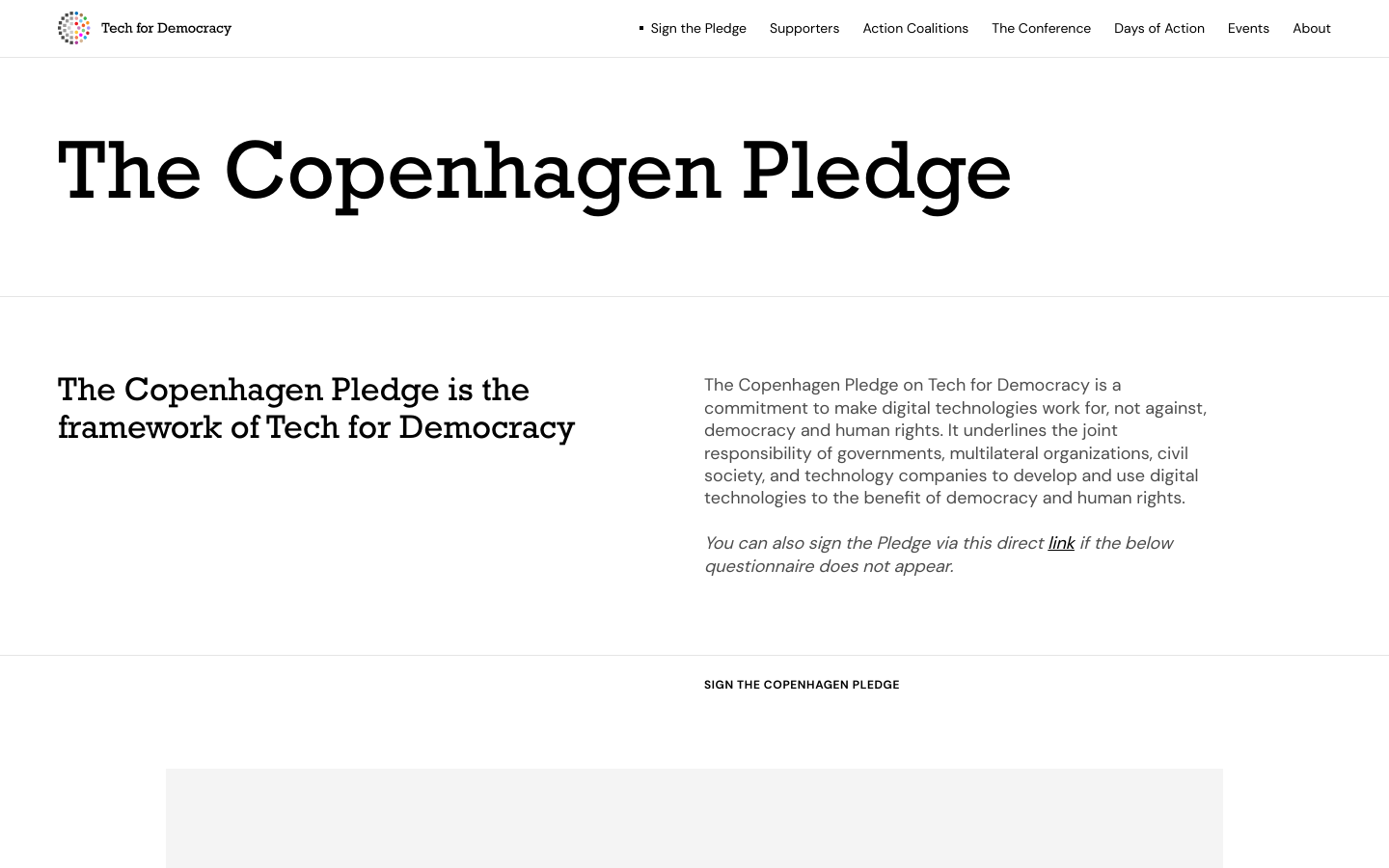
The Copenhagen Pledge on Tech for Democracy

A commitment to make digital technologies work for, not against, democracy and human rights. It underlines the joint responsibility of governments, multilateral organizations, civil society, and technology companies to develop and use digital technologies to the benefit of democracy and human rights.

Copenhagen
2021