Namma Mahiti Kendras
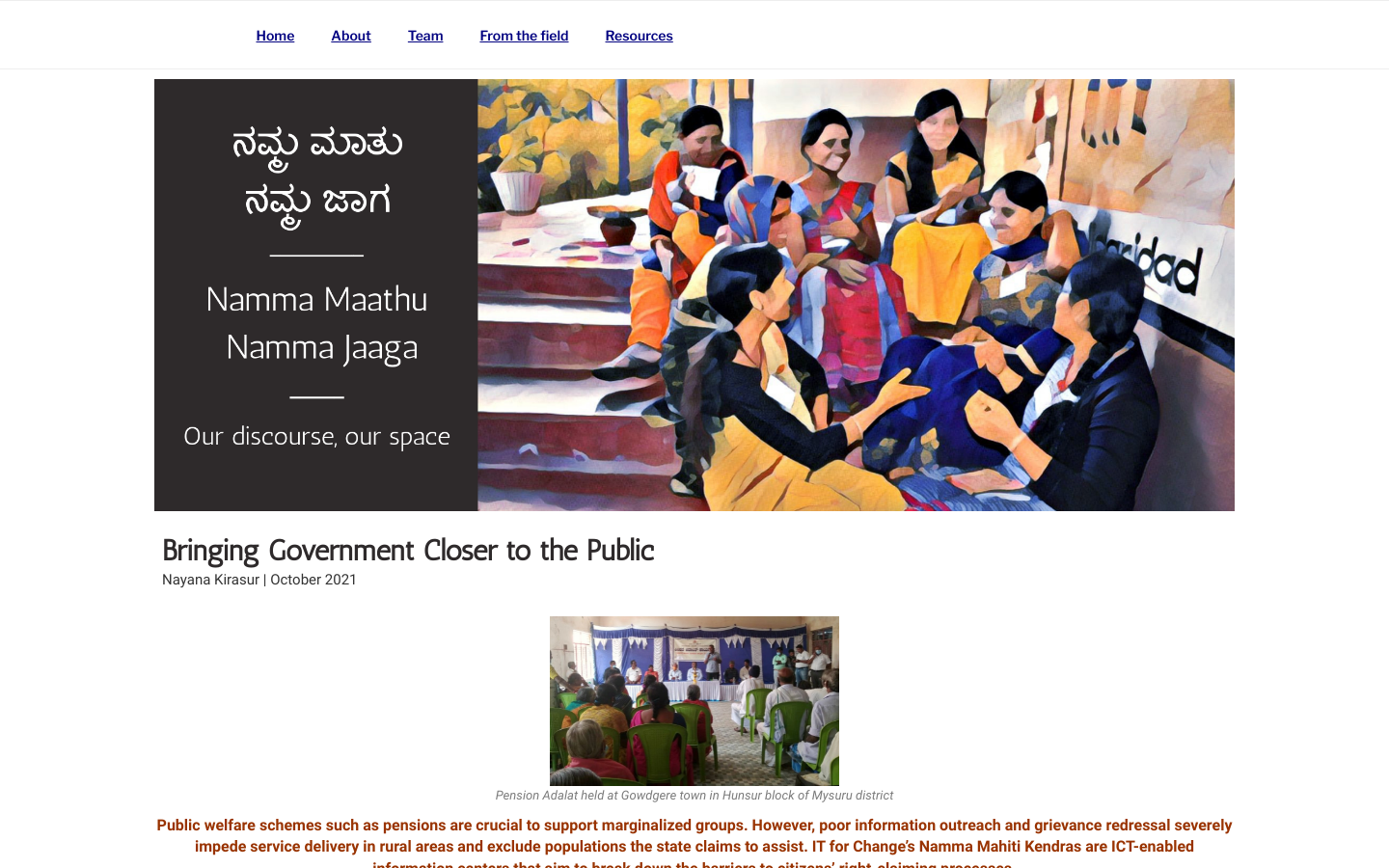
IT for Change’s Namma Mahiti Kendras are ICT-enabled information centers that aim to break down the barriers to citizens’ right-claiming processes.
Bangalore
place-based

These findings support preference- and incentive-based accounts of participation but suggest that light-touch interventions are unlikely to bridge participation gaps, let alone polarization.
Online political discussions are often dominated by a small group of active users, while most remain silent. This visibility gap can distort perceptions of public opinion and fuel polarization. Using a collective field experiment on Reddit, we examined factors predicting self-selection into silent “lurker” and active “power-user” roles and tested whether participation differentials can be reduced with norm- or incentive-based interventions. We recruited 520 United States participants, randomly assigned them to conditions in six private communities, and asked them to discuss 20 political issues over 4 weeks while completing weekly surveys. Lurking (posting nothing) was most common among users who perceived discussions as toxic, disrespectful, or unconstructive; these same perceptions also predicted power usership (more posting, conditional on not lurking). Experimentally, financial incentives for commenting reduced participation differentials, whereas we did not find effects from a civility norm treatment. These findings support preference- and incentive-based accounts of participation but suggest that light-touch interventions are unlikely to bridge participation gaps, let alone polarization.

IT for Change’s Namma Mahiti Kendras are ICT-enabled information centers that aim to break down the barriers to citizens’ right-claiming processes.

Common Good AI is a tech non-profit organization dedicated to building common ground for the common good.

Free tool to gather opinions and simplify participation.

Capture customer and employee feedback in the moment to drive positive change throughout your organization.