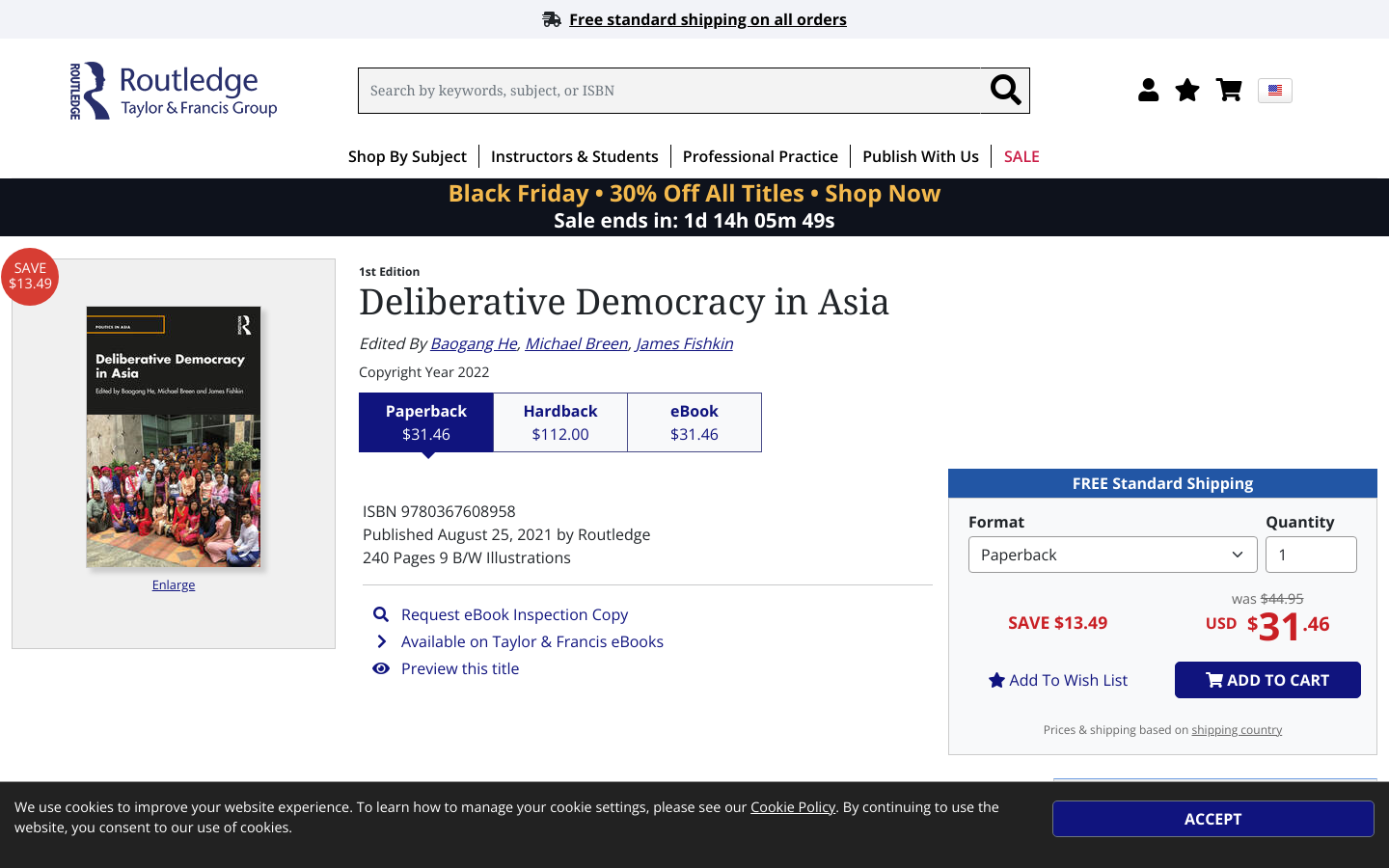
"Featuring cases from India, China, Nepal, Japan, South Korea, Singapore, Mongolia and Malaysia, the authors demonstrate and compare the differing uses of public deliberation in Asia.
Many countries in Asia have long traditions of public deliberation, in both democratic and undemocratic settings, some of which continue today. Yet in the face of pressures from complex governance, popular protests and democratization, certain deliberative practices – notably deliberative polling – have been ‘parachuted’ into the region without regard to historical or traditional practices of deliberation. And, the motivations differ. Some states have made use of public deliberation in order to contain dissent, while others have more emancipatory goals in mind. The contributors to this book take a comparative perspective on the emergence and evolution of deliberative practices in Asia, and their relationships with democracy. They analyse the main motivations for introducing public deliberation in different political regimes and the effectiveness of public deliberation in Asian countries for solving problems and improving governance. In doing so they evaluate whether deliberative democratic tools, can apply to all societies regardless of their political and cultural differences.
Essential reading for students and scholars of Asian Politics, this book will also be of great use to all political scientists with an interest in deliberative democracy."
Politics Recoded: The Infrastructural Organizing of Code for America
By Aure Schrock. Out in September. The first detailed history of Code for America that examines how democratically designed government systems can collectively improve technology's impact on society.
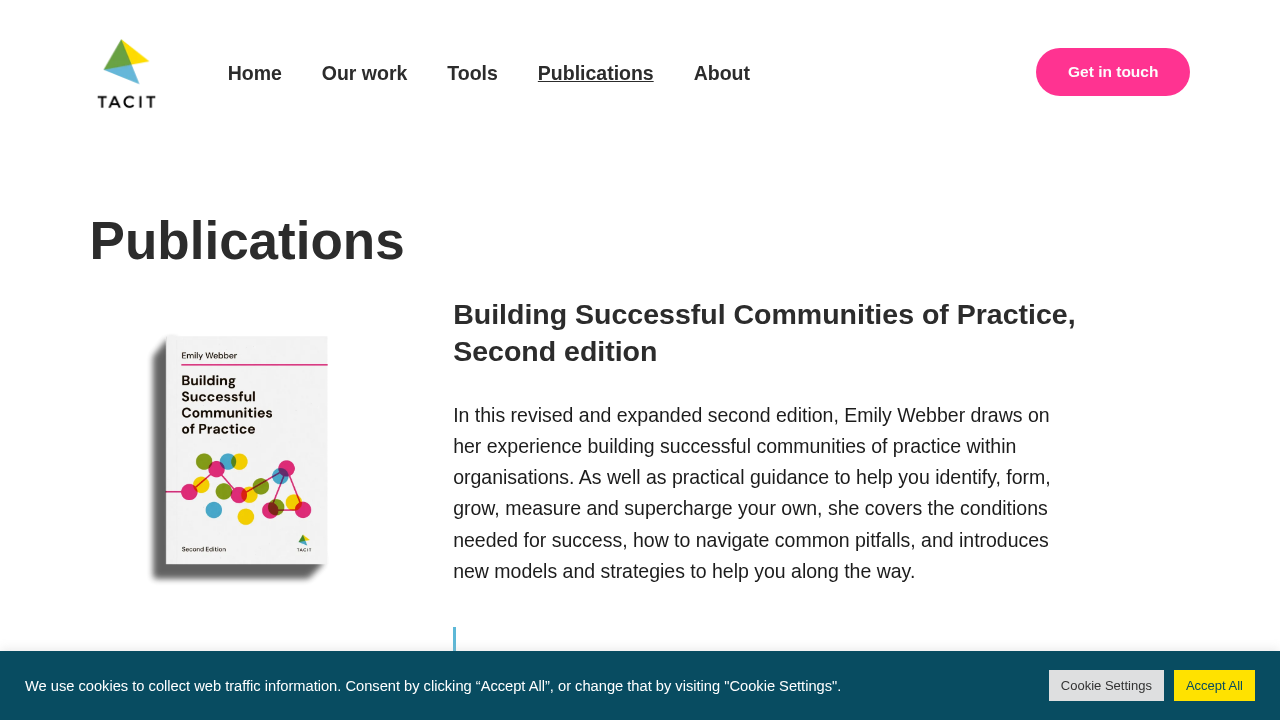
This practical book outlines the benefits of communities of practice, including accelerating professional development, breaking down organisational silos, enabling knowledge sharing, building better practices, helping to hire and retain staff, and making people happier.
Recoding America: Why Government Is Failing in the Digital Age and How We Can Do Better
A bold call to reexamine how our government operates—and sometimes fails to—from President Obama's former deputy chief technology officer and the founder of Code for America.