Internet Governance Forum
The IGF is a global multistakeholder platform that facilitates the discussion of public policy issues pertaining to the Internet
2006

As narrower terms like open government, civic technology, etc. are in vogue today, it is notable that the debate over defining terms has shifted to more popular terms. "E-democracy" as a shorten term pre-dated use of e-commerce, e-business, starting in 1994 etc. but came after teledemocracy and the long-form rare use of the phrase “electronic democracy.” Defining E-democracy The working definition for e-democracy used by the Democracies Online Newswire is: E-democracy represents the use of information and communication technologies and strategies by democratic actors within political and governance processes of local communities, nations and on the international stage. Democratic sectors/actors include governments, elected officials, the media, political organizations, and citizen/voters. (see below) To many, e-democracy suggests greater and more active citizen participation enabled by the Internet, mobile communications, and other technologies in today's representative democracy as well as through more participatory or direct forms of citizen involvement in addressing public challenges. Source: Steven Clift's E-Democracy Resource Links
The IGF is a global multistakeholder platform that facilitates the discussion of public policy issues pertaining to the Internet

The Data Coalition advocates on behalf of the private sector and the public interest for the publication of government information as standardized, machine-readable data.
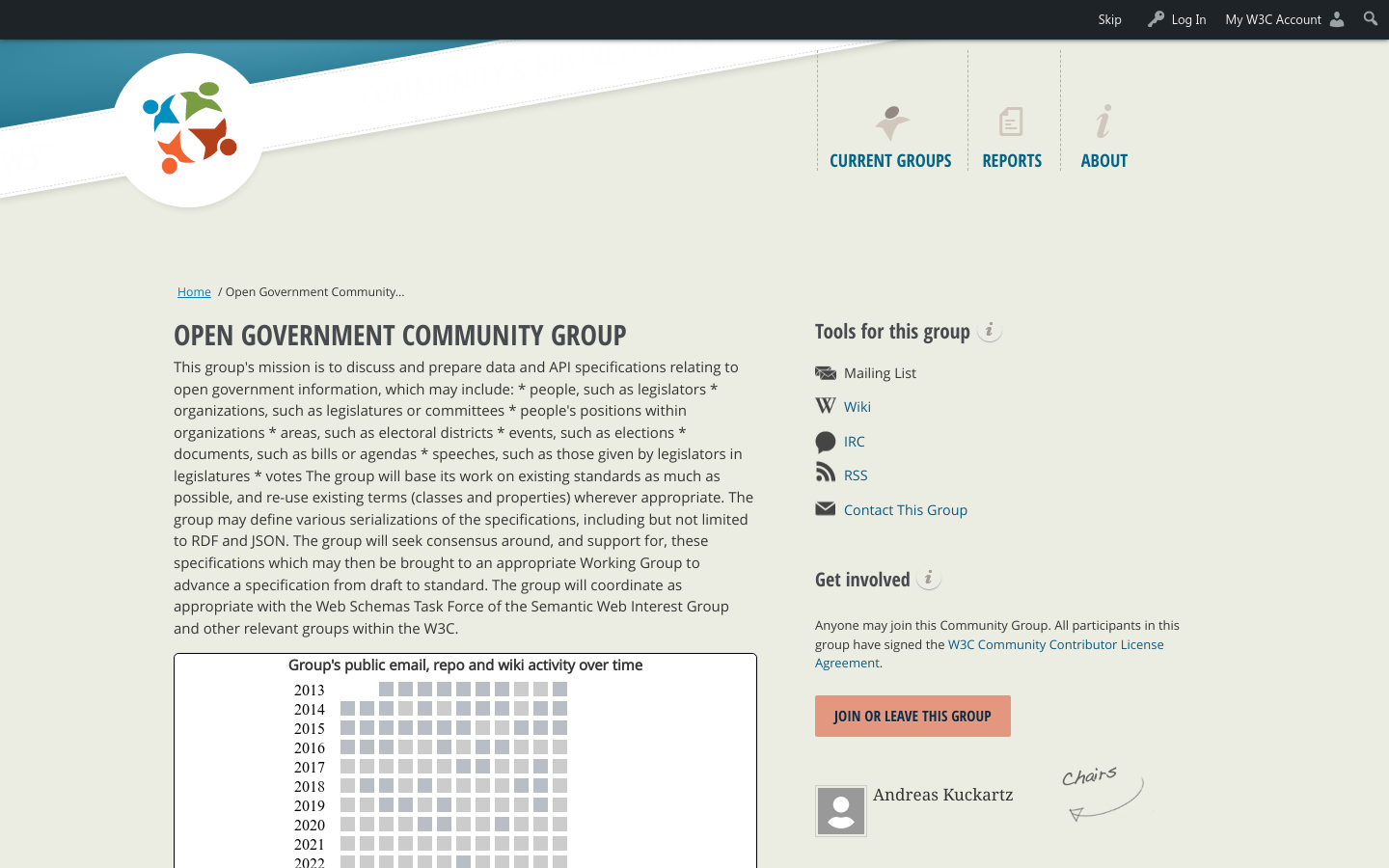
Facilitating development of open government data and API specifications via a W3C Community Group (now closed).