SSRC Media Well
Disinformation, misinformation, and “fake news” are longstanding phenomena that, in the wake of the digital revolution, have become newly politicized and consequential. SSRC's research on the topic.
Brooklyn, NY

A February 2021 report by Polaris, The Soufan Group, and Limbik
By Anjana Rajan, Polaris, Catherine Chen, Polaris, Caren Benjamin, Polaris, Mollie Saltskog, The Soufan Group, Jason Blazakis, The Soufan Group, Zach Schwitzky, Limbik, and Leela McClintock, Limbik • Disinformation about human trafficking serves as a gateway narrative that radicalizes susceptible audiences to condone, and even perform, acts of violence and terrorism. This ultimately poses a threat to the national security of the United States. • The fallout from disinformation about human trafficking has a profoundly harmful impact on victims and survivors of human trafficking; the amount of time Polaris spent responding to false reports about the Wayfair conspiracy theory could have been used to respond to an additional 42 trafficking cases. • A significant portion of the U.S. population is susceptible to being radicalized; 21 percent of U.S. adults self-identify as QAnon believers, and 41 percent of U.S. adults believe that elites, politicians, and/or celebrities are involved in a global pedophilia ring. • In spite of de-platforming efforts by social media companies, white supremacist and other violent far-right extremist groups on encrypted chat platforms are using human trafficking disinformation as a way to recruit disillusioned QAnon followers to join their movements. • A coordinated, multi-stakeholder effort is needed to develop and implement strategies to impart the truth about human trafficking in a way that is compelling to both susceptible audiences and to audiences already convinced of the false narrative.
Parent organization: Polaris
Disinformation, misinformation, and “fake news” are longstanding phenomena that, in the wake of the digital revolution, have become newly politicized and consequential. SSRC's research on the topic.
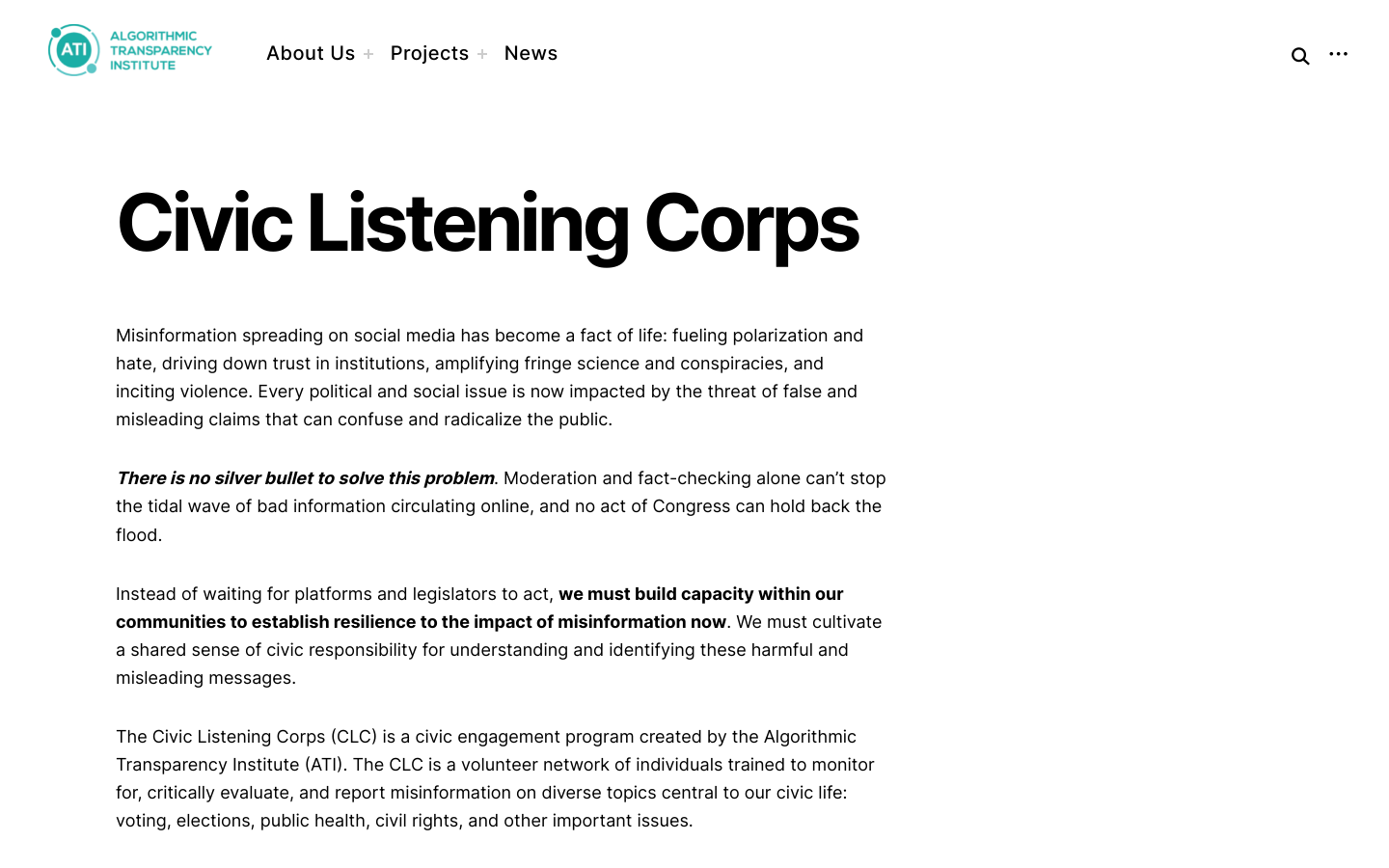
The CLC is a volunteer network of individuals trained to monitor for, critically evaluate, and report misinformation on diverse topics central to our civic life: voting, elections, public health, civil rights, and other important issues.

A collection of easy to use resources for identifying misinformation and its psychological tricks
For this first phase of our program, WhatsApp is commissioning a competitive set of awards to researchers interested in exploring issues that are related to misinformation on WhatsApp.