SSRC Media Well
Disinformation, misinformation, and “fake news” are longstanding phenomena that, in the wake of the digital revolution, have become newly politicized and consequential. SSRC's research on the topic.
Brooklyn, NY

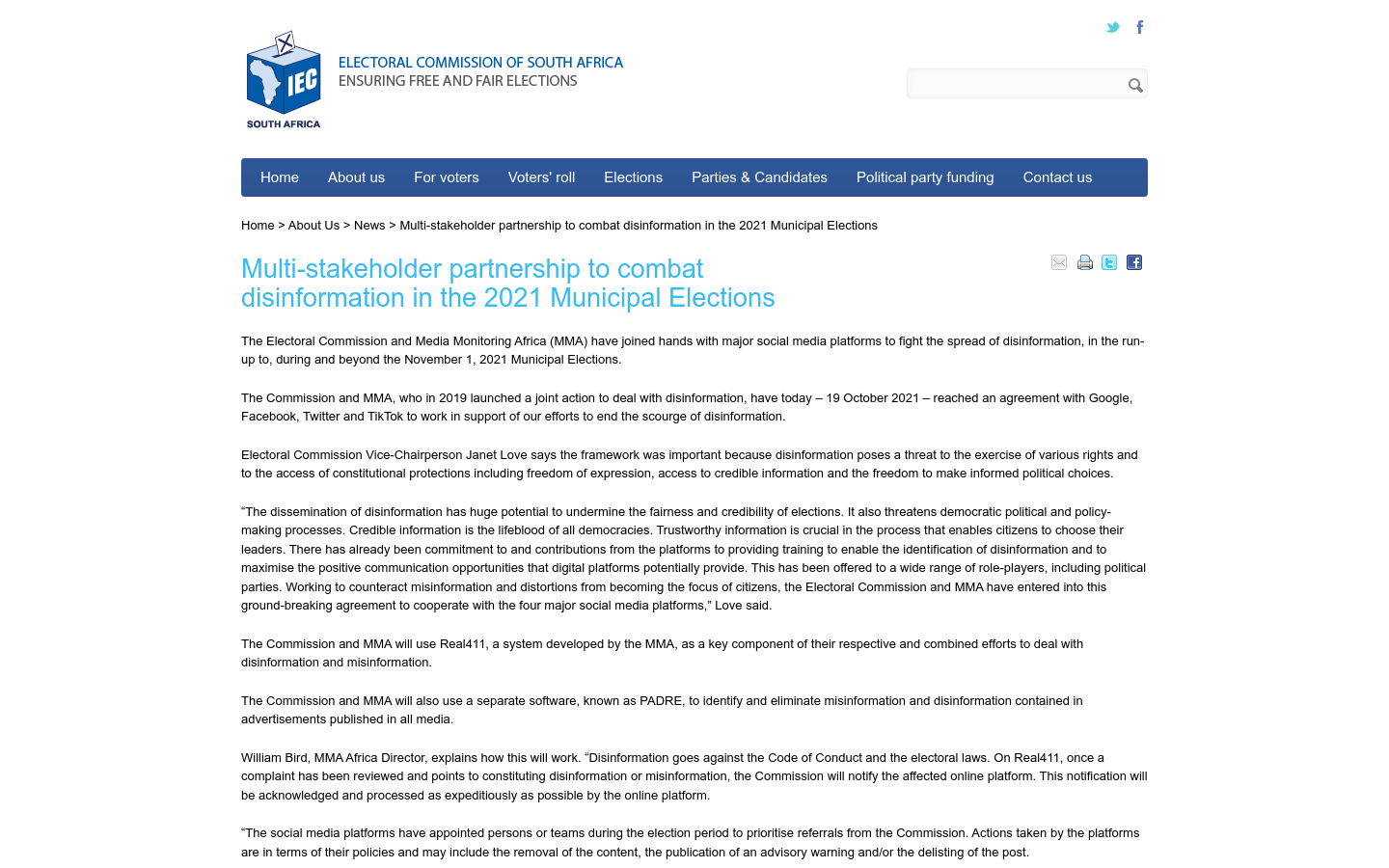
South Africa’s “Code of Conduct: Measures to Address Disinformation Intended to Cause Harm During the Election Period” (in draft form as of July 2020) is aimed at “every registered party and every candidate” with additional obligations under the code for how those parties and candidates must take appropriate recourse against any member, representative or supporter of that party or candidate who behaves in violation of the code.
The code is drawn narrowly to limit its application to the electoral period and ground it firmly in the broader legal and regulatory framework in South Africa. Disinformation is defined as “any false information that is published with the intention of causing public harm.” This narrowly drawn definition creates gates around the types of disinformation that fall under the responsibility of the EMB; the EMB’s Code addresses false information, published with intent, that threatens the integrity of the electoral process.
Disinformation, misinformation, and “fake news” are longstanding phenomena that, in the wake of the digital revolution, have become newly politicized and consequential. SSRC's research on the topic.
The CLC is a volunteer network of individuals trained to monitor for, critically evaluate, and report misinformation on diverse topics central to our civic life: voting, elections, public health, civil rights, and other important issues.

A collection of easy to use resources for identifying misinformation and its psychological tricks
For this first phase of our program, WhatsApp is commissioning a competitive set of awards to researchers interested in exploring issues that are related to misinformation on WhatsApp.