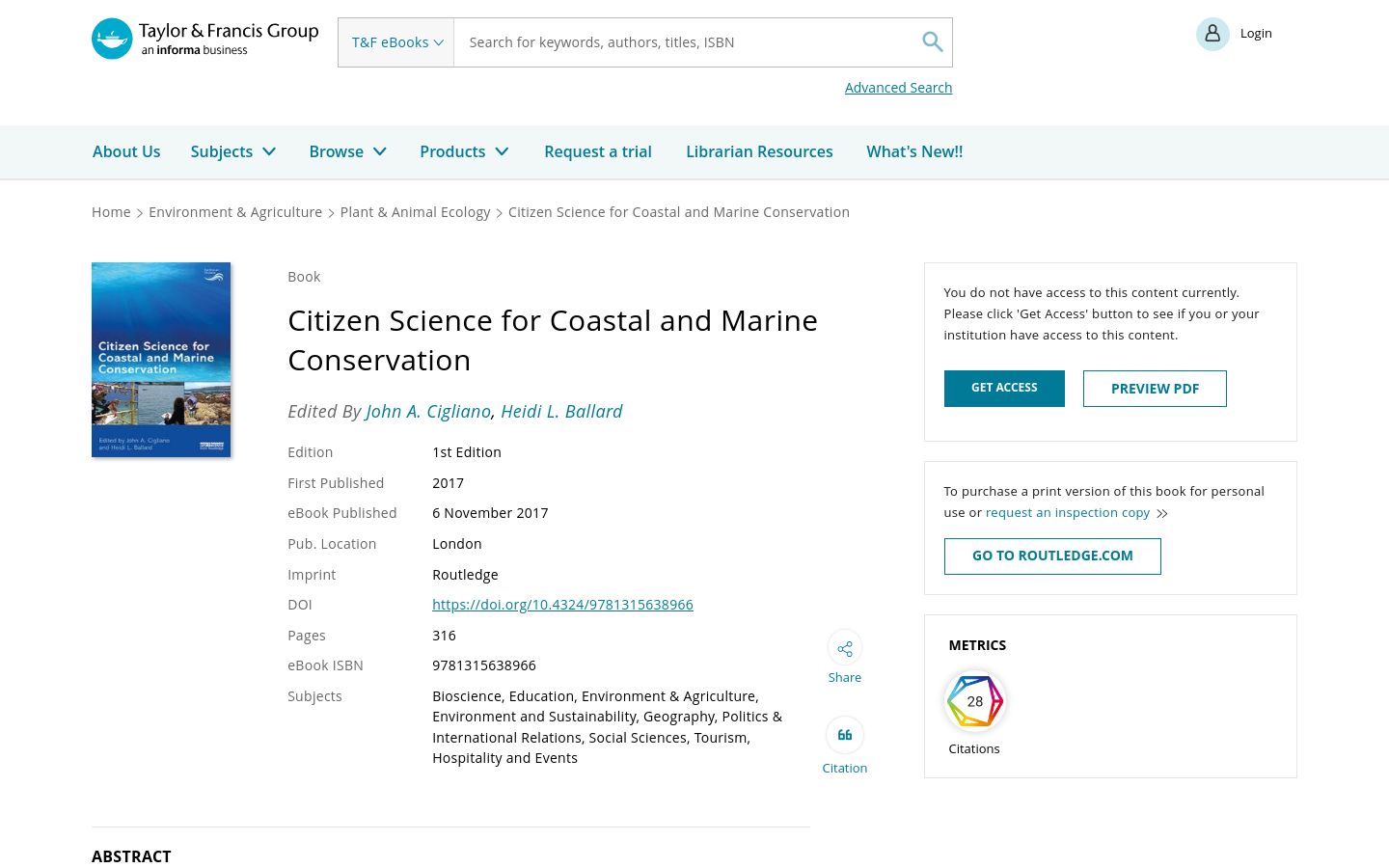
In recent years, citizen science has emerged as a powerful new concept to enable the general public, students, and volunteers to become involved in scientific research. A prime example is in biodiversity conservation, where data collection and monitoring can be greatly enhanced through citizen participation. This is the first book to provide much needed guidance and case studies from marine and coastal conservation. The novelty and rapid expansion of the field has created a demand for the discussion of key issues and the development of best practices. The book demonstrates the utility and feasibility, as well as limitations, of using marine and coastal citizen science for conservation, and by providing critical considerations (i.e.which questions and systems are best suited for citizen science), presents recommendations for best practices for successful marine and coastal citizen science projects. A range of case studies, for example, on monitoring of seabird populations, invasive species, plastics pollution, and the impacts of climate change, from different parts of the world, is included. Also included are discussions on engaging youth, indigenous communities, and divers and snorkelers as citizen scientists, as well as best practices on communication within citizen science, building trust with stakeholders, and informing marine policy as part of this exciting and empowering way of improving marine and coastal conservation. .
Politics Recoded: The Infrastructural Organizing of Code for America
By Aure Schrock. Out in September. The first detailed history of Code for America that examines how democratically designed government systems can collectively improve technology's impact on society.
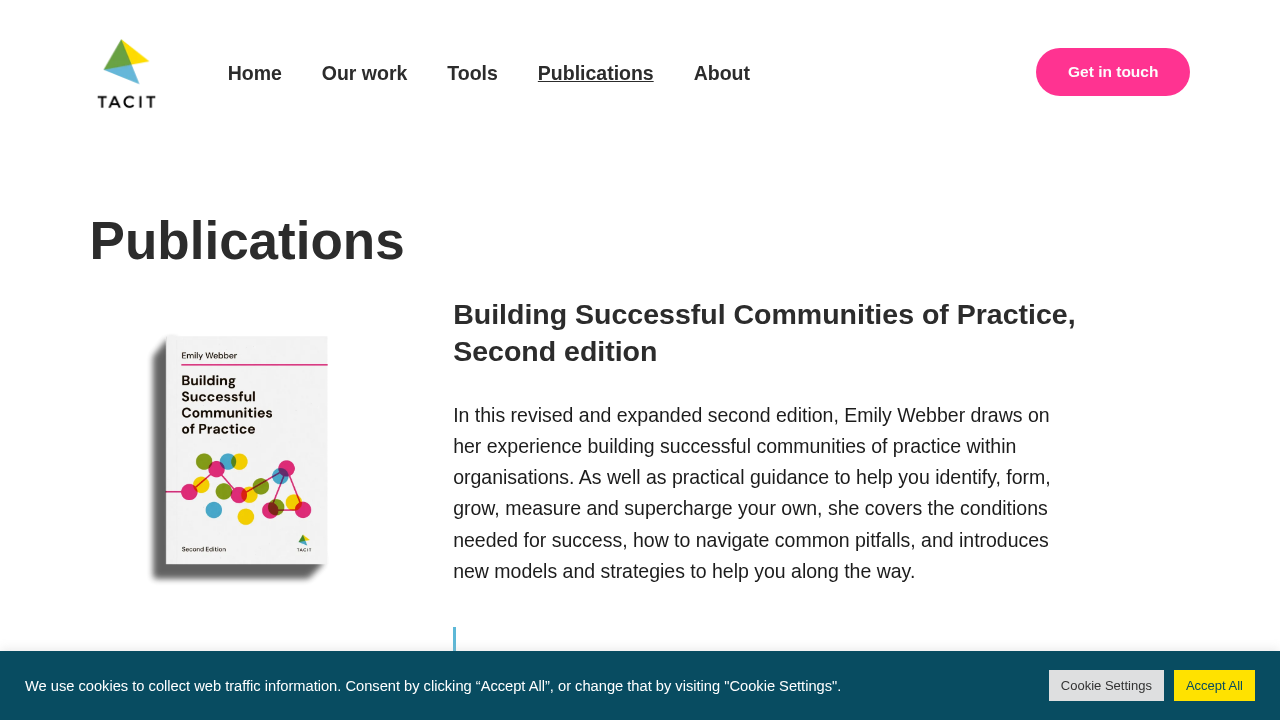
This practical book outlines the benefits of communities of practice, including accelerating professional development, breaking down organisational silos, enabling knowledge sharing, building better practices, helping to hire and retain staff, and making people happier.
Recoding America: Why Government Is Failing in the Digital Age and How We Can Do Better
A bold call to reexamine how our government operates—and sometimes fails to—from President Obama's former deputy chief technology officer and the founder of Code for America.