SSRC Media Well
Disinformation, misinformation, and “fake news” are longstanding phenomena that, in the wake of the digital revolution, have become newly politicized and consequential. SSRC's research on the topic.
Brooklyn, NY

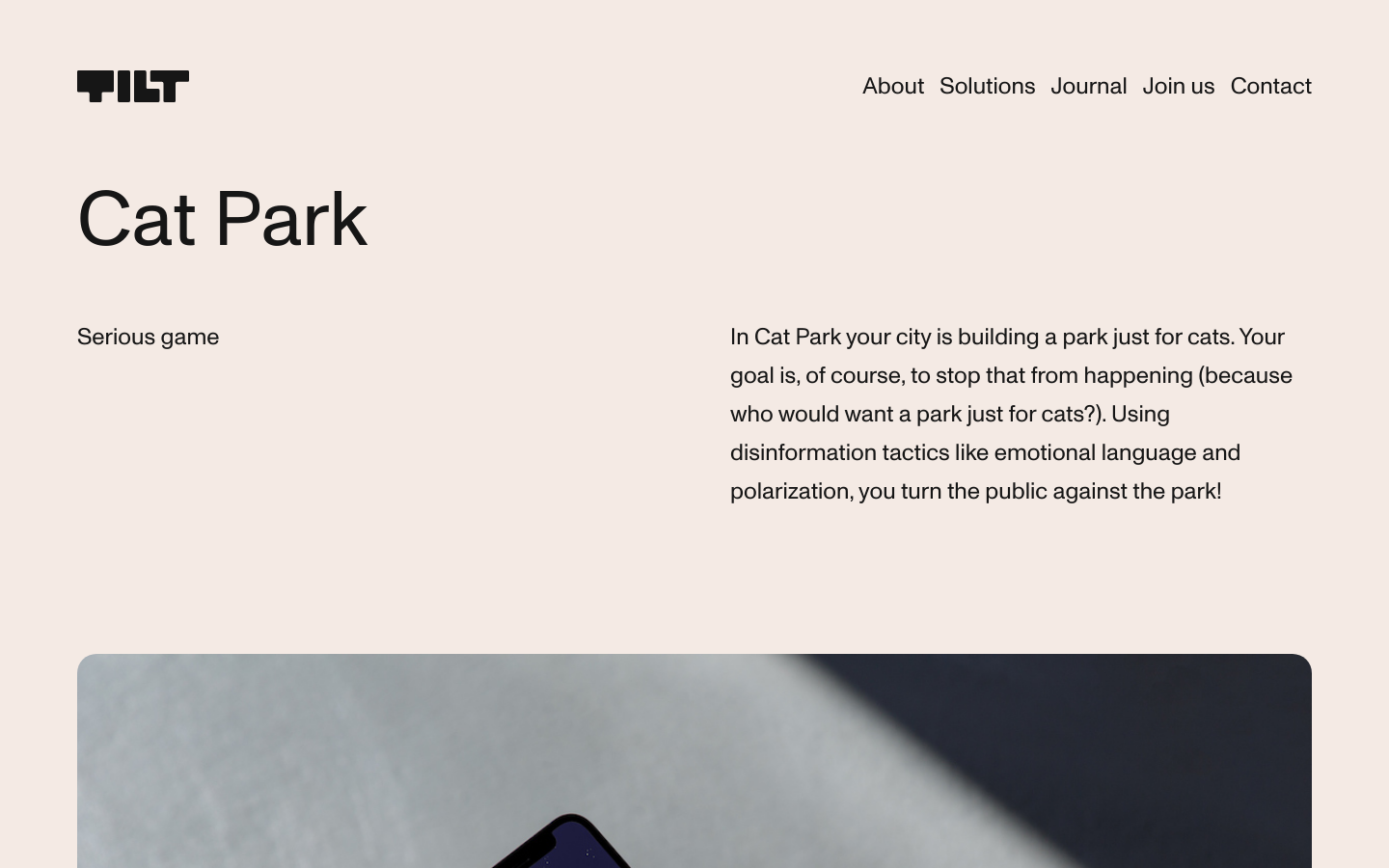
A game to arm people against disinformation
Cat Park is based on “active inoculation” theory, pioneered by the University of Cambridge’s Social Decision-Making Lab. Much as vaccinations work by exposing subjects to an innocuous strain of a virus in order to trigger an immune response, empirical studies indicate that the controlled experience of disinformation through a game can build cognitive resistance to disinformation in the real world. This concept is also known as “prebunking.” Rather than simply waiting for lies to spread and then debunking them with a fact-check, the goal of Cat Park is to proactively educate about common disinformation techniques so that players are better prepared to spot fake news no matter what form it takes. In a survey analysis of the game’s efficacy conducted by the University of Cambridge, researchers found that individuals who play Cat Park are 19-percentage points more likely than a control group to spot disinformation and 15-percentage points less likely to want to share disinformation.
Disinformation, misinformation, and “fake news” are longstanding phenomena that, in the wake of the digital revolution, have become newly politicized and consequential. SSRC's research on the topic.
The CLC is a volunteer network of individuals trained to monitor for, critically evaluate, and report misinformation on diverse topics central to our civic life: voting, elections, public health, civil rights, and other important issues.

A collection of easy to use resources for identifying misinformation and its psychological tricks
For this first phase of our program, WhatsApp is commissioning a competitive set of awards to researchers interested in exploring issues that are related to misinformation on WhatsApp.