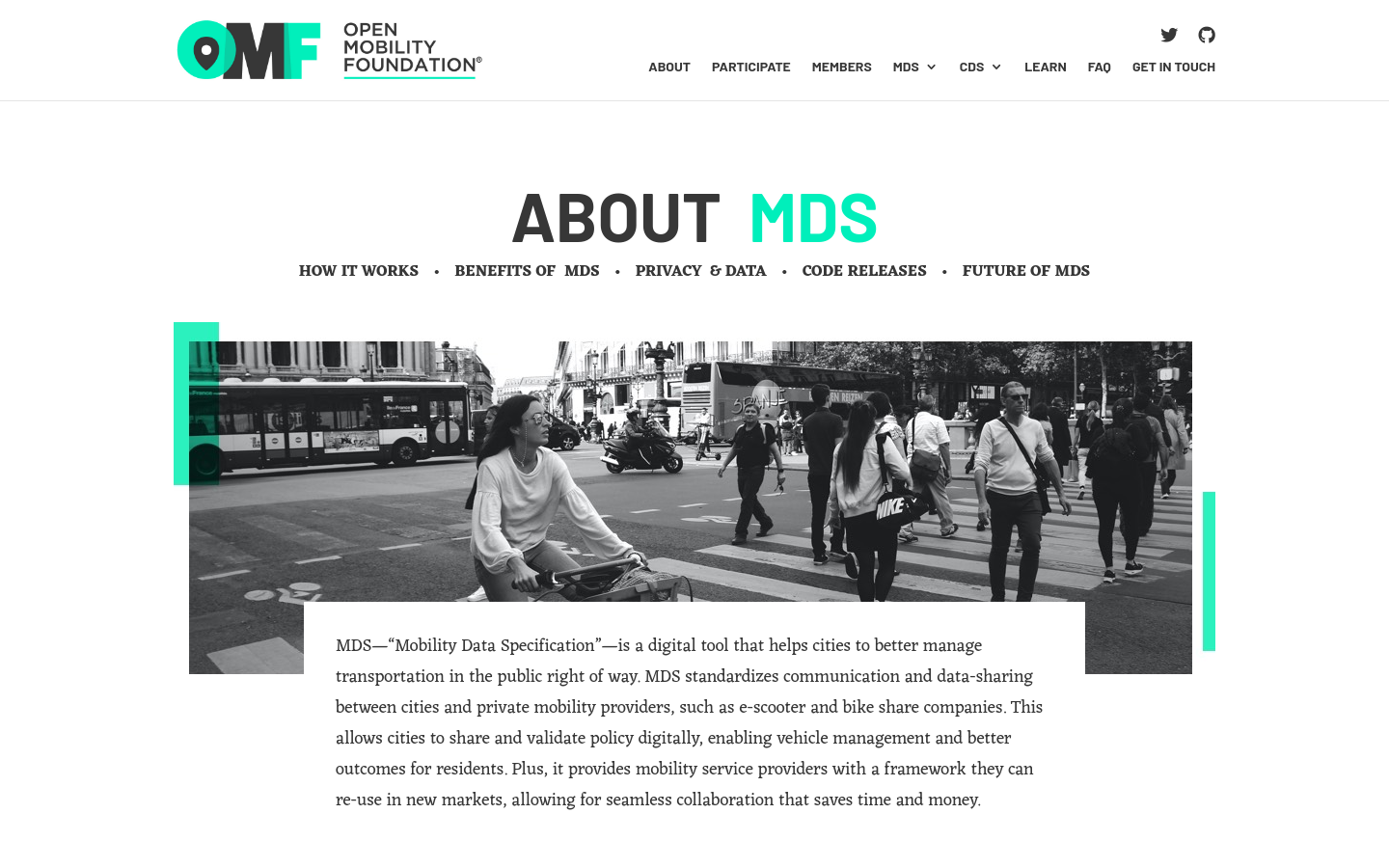
Mobility Data Specification (MDS)
MDS standardizes communication and data-sharing between cities and private mobility providers, such as e-scooter and bike-share companies.
USA
mobility, city, Sustainable cities and communities

The Authenticated Transfer Protocol (ATP) working group will develop a set of Standards Track specifications that enable creation of decentralized global networks for publication of self-certifying data.
Data is published by accounts in data repositories. An account represents the identity of a user, can migrate between hosting locations over time, and is identified by a persistent globally-resolvable account identifier. The network comprises independent hosts and other participants that synchronize public data across organizational boundaries, while preserving authenticity of content and attribution to the accounts that published the content. The network will give small independent participants global visibility and distribution without prior coordination, and will not depend on the existence of any single privileged entity.
MDS standardizes communication and data-sharing between cities and private mobility providers, such as e-scooter and bike-share companies.
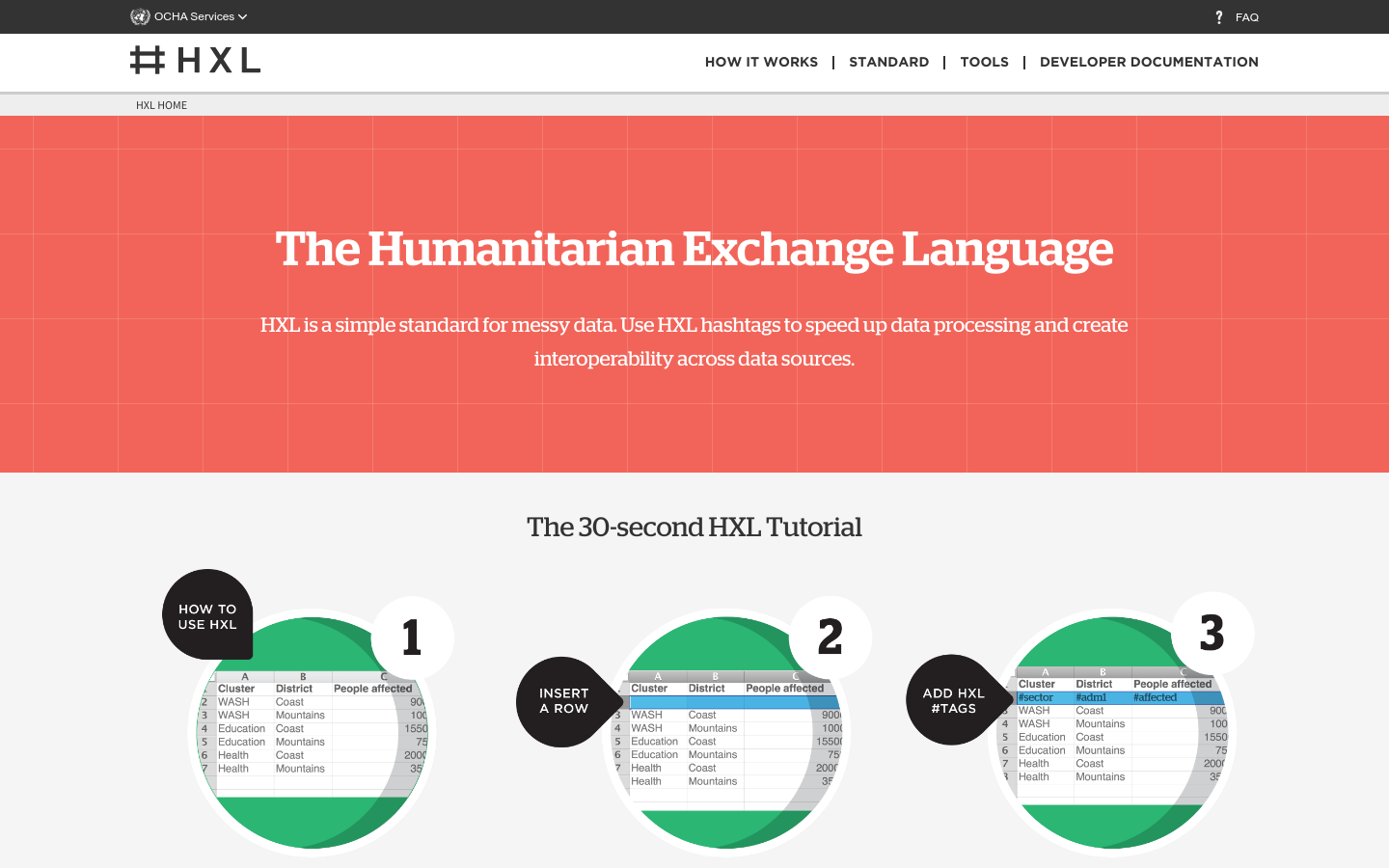
HXL is a different kind of data standard, designed to improve information sharing during a humanitarian crisis without adding extra reporting burdens.
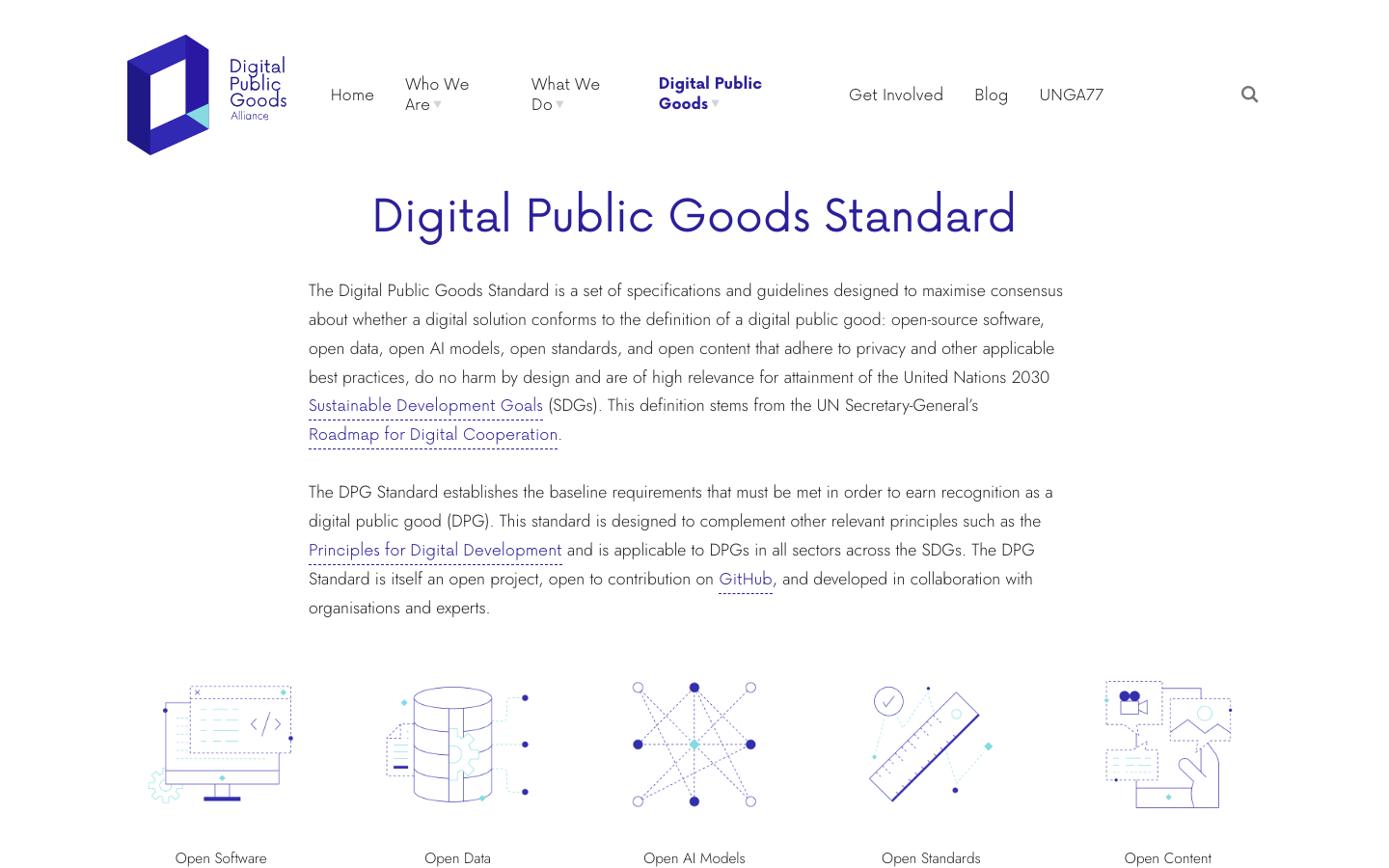
The Digital Public Goods Standard is a set of specifications and guidelines designed to maximise consensus about whether a digital solution conforms to the definition of a digital public good: open-source software, open data, open AI models, open standards, and open content that adhere to privacy and other applicable best practices, do no harm by design and are of high relevance for attainment of the United Nations 2030 Sustainable Development Goals (SDGs).
CityGML is an open data model and XML-based format for the storage and exchange of virtual 3D city models.