SSRC Media Well
Disinformation, misinformation, and “fake news” are longstanding phenomena that, in the wake of the digital revolution, have become newly politicized and consequential. SSRC's research on the topic.
Brooklyn, NY

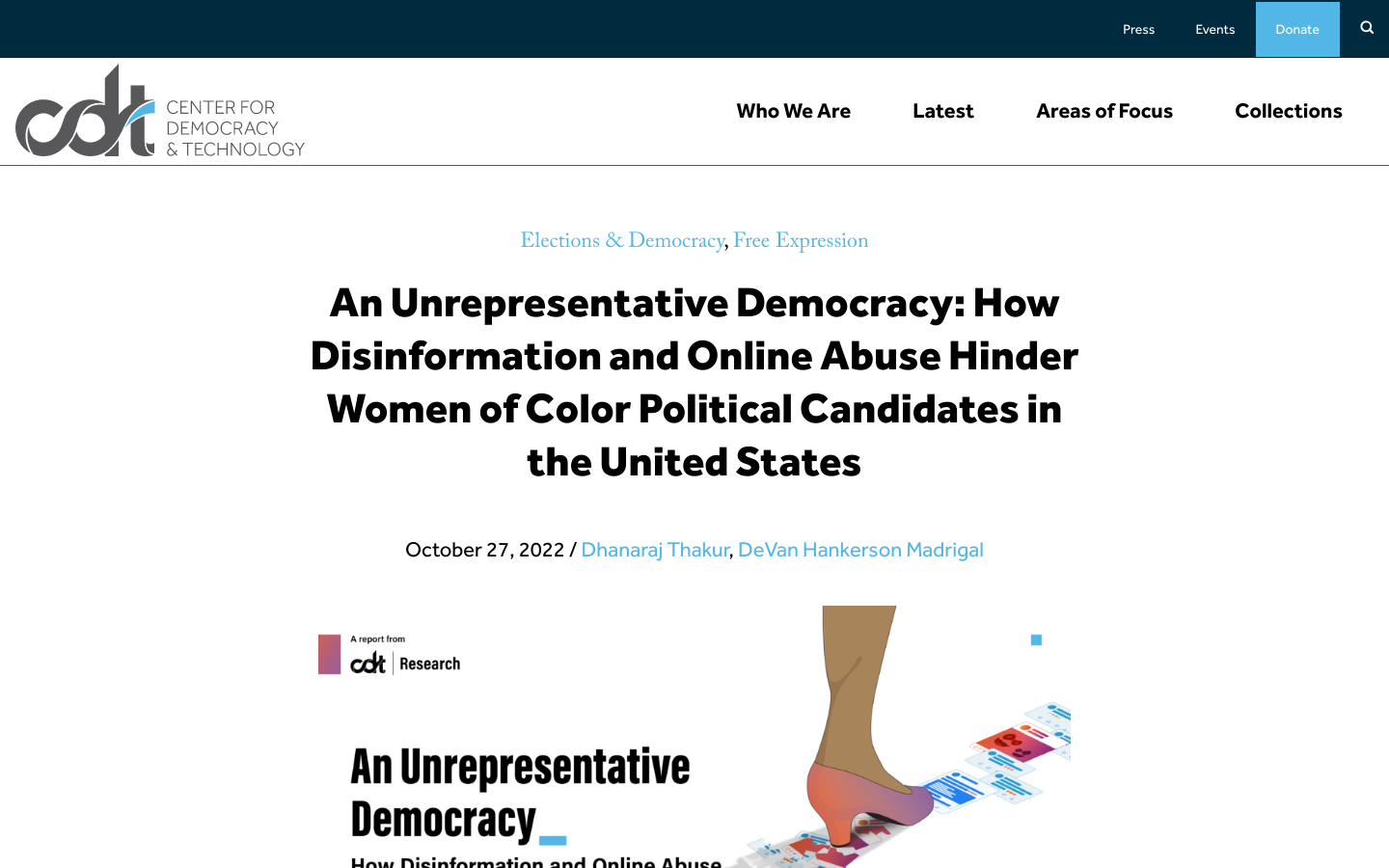
A report by Center for Democracy & Technology
In a press interview, former Vermont state house representative Kiah Morris said she reported at least 26 incidents to the local police where she and her family felt threatened between 2016 and 2018. The severity of the targeted abuse both on and offline ultimately led Rep. Morris to a premature resignation three months before the end of her second term in office in 2018. In the same story, U.S. Rep. Nikema Williams expressed the view that the onslaught of mis- and disinformation and abuse seemed to be to designed to intimidate women of color out of government: “Early on, when we were getting the list of credible threats coming in for members of Congress, they were centered around members of color and there are only 25 black women that serve in the United States…there’s not that many of us…which I think is part of the whole thing of people trying to scare people [black women] into silence.”
Parent organization: Center for Democracy and Technology
Disinformation, misinformation, and “fake news” are longstanding phenomena that, in the wake of the digital revolution, have become newly politicized and consequential. SSRC's research on the topic.
The CLC is a volunteer network of individuals trained to monitor for, critically evaluate, and report misinformation on diverse topics central to our civic life: voting, elections, public health, civil rights, and other important issues.

A collection of easy to use resources for identifying misinformation and its psychological tricks
For this first phase of our program, WhatsApp is commissioning a competitive set of awards to researchers interested in exploring issues that are related to misinformation on WhatsApp.